Ten Wildlife Encounters That Defined My Time in the Maldives
Spending two years in the Maldives opened the door for many wildlife encounters that I never imagined I would have. Some were rare, others a bit chaotic, and a few left me feeling incredibly humbled. These are the moments that have stayed with me long after I left the islands.
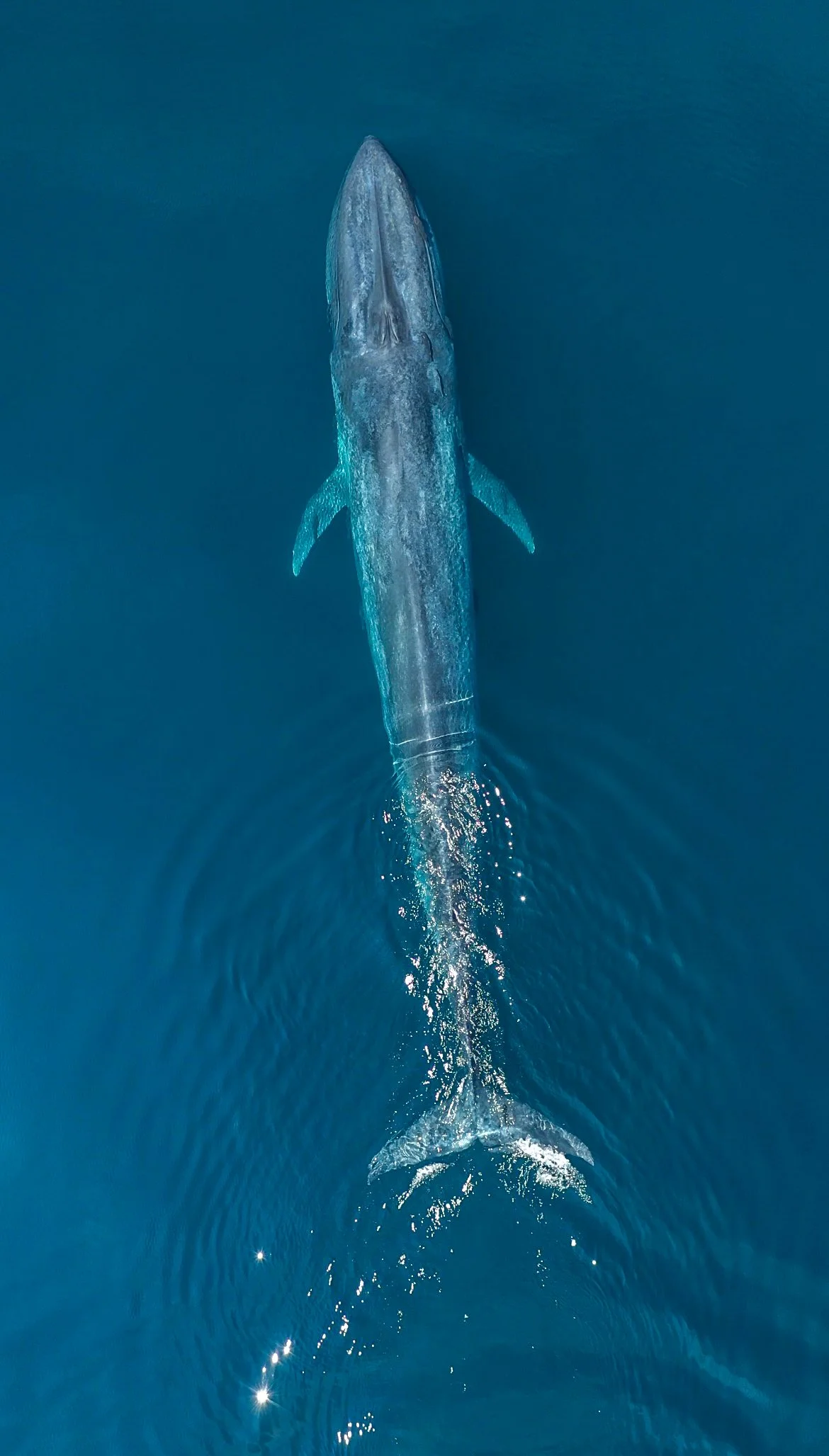
1. Blue Whale
I moved to the Maldives in 2022, and by November, I found myself on the local island of Maafushi. Maafushi is a special place, with tour companies offering full-day trips that let you explore different corners of the country. I had seen photos from other wildlife enthusiasts and heard rumors that both a humpback and a sperm whale had been spotted nearby. That was all the motivation I needed to stack two days off and make the journey. I signed up for the classic trip: Vaavu Atoll for nurse sharks, Fulidhoo for dolphin watching, a sandbank stop, and a visit to the manta cleaning stations. We were out on the boat, swimming with spinner dolphins, when our captain got a call from a friend on a fishing boat. He had seen a whale spout nearby. Suddenly, everyone was back on board, eyes glued to the horizon as we sped toward the last known location. The ocean was so calm it looked like glass. Then, out of nowhere, a huge spout erupted in front of us. Excitement buzzed through the boat. My team and one of the crew launched our drones, expecting to see a humpback whale. But as my drone approached, I realized just how massive this animal was. It was a blue whale in the Maldives. Even more incredible, it was inside the atoll, which is almost unheard of because of the shallow water. We watched in awe from the boat. Every time we tried to get closer, the whale would dive as soon as the engine revved. While swimming, it would take three to five deep breaths, but only one when the boat was running. That told me we were disturbing it, so I spoke up and suggested we give the whale space and simply appreciate the privilege of witnessing such a majestic animal. This was my first blue whale encounter, and in a place where they are rarely seen. Seeing the largest animal to ever live on Earth was one of those moments that makes you feel incredibly small.
Since that day, whale sightings have become more common in the Maldives. While it’s exciting, it also raises concerns that cargo ships and noise pollution might be pushing these giants off their usual routes. I hope this blue whale was just exploring, but no matter the reason, that encounter will always be one of my most unforgettable wildlife moments—completely unexpected and absolutely extraordinary.
2. Tiger Shark
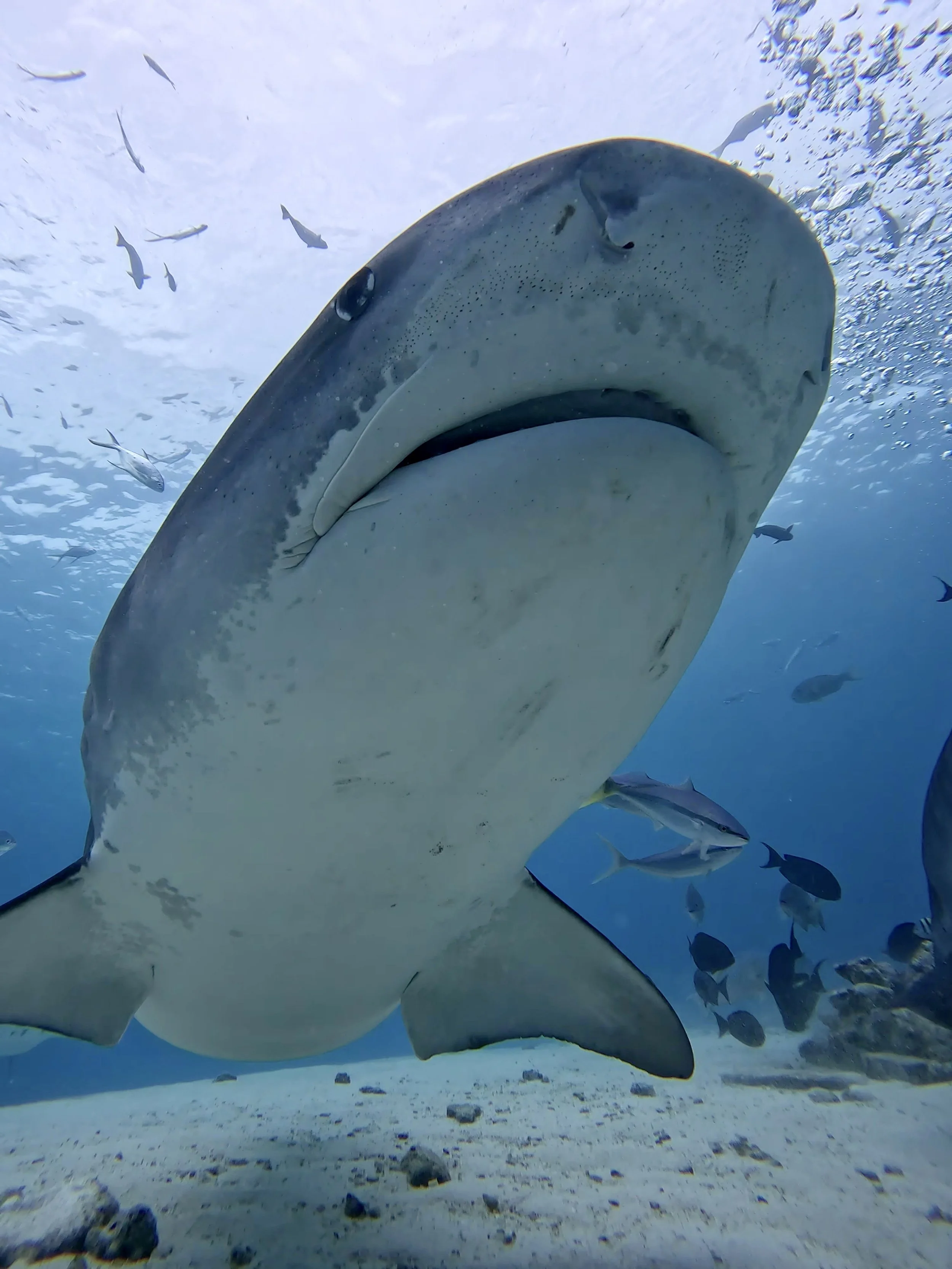
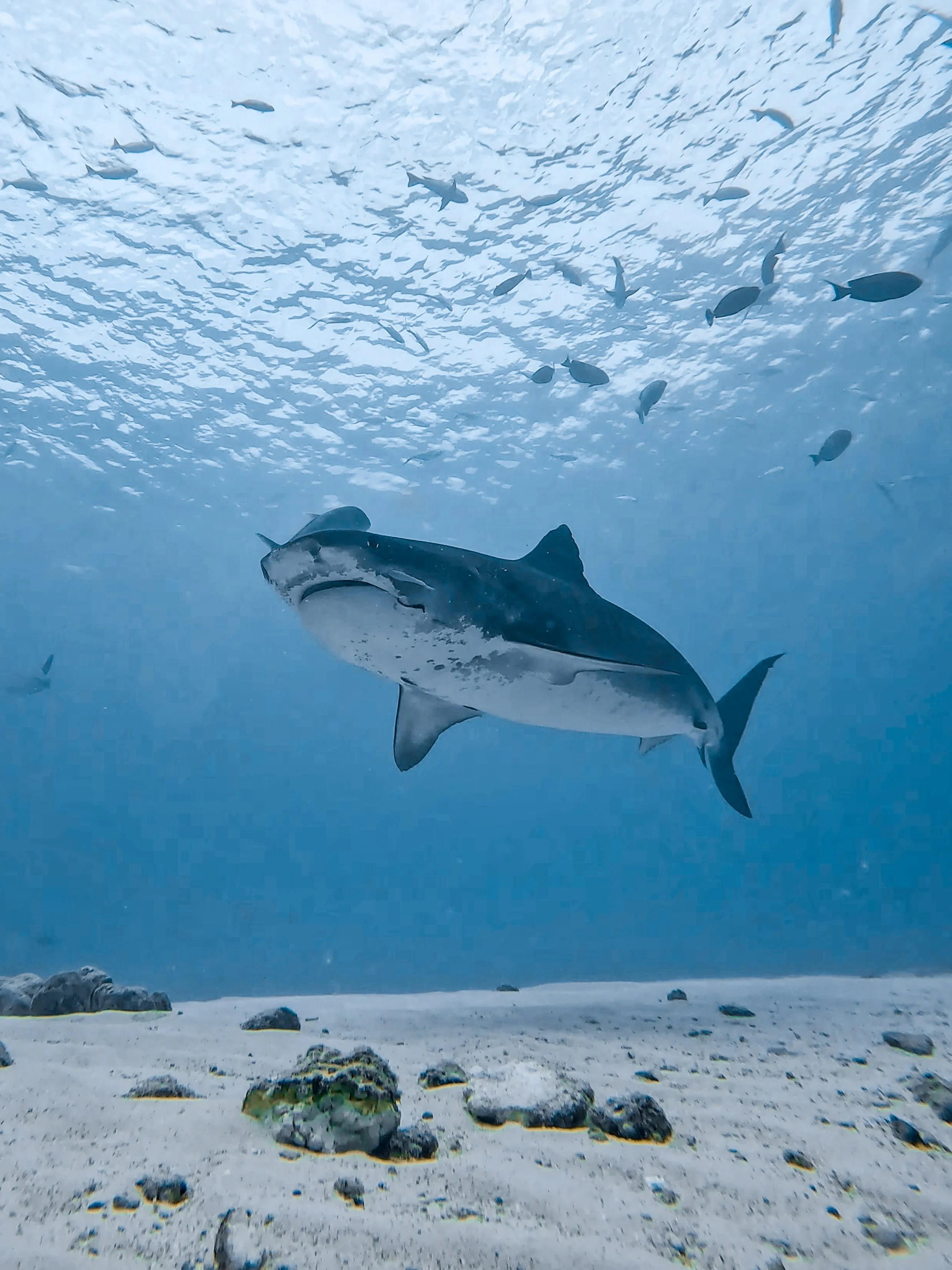
If you ask experienced divers about the best spots in the Maldives, Fuvamulah in the south always comes up. Unlike most Maldivian islands, Fuvamulah doesn’t have a lagoon. Instead, it rises straight out of the ocean, surrounded by deep reef walls. This unique geology attracts some of the most impressive pelagic species year-round. I visited in March, right at the tail end of hammerhead season and just as oceanic mantas were starting to arrive. But the real stars here are the tiger sharks. There’s a local story that fishermen, frustrated by sharks stealing their tuna, started tossing fish scraps to the sharks. Over time, the sharks learned to eat the leftovers and leave the catch alone. Eventually, dive operators realized this was a chance to offer close-up encounters with tiger sharks. I couldn’t resist the opportunity to see these apex predators up close.
The main dive site here is called Tiger Zoo, and as soon as we reached the boat, we geared up—there’s no time to waste since it’s only a five-minute ride from the harbor. You have to do a negative entry, dropping straight down, because tiger sharks are known to come right up to the surface to check you out. It’s best to get down quickly and meet them on their level. As soon as I hit the water, two tiger sharks, each about three meters long, were already cruising nearby. We swam down to the sandy bottom, where someone from the boat dropped big tuna heads into the water. An instructor tucked them under a large rock, and almost instantly, a swirling mass of tiger sharks closed in. At one point, I counted at least twenty sharks circling us, all focused on the tuna heads. The energy was wild. I’ll never forget the moment the biggest shark, Rose—measuring a massive 4.5 meters—glided within a meter of my head. I actually had to duck to get out of her way. The sheer size of her head was unbelievable. Watching these sharks interact was fascinating. Later, when we left the reef and swam out into the open blue, a few tiger sharks followed. It was surreal to look around and see their dark shapes materializing from the distance, sometimes heading straight for us before veering off at the last second. While Tiger Zoo is an adrenaline rush, it does feel a bit commercial. Thankfully, I was able to see plenty of tiger sharks in the wild during my time in the Maldives. If you ever find yourself here, keep your head on a swivel—these sharks love to sneak up from behind.
3. Peacock Mantis Shrimp
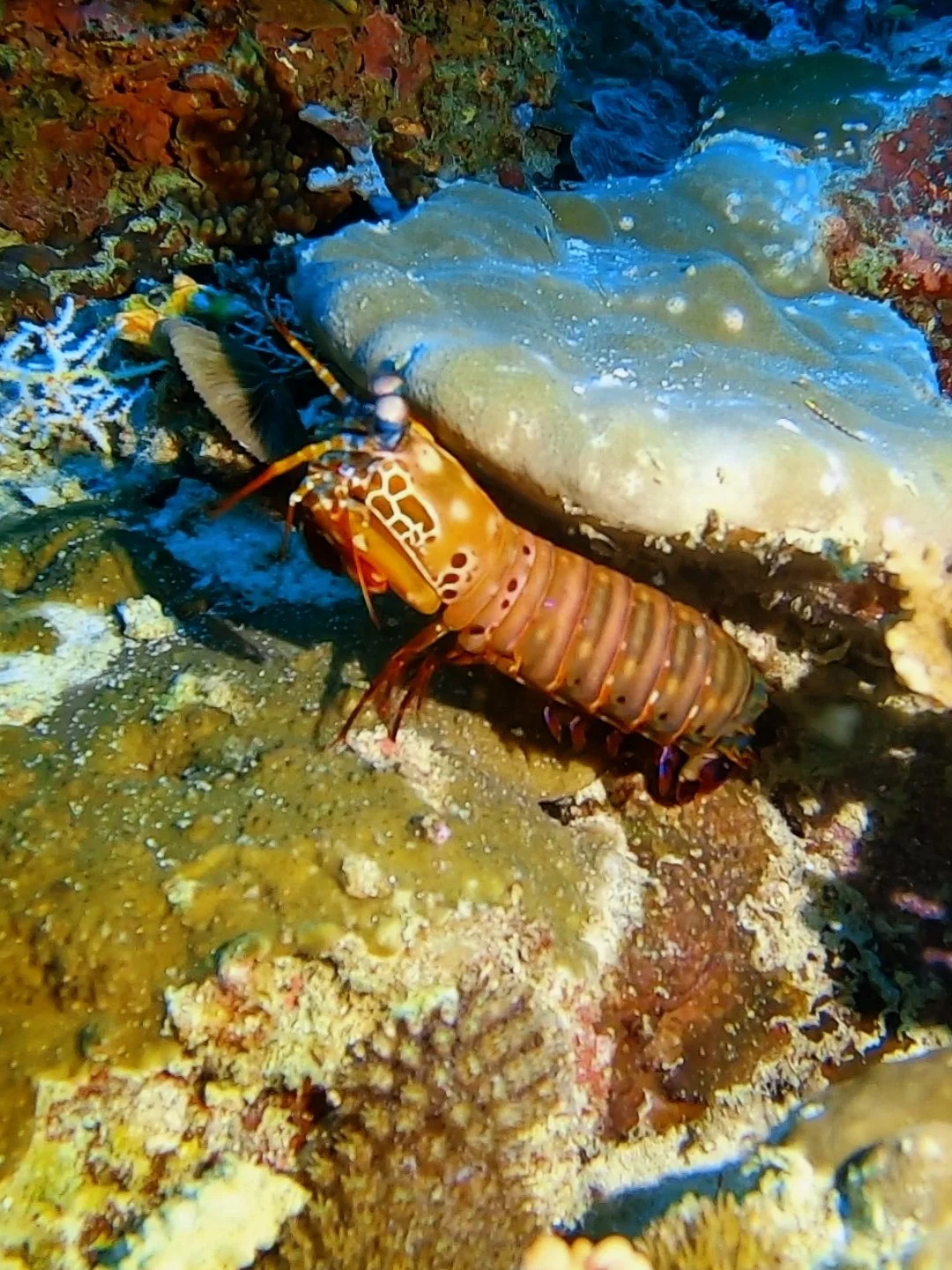
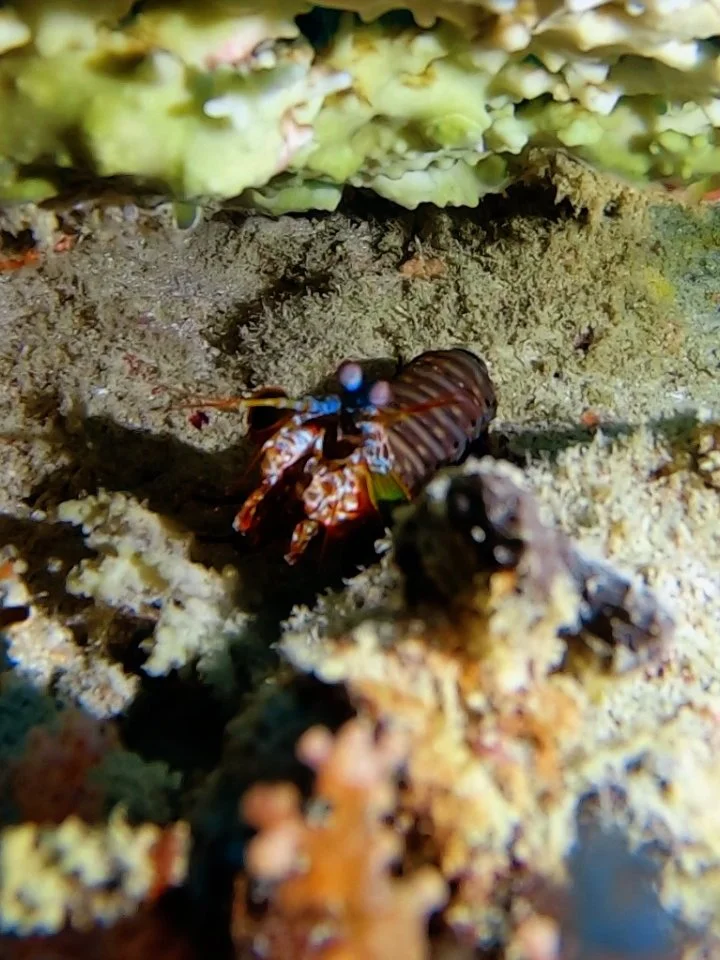
Peacock mantis shrimp are easily one of my favorite underwater finds. Over the past few years, I’ve been lucky to spot quite a few of them, especially at dive sites near the resort where I worked in the Maldives. I’ve also come across them in Raja Ampat and the Philippines. These little powerhouses have the fastest strike of any animal, creating a cavitation bubble that implodes at temperatures hotter than the surface of the sun—about 5,000 degrees Celsius. Their eyes are the most complex in the animal kingdom, able to see infrared, ultraviolet, and a rainbow of colors we can’t even imagine. They’re not always easy to find, but once you know what to look for, you start noticing their burrows—neat little patches on flat areas or tucked into ledges. The first time one peered back at me from its burrow, those alien eyes moving independently, I realized this was no ordinary invertebrate. They seem more aware than most animals I’ve met underwater. One especially curious mantis shrimp kept popping up from different burrow entrances, almost like a game of underwater whack-a-mole, and I couldn’t help but laugh through my regulator.
4. Ornate Eagle Ray
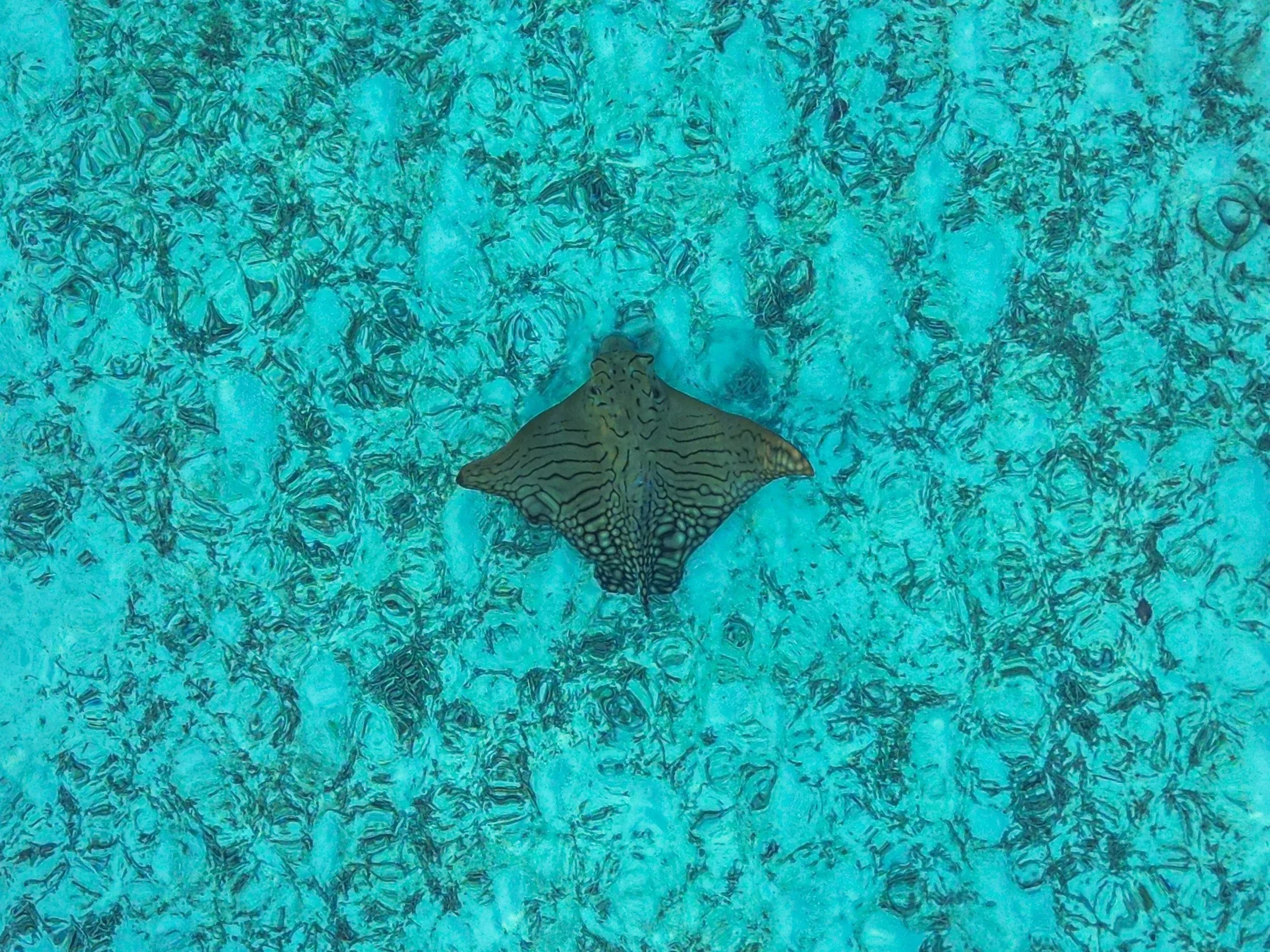
One evening, just before a night snorkel with guests, I was flying my drone during a wildlife survey. I usually spot eagle rays, cowtail stingrays, and sometimes a blacktip reef shark gliding through the shallow lagoons around the resort. The wind had picked up, so the water was a bit choppy as I sent the drone over the guest arrival area. Suddenly, I spotted an eagle ray—its diamond-shaped body unmistakable even from 100 meters up. But this one was huge, and my heart started racing. Ornate eagle rays are incredibly rare in the Maldives, and I realized I might be looking at one. I dropped the drone down to about 10 meters above the ray and could clearly see its olive-gold color and bold tiger stripes. I couldn’t help but shout with excitement. This was my first-ever sighting of what many marine enthusiasts call the unicorn of the sea: the Ornate Eagle Ray. Unfortunately, this individual was missing its tail, which isn’t uncommon since sharks often target them, but it was still an impressive size. Ornate eagle rays can reach up to three meters wide and over five meters long, with the largest recorded weighing 530 kilograms. I followed this beautiful animal until my drone battery ran out, and as luck would have it, the guests arrived just in time to see it too. I managed to spot this same ray once more, and even saw another individual with its tail intact. Thanks to drones and better reporting, sightings are increasing, but ornate eagle rays are still among the rarest rays in the world. I’m still waiting to see one underwater, so that’s definitely staying on my bucket list.
5. Pilot Whale
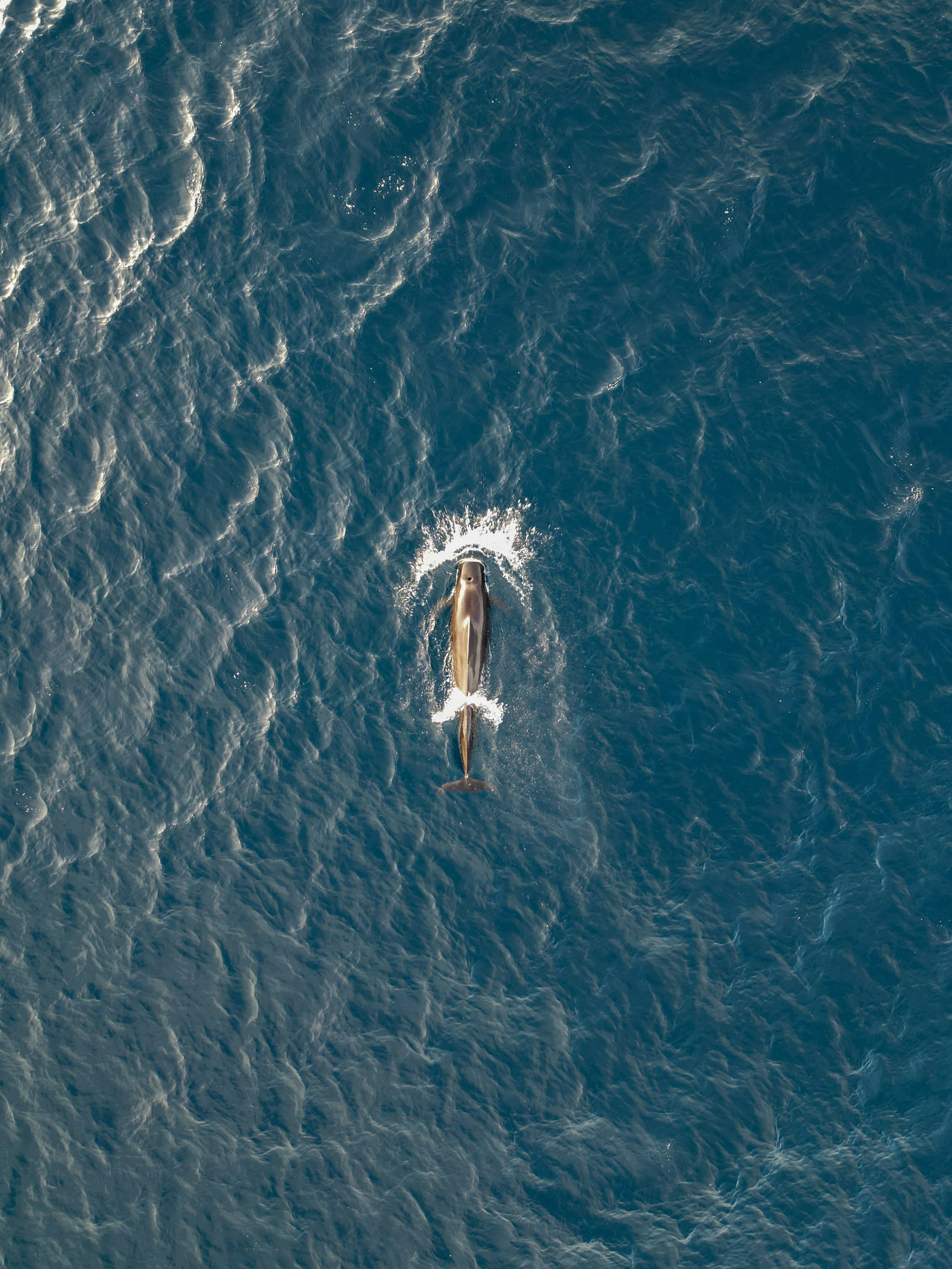
Another unforgettable sighting during a drone wildlife survey was a pod of pilot whales. August brought perfect weather, so I made a habit of flying my drone every evening along the eastern side of the island, hoping to spot some of the larger ocean dwellers. Thursdays and Sundays were dolphin cruise days, and I often used the boats as a clue to where the action was. One evening, I noticed all the resort boats converging in one spot—always a good sign. Sure enough, a pod of about ten pilot whales had appeared. Pilot whales are among the largest members of the dolphin family, with a body shape that’s a bit quirky compared to your typical dolphin. They get their name from the way the pod follows a leader, or 'pilot,' who swims out in front. I managed to photograph the lead whale as it glided effortlessly through the waves, almost keeping pace with my drone. Watching these animals move through the open ocean was mesmerizing.
6. Thresher Shark
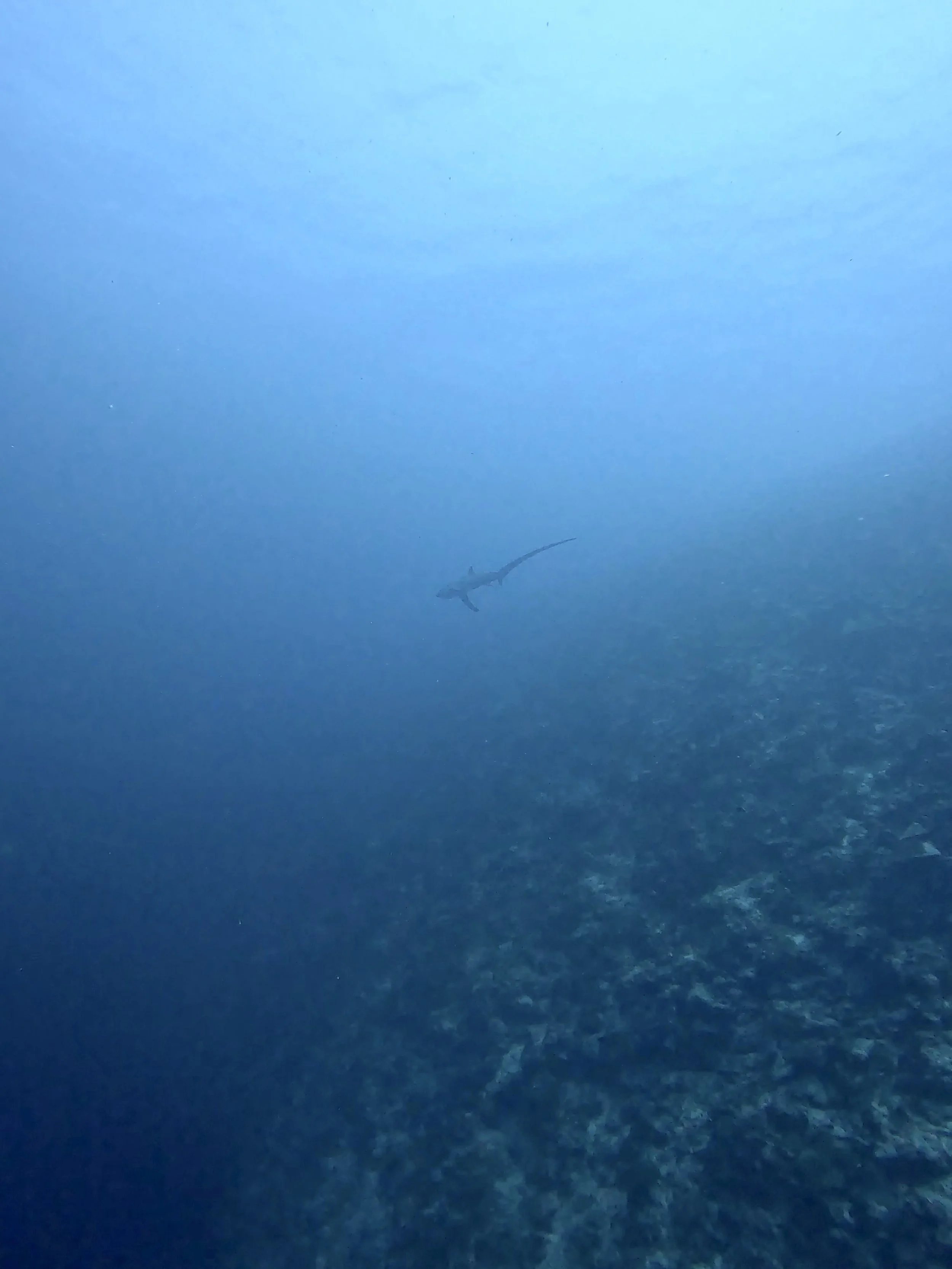
One of my most exciting firsts in the Maldives was finally seeing a thresher shark in the wild at Fuvamulah. It was our third dive of the day, and we were all hoping for a glimpse of this elusive species. Suddenly, our lead guide tapped his tank and pointed upward. I looked up, and there it was—gliding at about 25 meters, a thresher shark. These sharks are truly something special. Their tails are almost as long as their bodies, swaying gracefully through the deep blue. The shark moved past us with such elegance, and I managed to snap a silhouette photo, even if it was about ten meters away and not my best GoPro shot. Thresher sharks have some of the goofiest faces in the shark world, and there are three species globally. Unlike most sharks, threshers don’t use their mouths to hunt. Instead, they use their long tails to whip and stun schools of fish before circling back to eat them. Around Fuvamulah, they usually stay deep—often at 50 to 60 meters—but we dropped to about 35 meters, hoping to spot one below us. That moment is one I’ll never forget.
7. Reef Manta
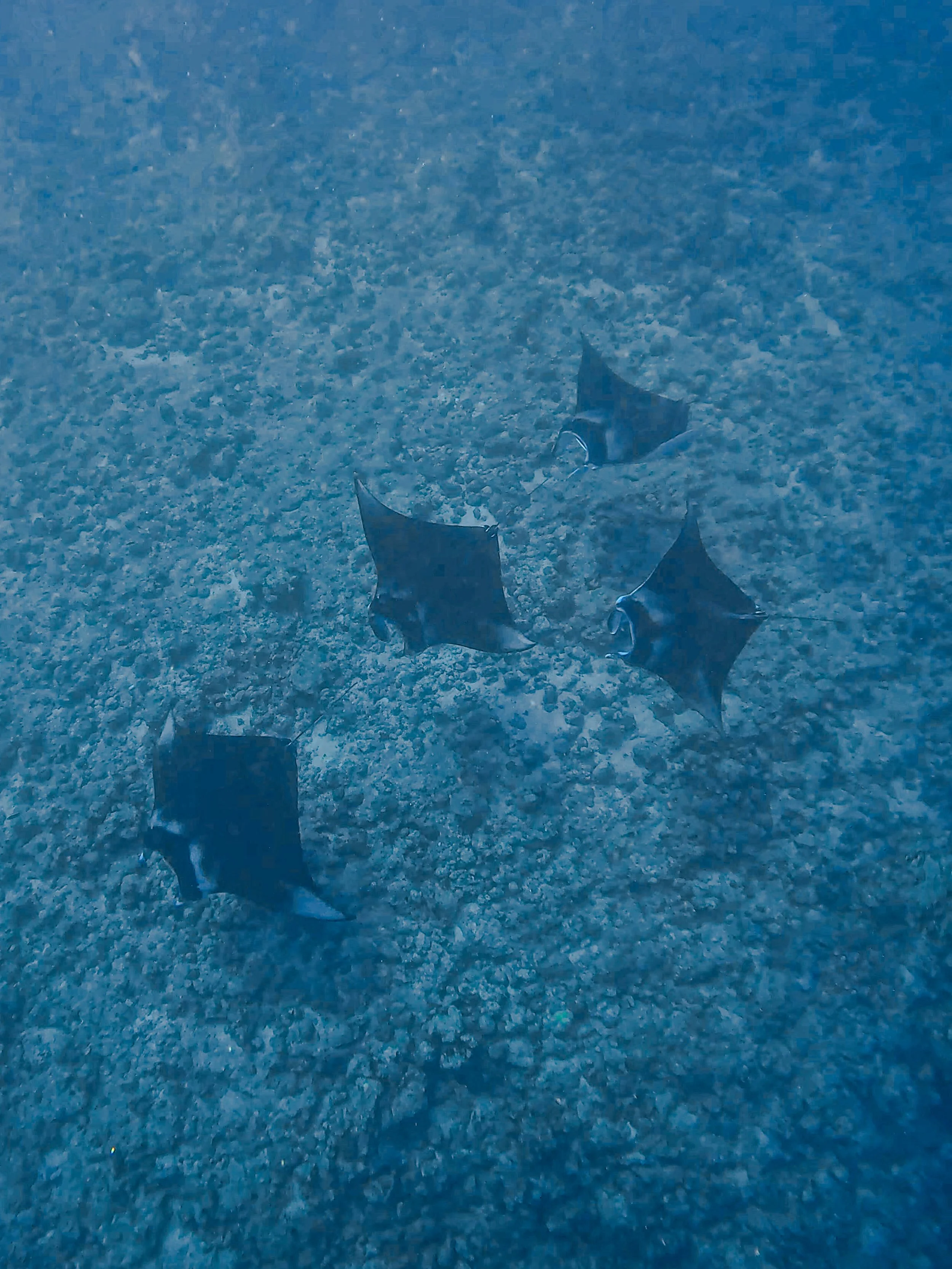
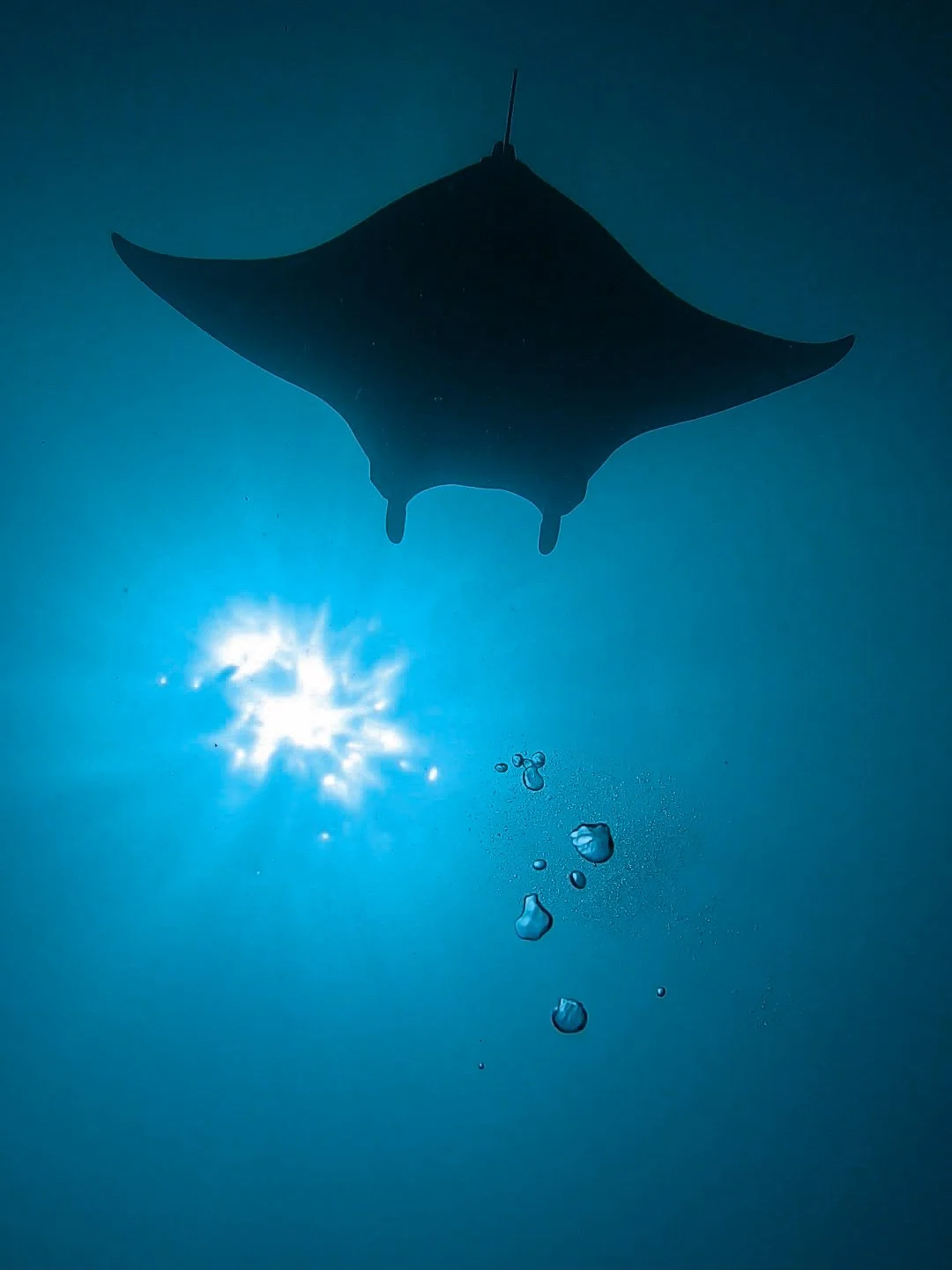
I’ve been lucky enough to see manta rays in Mexico and Indonesia, but nothing quite compares to witnessing Hanifaru Bay in full swing. After two dives, we got a text saying mantas were in the bay and to be ready for the boat in 15 minutes. We scrambled to grab our gear and set off on a 20-minute ride, buzzing with anticipation. As we arrived, I could see the tips of manta wings breaking the surface, and from the boat, we counted about ten feeding in a line. I wasted no time jumping in and found myself in the middle of the action. Hanifaru Bay is famous for its unique shape, which traps plankton and draws in huge numbers of mantas. The water was thick with plankton, so visibility wasn’t great, but that didn’t matter. Looking down, I counted at least seventy mantas swirling beneath me, creating a living vortex. Since I’d been diving earlier, I couldn’t free-dive very deep, but even from the surface, being surrounded by so many mantas was unforgettable. While Hanifaru is the most famous spot, mantas can be found all over the Maldives, from feeding grounds to cleaning stations where they let smaller fish groom them.
8. Whale Shark
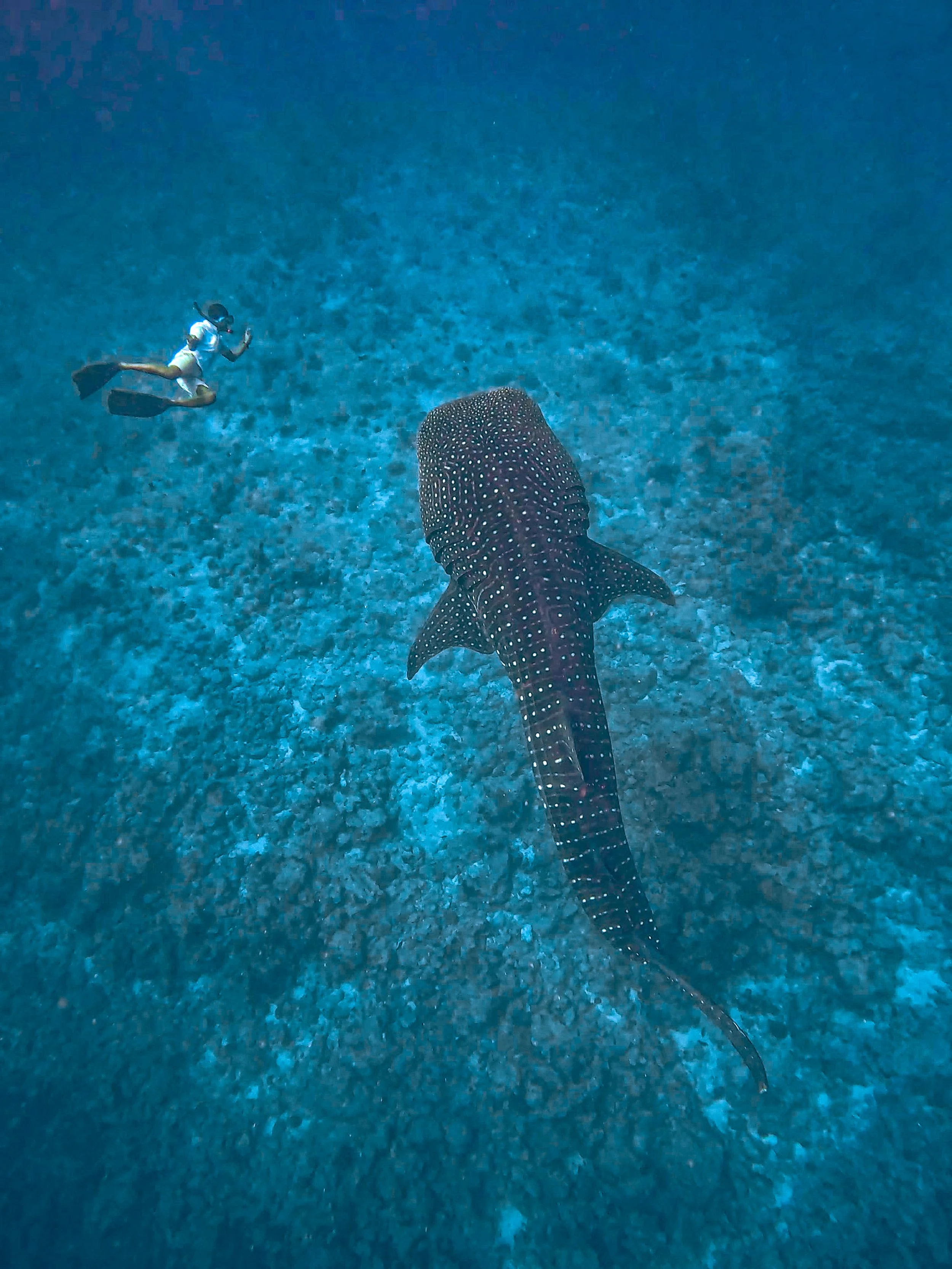
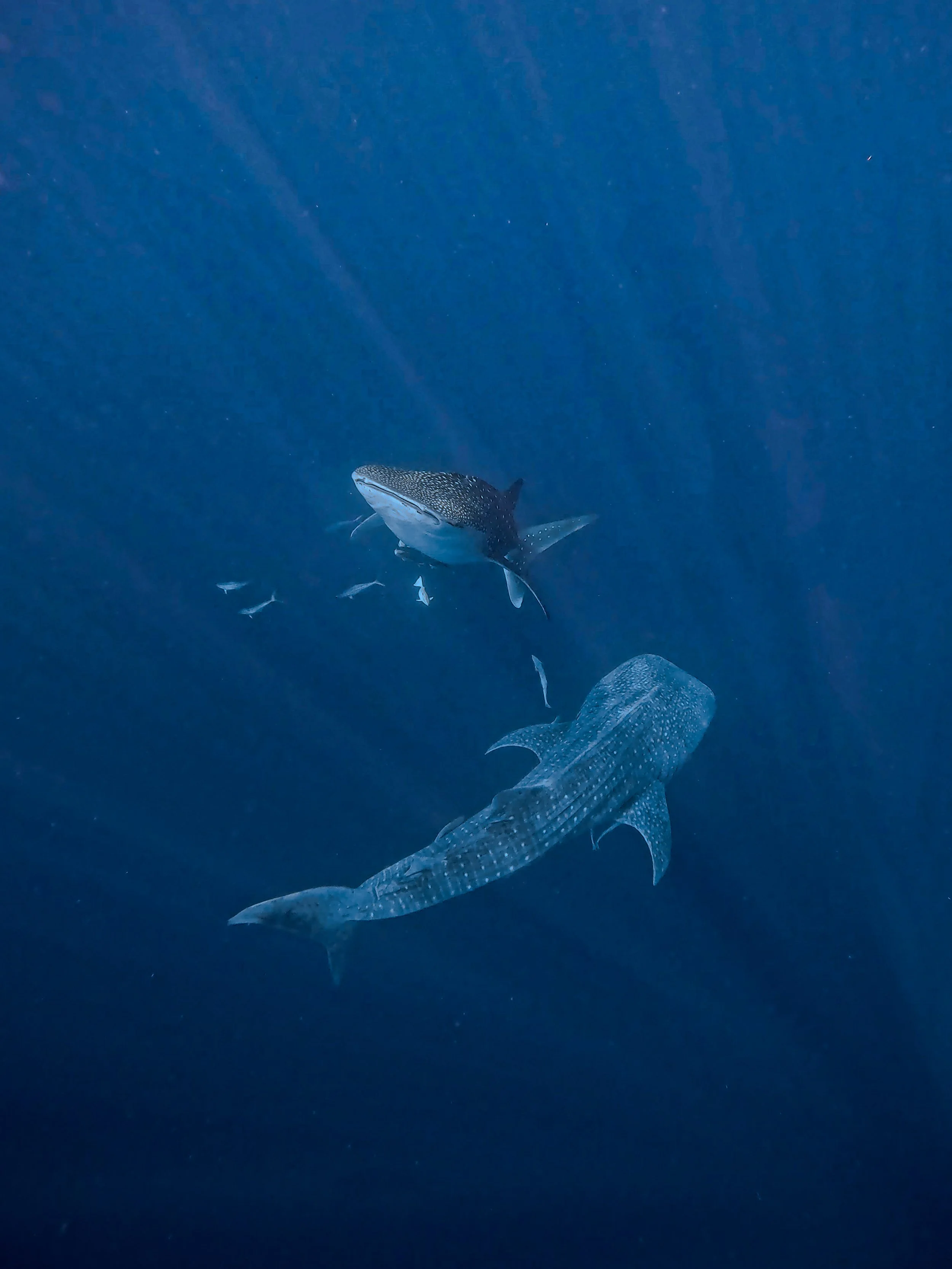
I had quite a few whale shark encounters in the Maldives, but two stand out above the rest. The first happened during a mock adventure tour with my boss, designed to test out a new guest experience. We launched the drone and were thrilled to spot a group of twenty manta rays, and then, to our amazement, a whale shark appeared. What made this encounter even more special was that the whale shark was a female—an extremely rare sight in the Maldives. I snapped ID photos and later learned that this individual, about five to six meters long, had never been recorded before. That meant we got to name her, and we chose Khazana, which means 'treasure' in the local language.
Another encounter I had was on an excursion with guests. We got the call right before we showed up that there wasn’t just one whale shark, but two. So, I jumped into the water, saw some frolicking tourists touching it, grabbed her, told them off, and then took videos of the sharks. When a whale shark is touched, it tends to sink because it really doesn’t like that. They are very tolerant of people, like in other spots in the country that need better regulations, as you end up seeing 80 people on one shark, but at this spot, there weren’t that many people, and the shark was moving, and I could keep up. What was cool, though, is that the other one and this one eventually met, and I was able to get a cool shot of them together, which was a true highlight.
9. Leaf Scorpion Fish
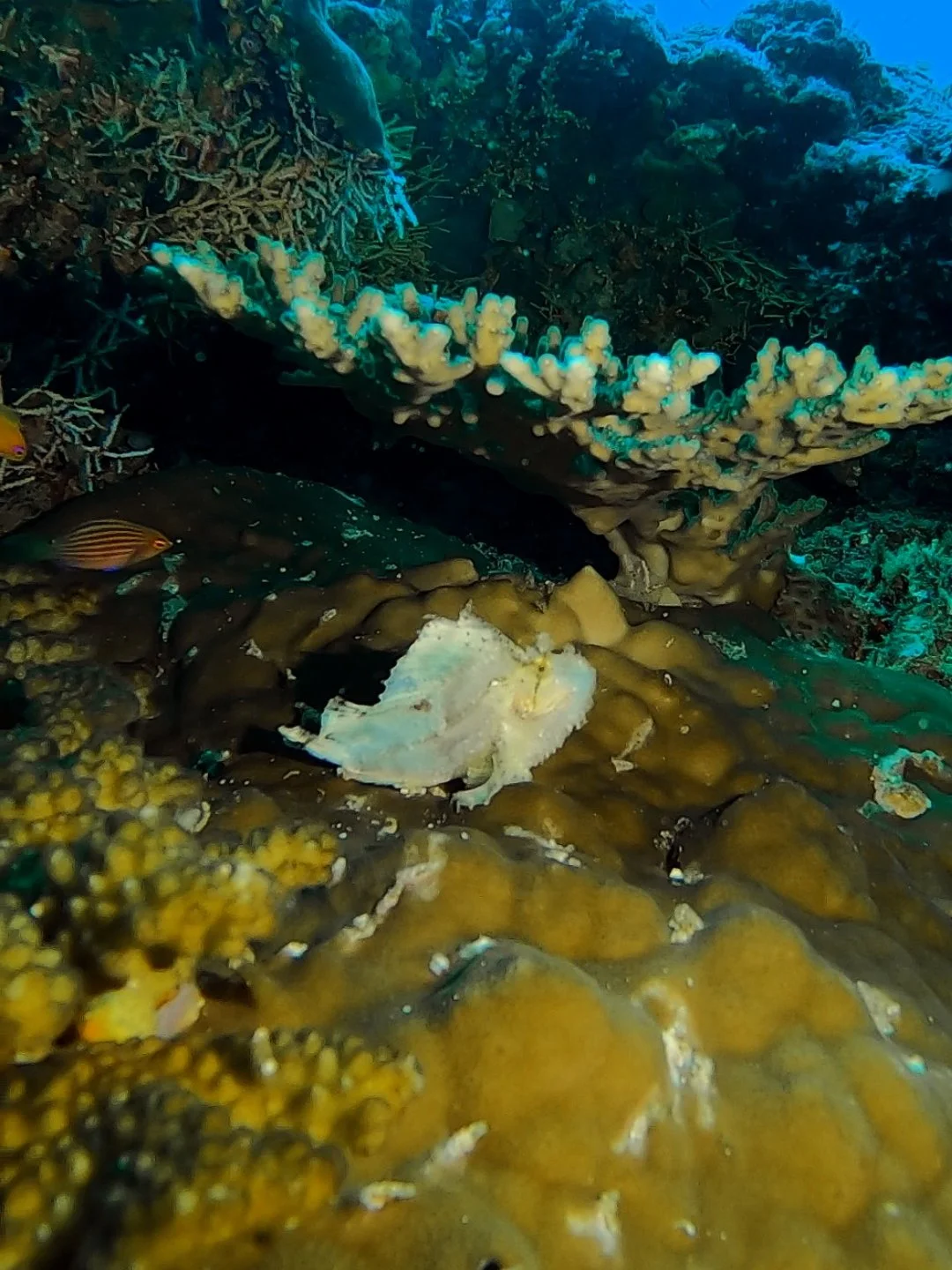
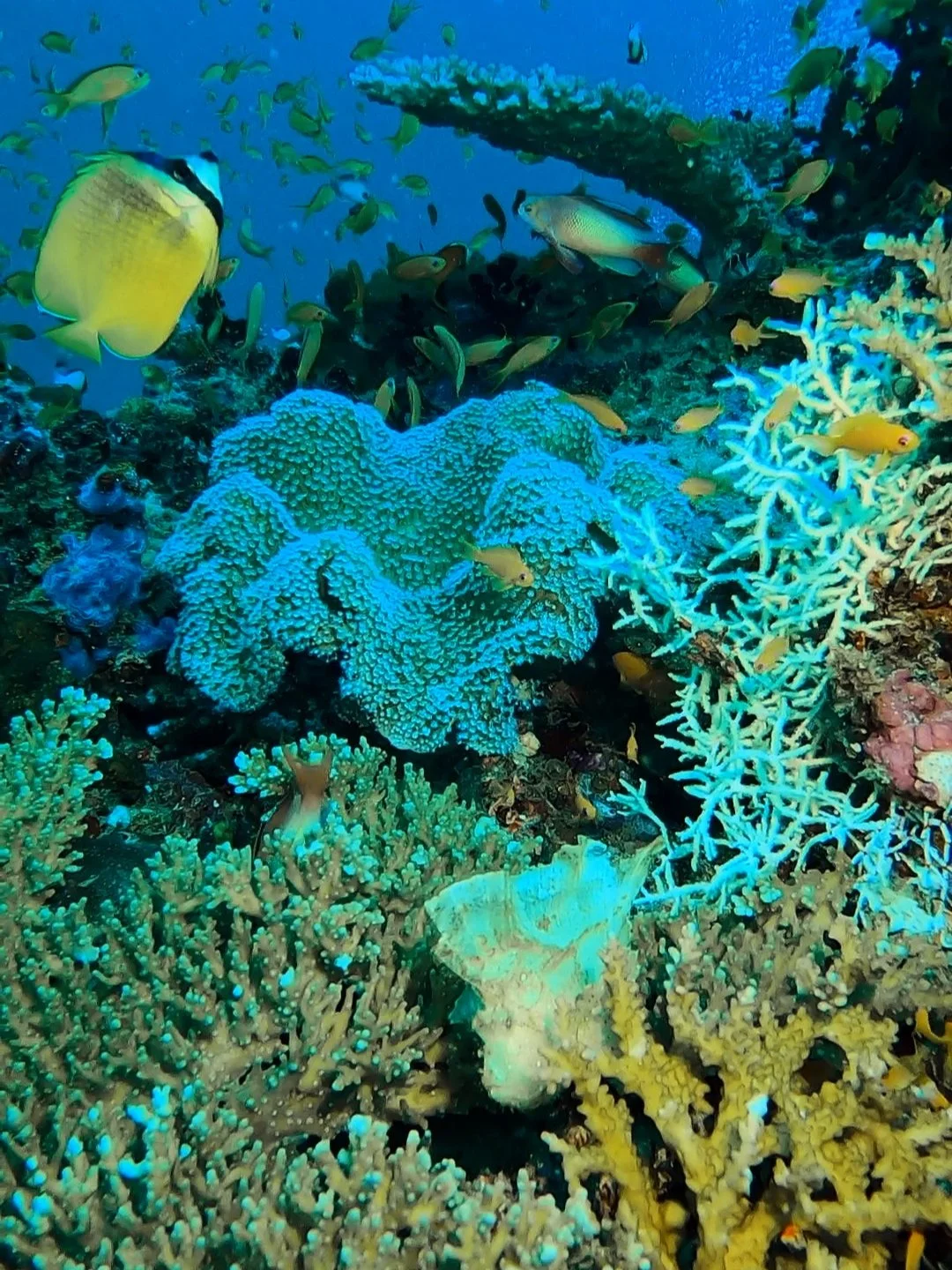
When it comes to diving, I have a soft spot for macro wildlife—sometimes even more than the big stuff. I was over the moon when I spotted my first leaf scorpionfish underwater. I was freediving, aiming to photograph some sweetlips, when I noticed a leaf shift near my hand. It turned out to be a stunning tallow leaf scorpionfish. Later, on a dive in Baa Atoll near Hanifaru Bay, I found two white ones together on a Thila, which is a fantastic spot for macro life. I’ve seen leaf scorpionfish in Indonesia as well, and what fascinates me most is their incredible range of colors. They can be red, purple, white, yellow, black, or green. So far, I’ve managed to spot black, yellow, and white individuals.
10. Silver Tips
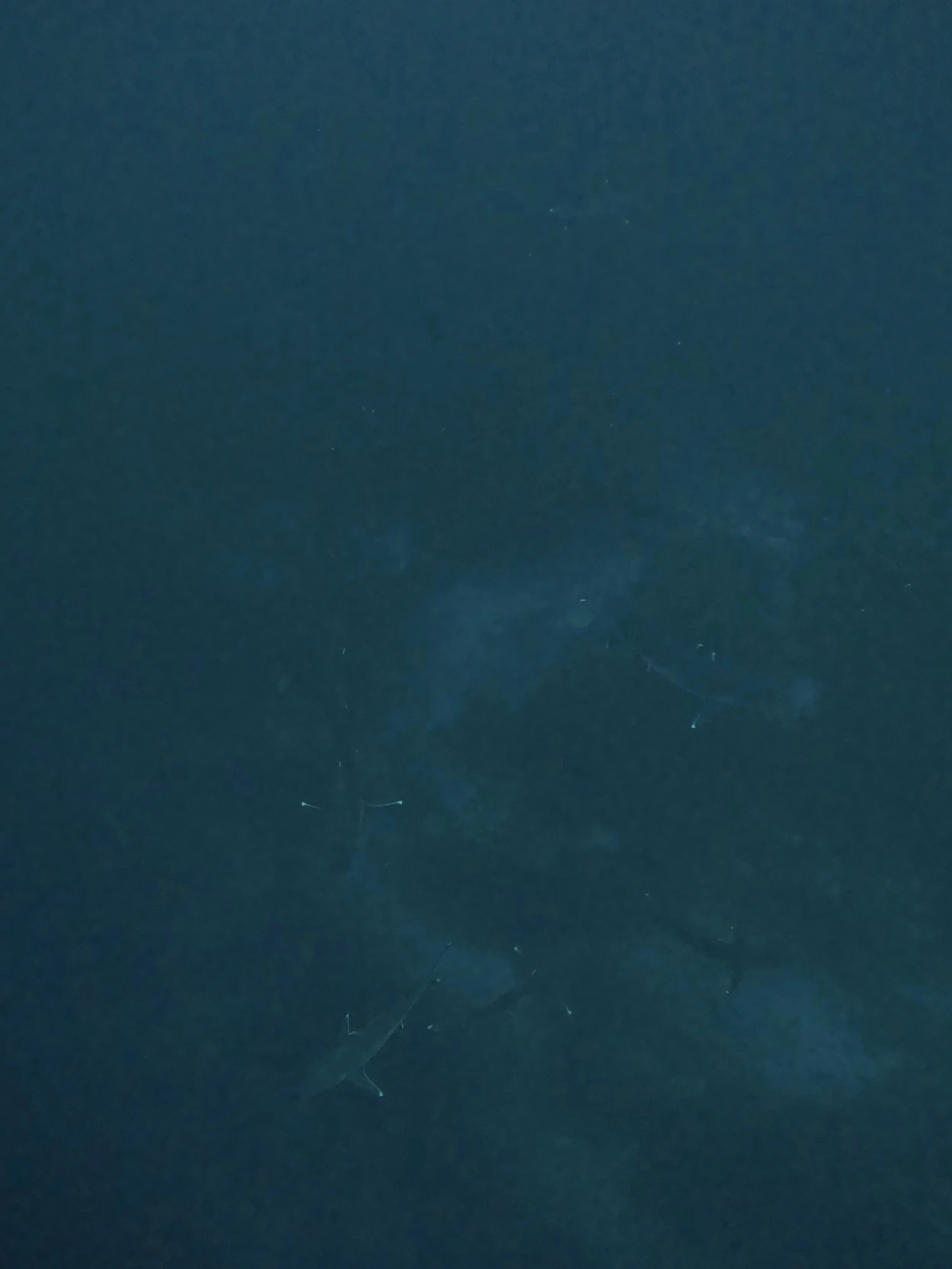
Before coming to the Maldives, I had never seen silvertip sharks, but they quickly became one of my favorites. My first sightings were while diving near the Ritz-Carlton, where I worked, but the most unforgettable encounter happened in Fuvamulah on the southern plateau. Our main goal that day was to find scalloped hammerheads, which gather here from November to April. We jumped off the boat, descended to 30 meters, and waited in what felt like endless blue—nothing but open ocean in every direction. The emptiness was so intense I actually felt a bit of vertigo. Suddenly, our guide struck his tank, signaling us to descend further. As we dropped, we found ourselves surrounded by a school of hammerheads. But what really caught my eye were the flashes of silver darting through the water. As they drew closer, the silhouettes of silvertip sharks appeared. Their silver-tipped fins almost glow against the deep blue, making them stand out even when the rest of their bodies seem to disappear. At one point, there were about forty silvertips circling us. That moment—being surrounded by so many of these striking sharks—is one I’ll never forget.