Manta Madness at Hanifaru Bay
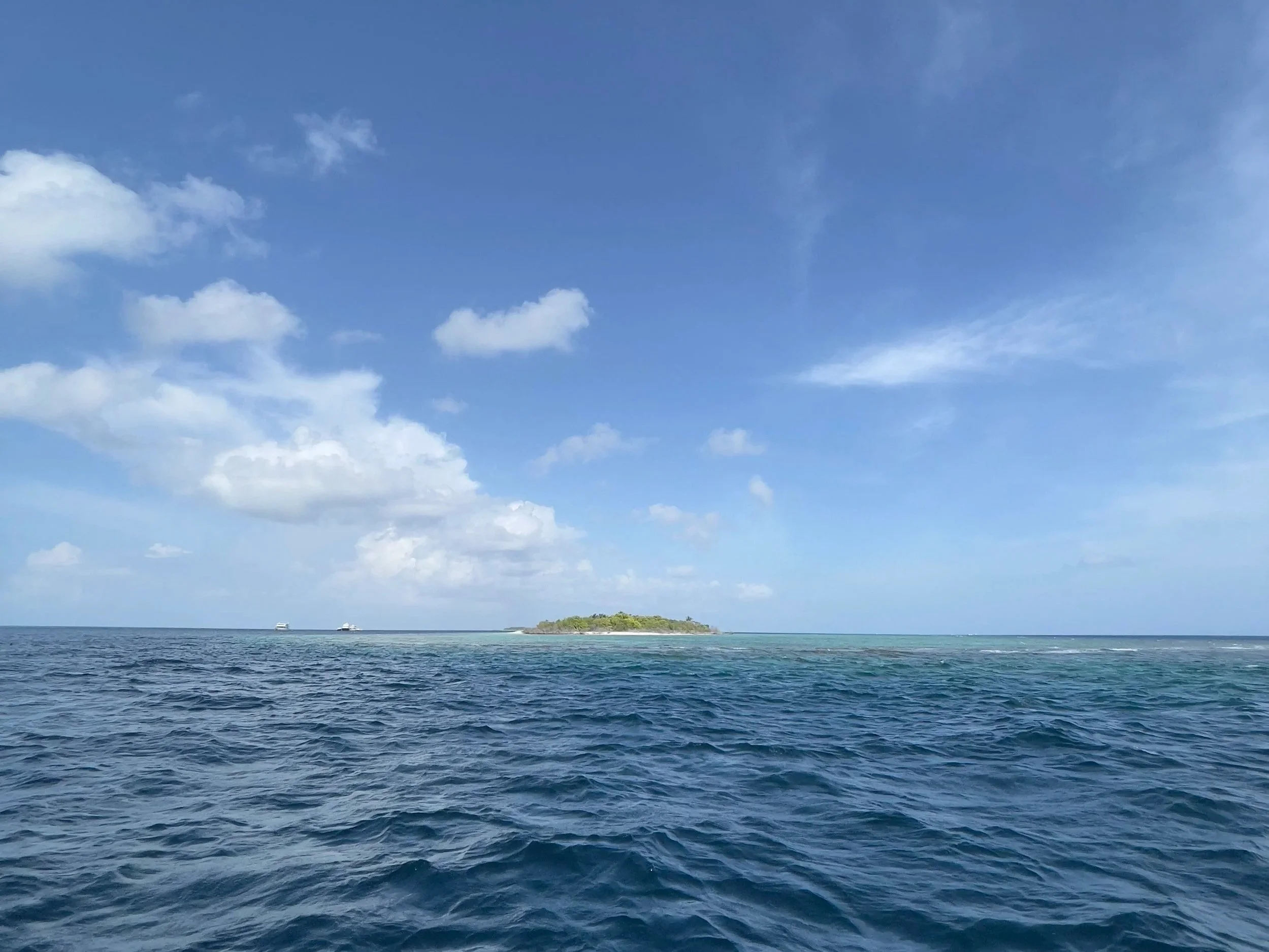
After passing my three-month probation at The Ritz-Carlton Maldives, I took my first trip in the country to Baa Atoll and visited Hanifaru Bay, one of the Maldives’ most famous sites. This UNESCO World Heritage site is known for hosting the world’s largest gathering of manta rays.
October 6th
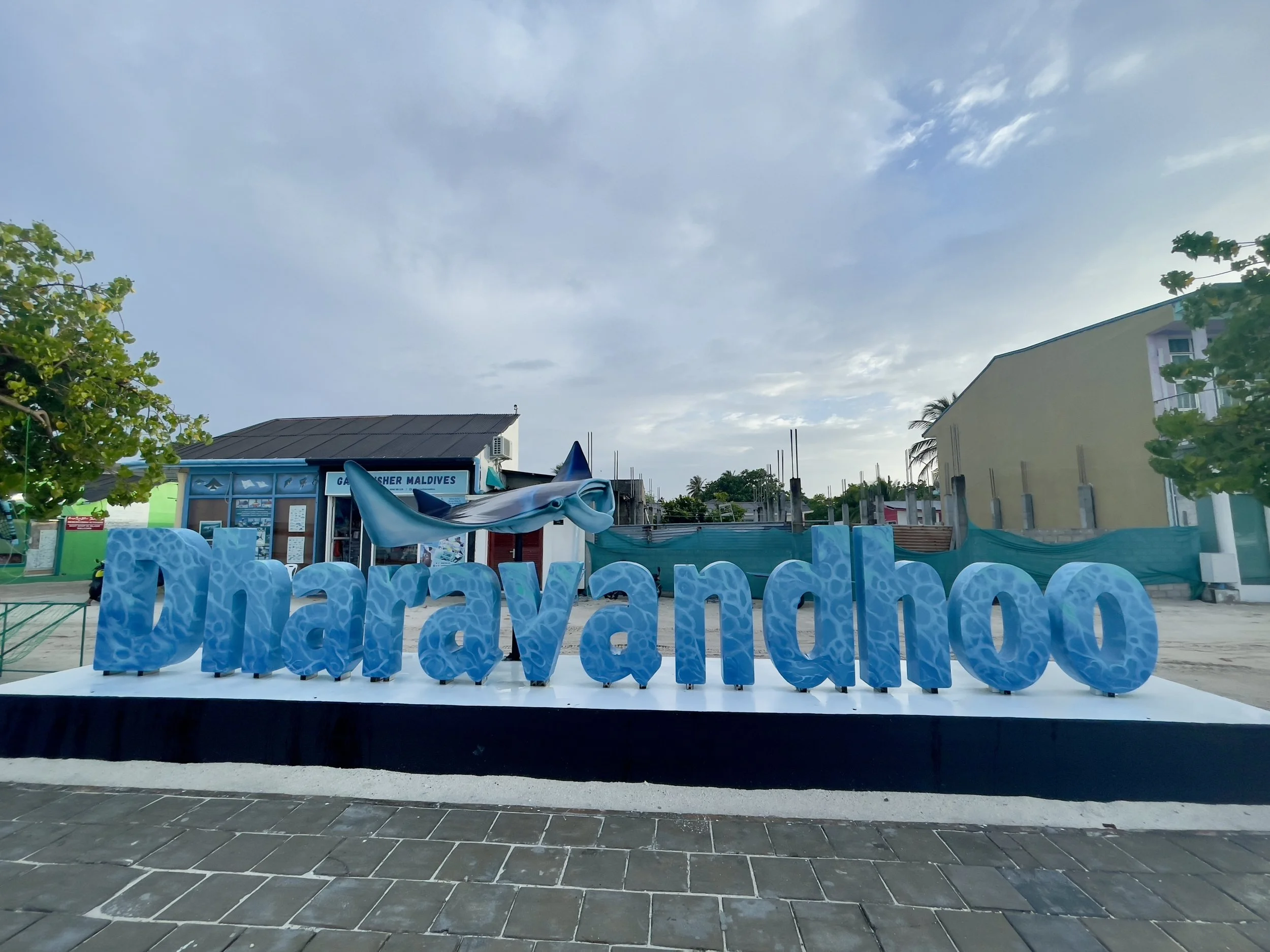
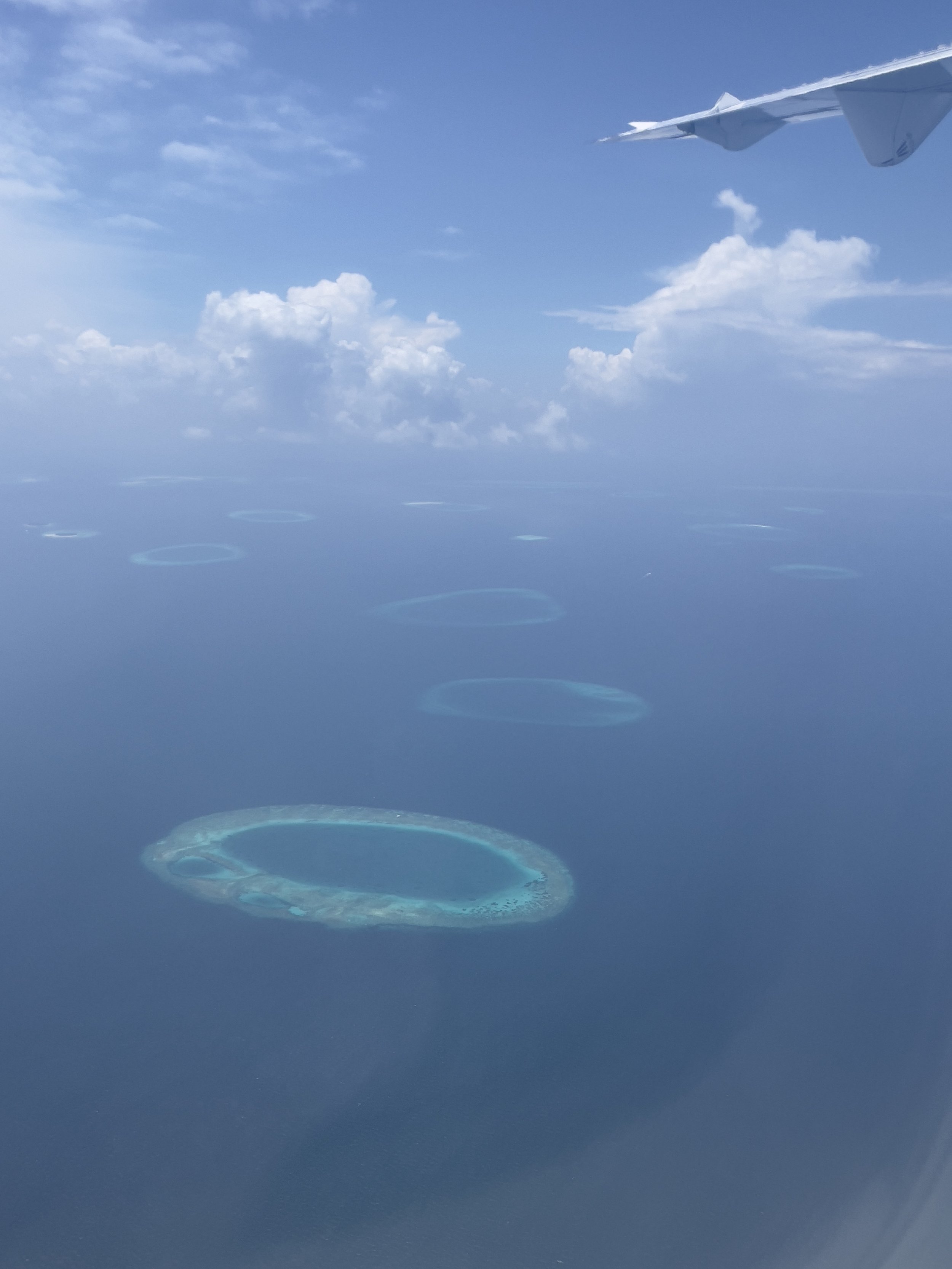
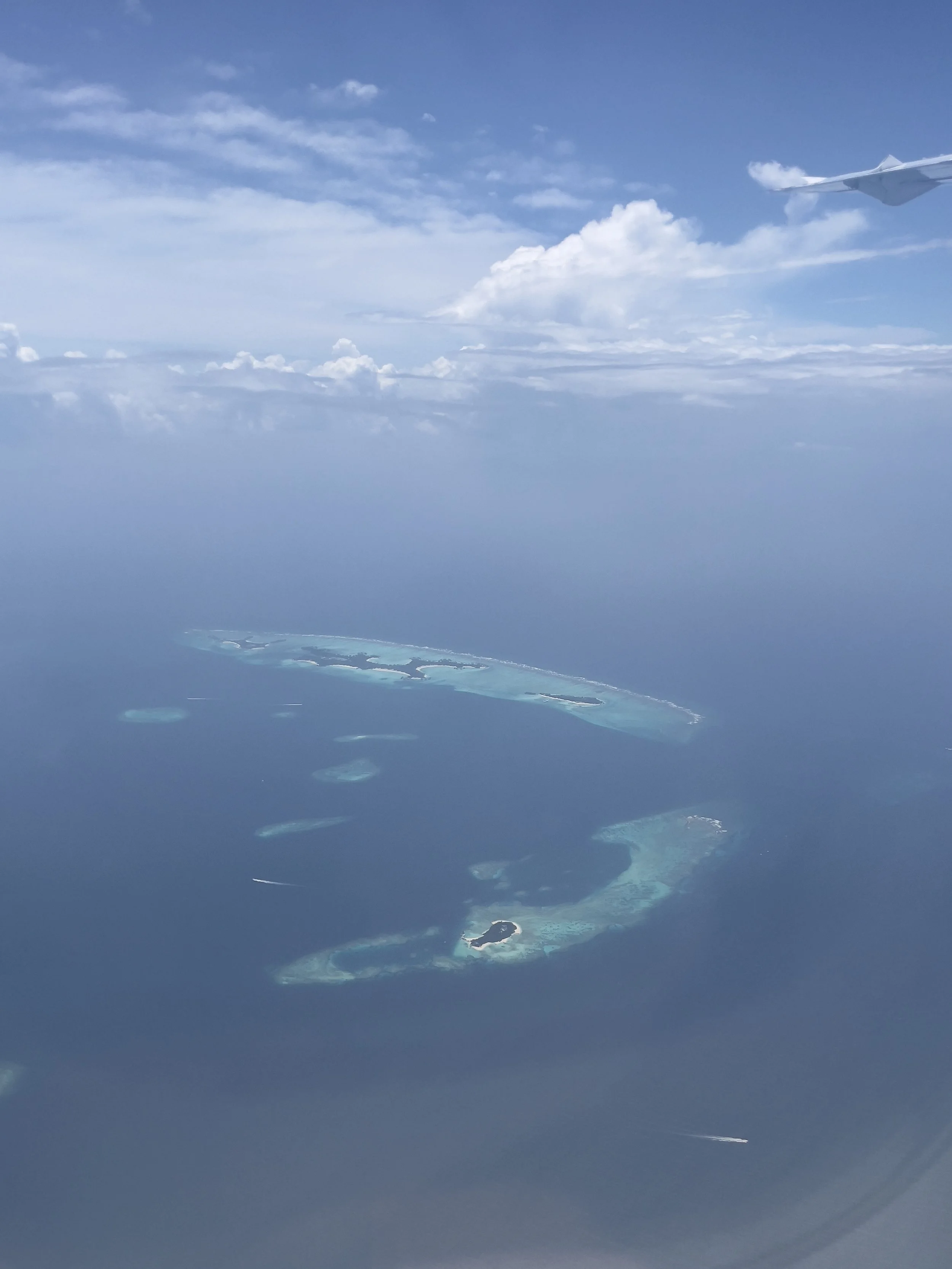
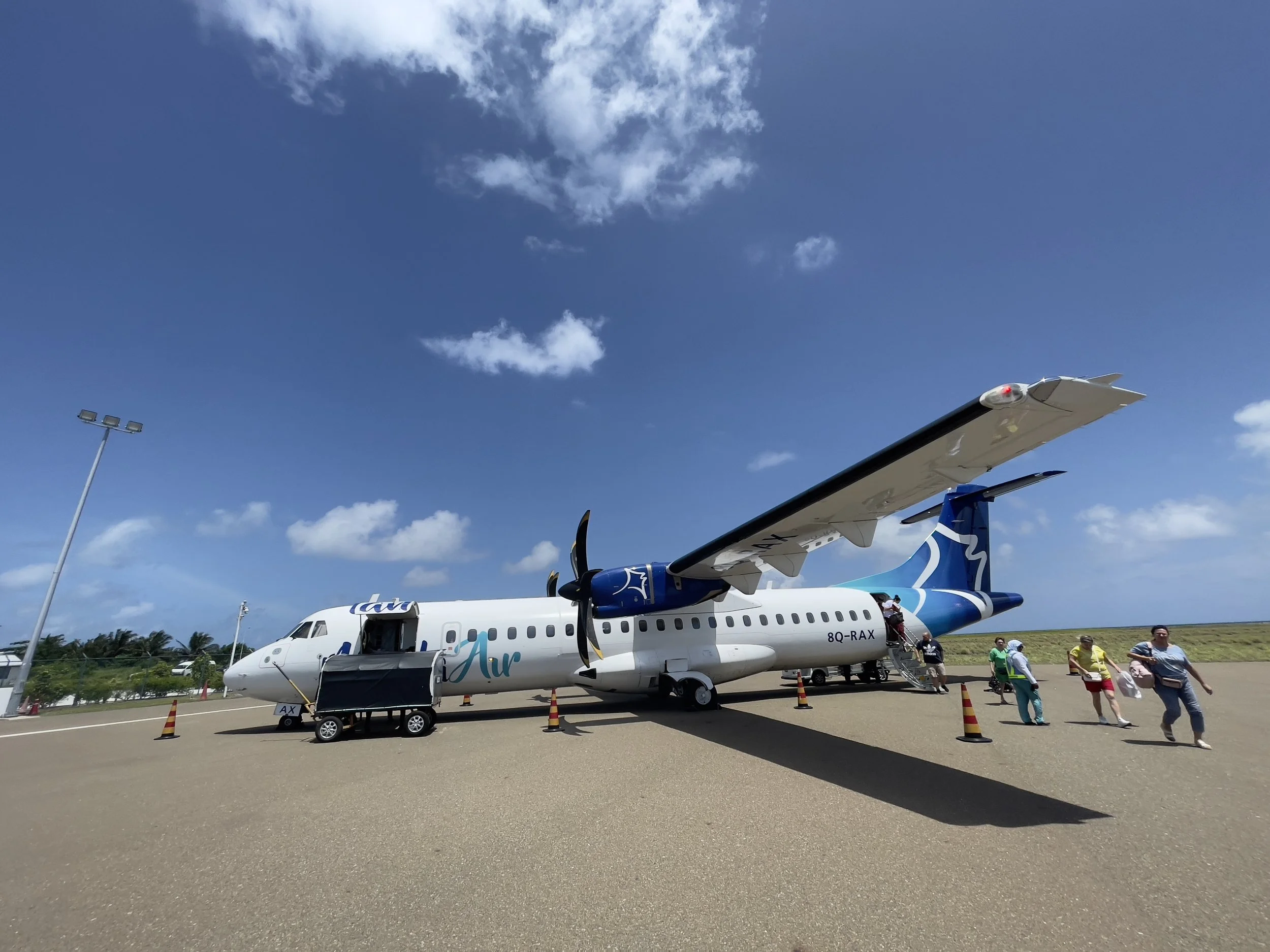
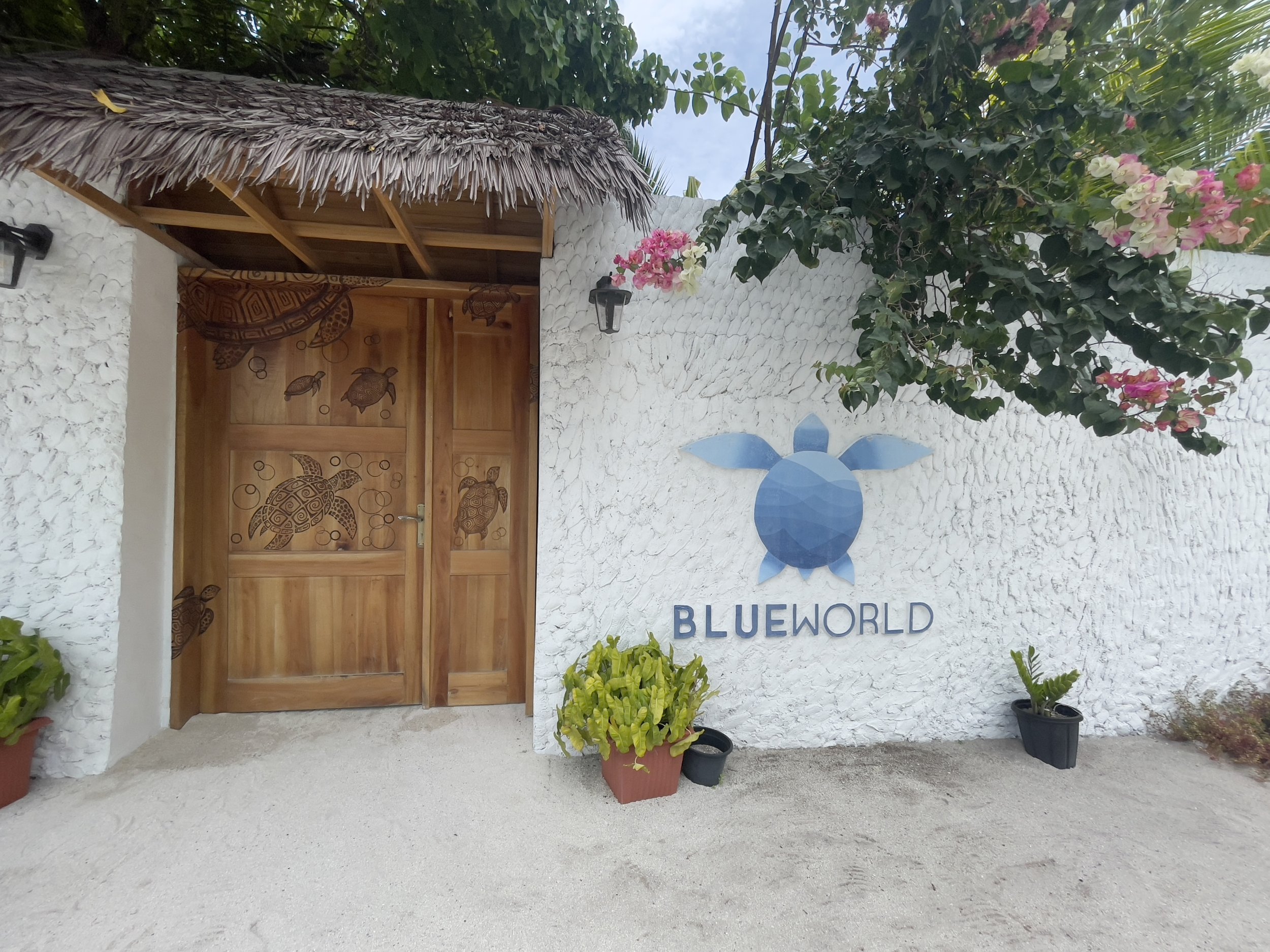
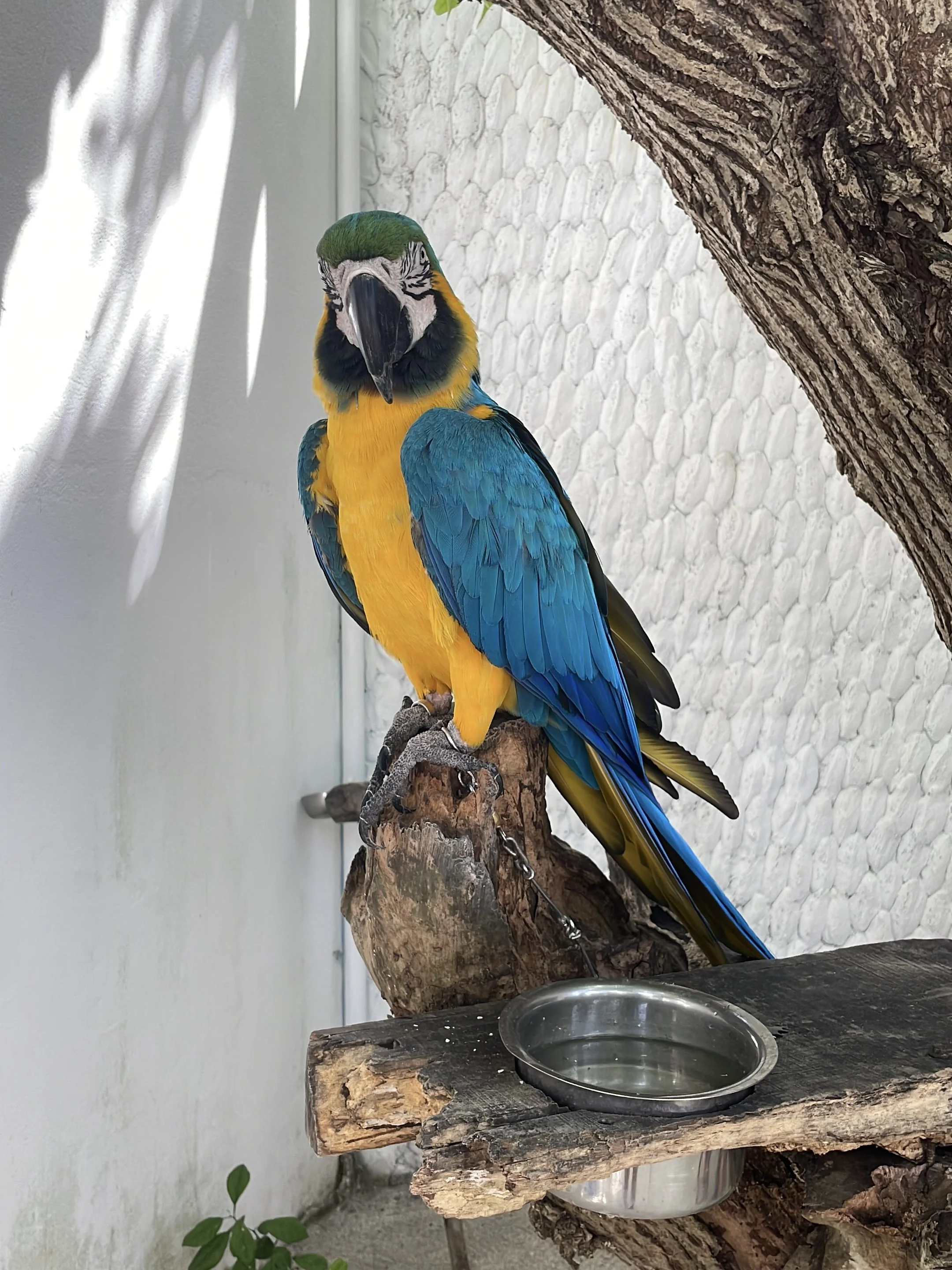
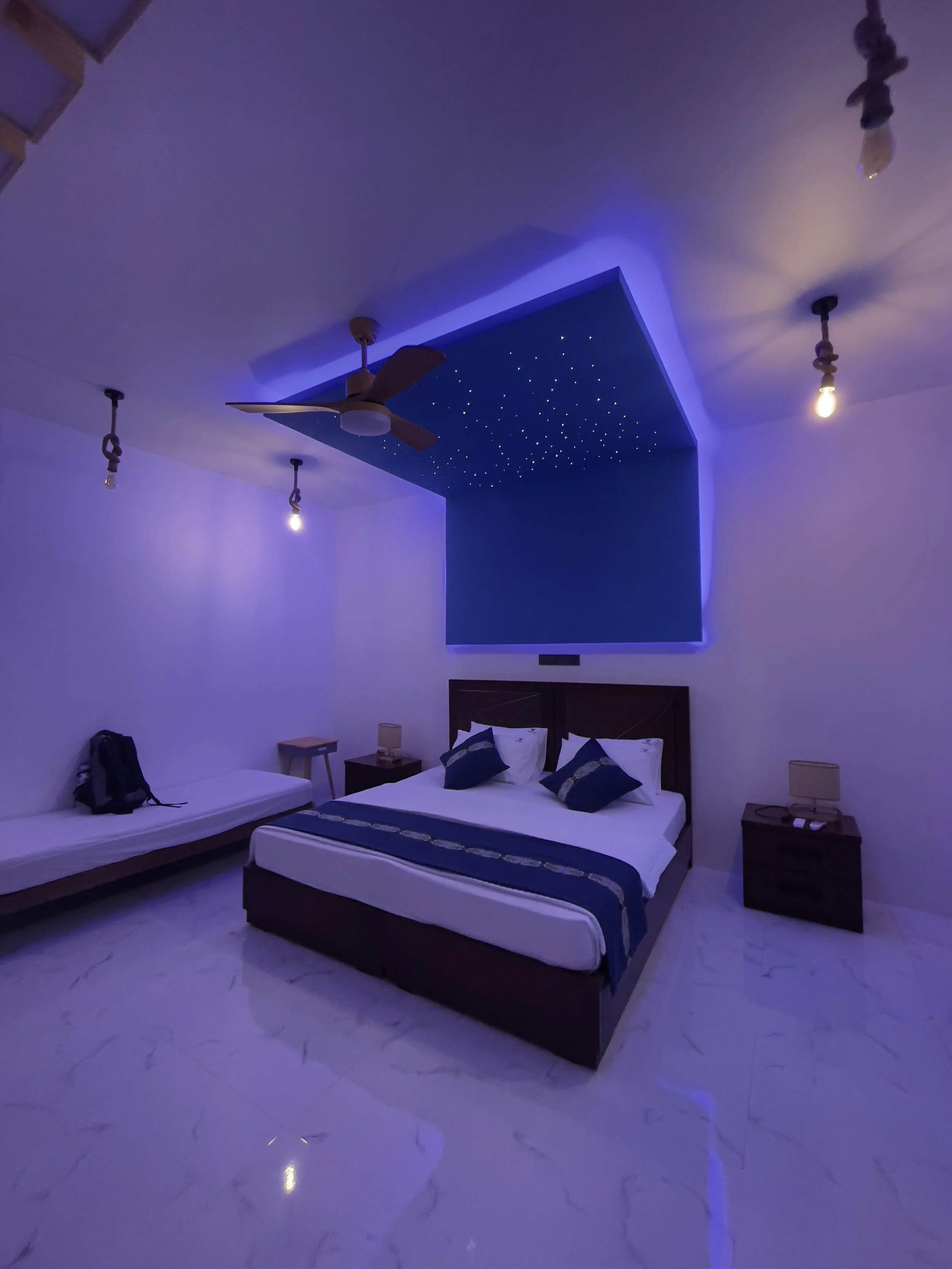
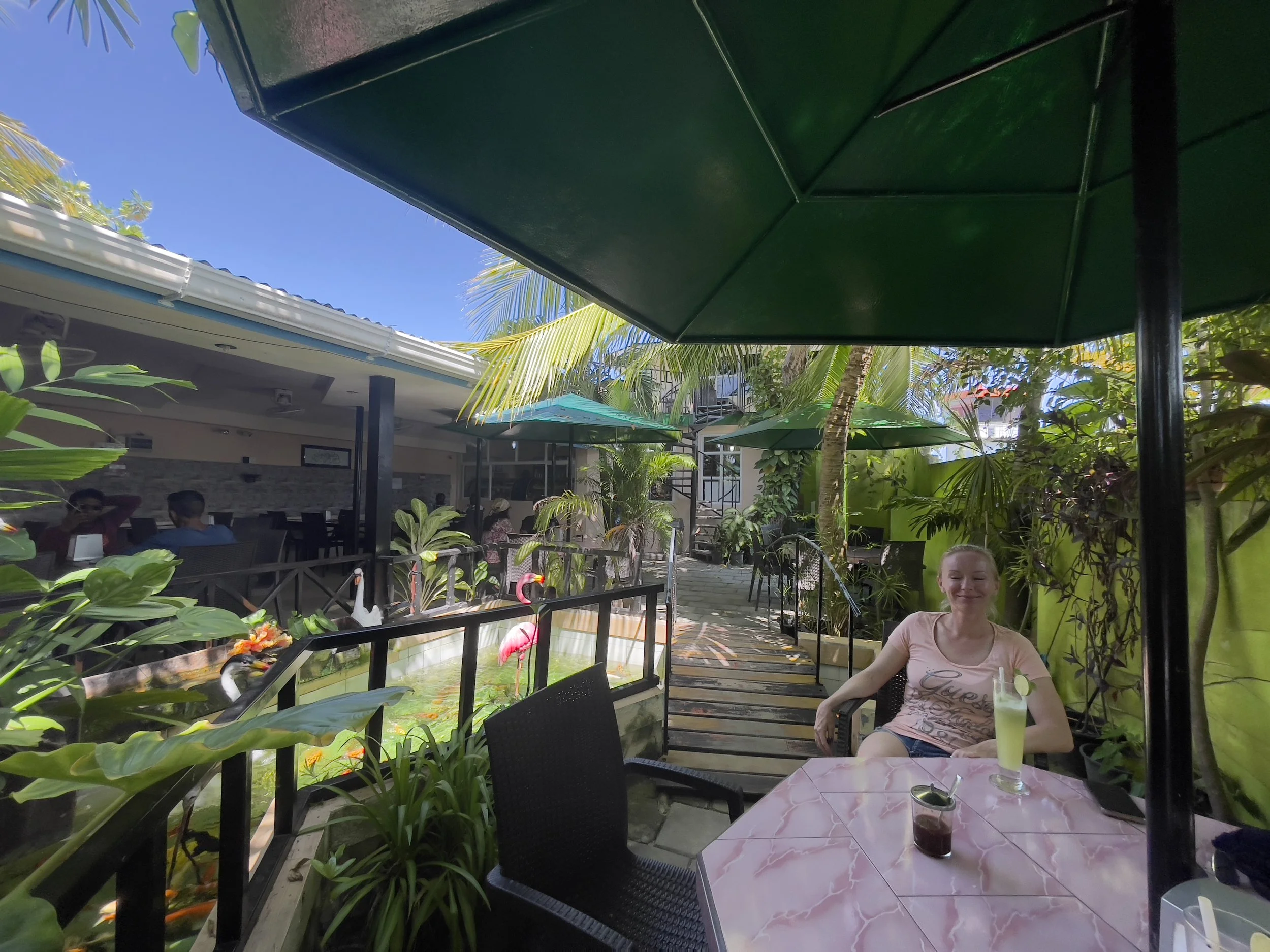
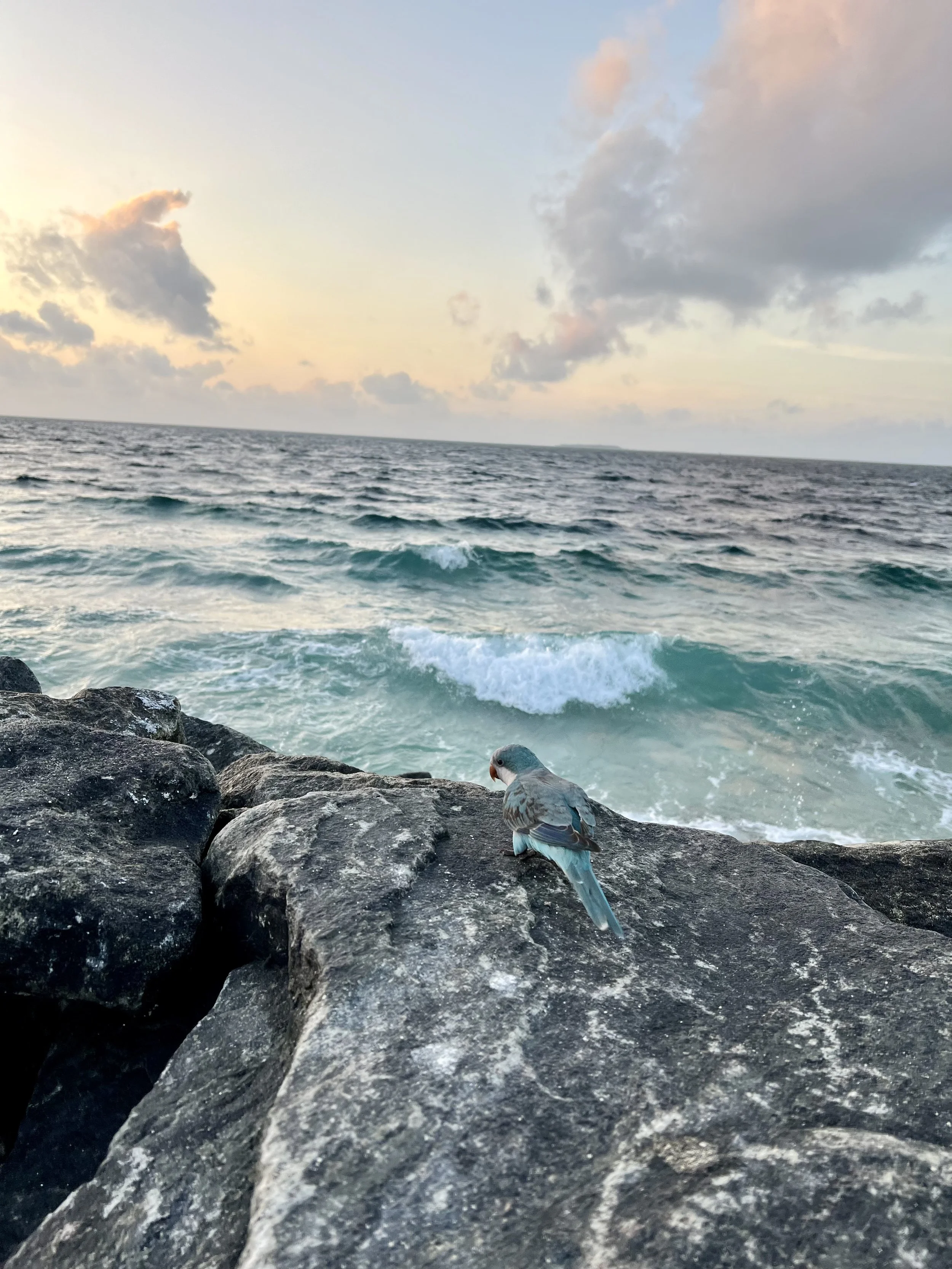
What is nice about working in North Male Atoll is that there are regularly scheduled boats to the capital, making it easy for the staff at the Ritz-Carlton to reach Male and the international airport. My role at the Ritz-Carlton was as a naturalist, and my travel companion, Maria, was a dive instructor with Dive Butler International, also working at the Ritz-Carlton Maldives. We hopped onto the morning boat to Hulumale and caught a morning flight to Baa Atoll. Because I had arrived in Male in the wee hours when I first landed in the Maldives, I never had the chance to see an aerial view of the country. As we climbed higher in the airplane, you could see the expanse of the Indian Ocean and the Maldivian atolls and reef pinnacles scattered all over the place. It was stunning. The island we were heading to was Dharavandhoo, the main island in Baa Atoll. It is the closest one to Hanifaru Bay. We landed around midday and were greeted by the staff of Blue World Hotel, where we were staying for the rest of the trip. The hotel was highly recommended because the owner, Faisal, is an avid diver who loves the ocean. It always surprises me not to see the random dog hanging out where I am traveling, because the Maldives does not allow dogs. It is haram to touch wet dogs, so the country tends to have many pet parrots. At check-in, I met Tito, their beautiful male blue-and-gold macaw.
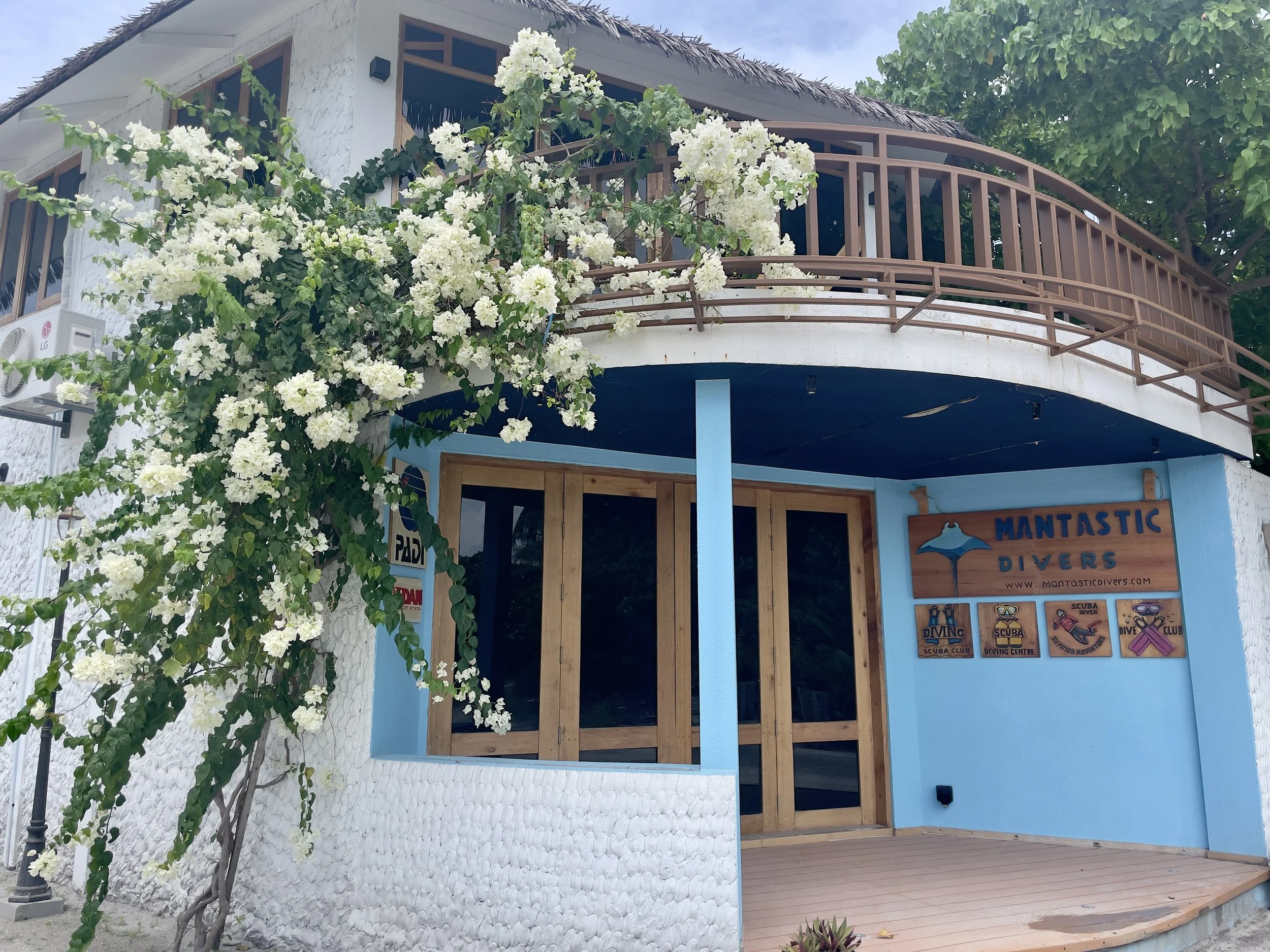
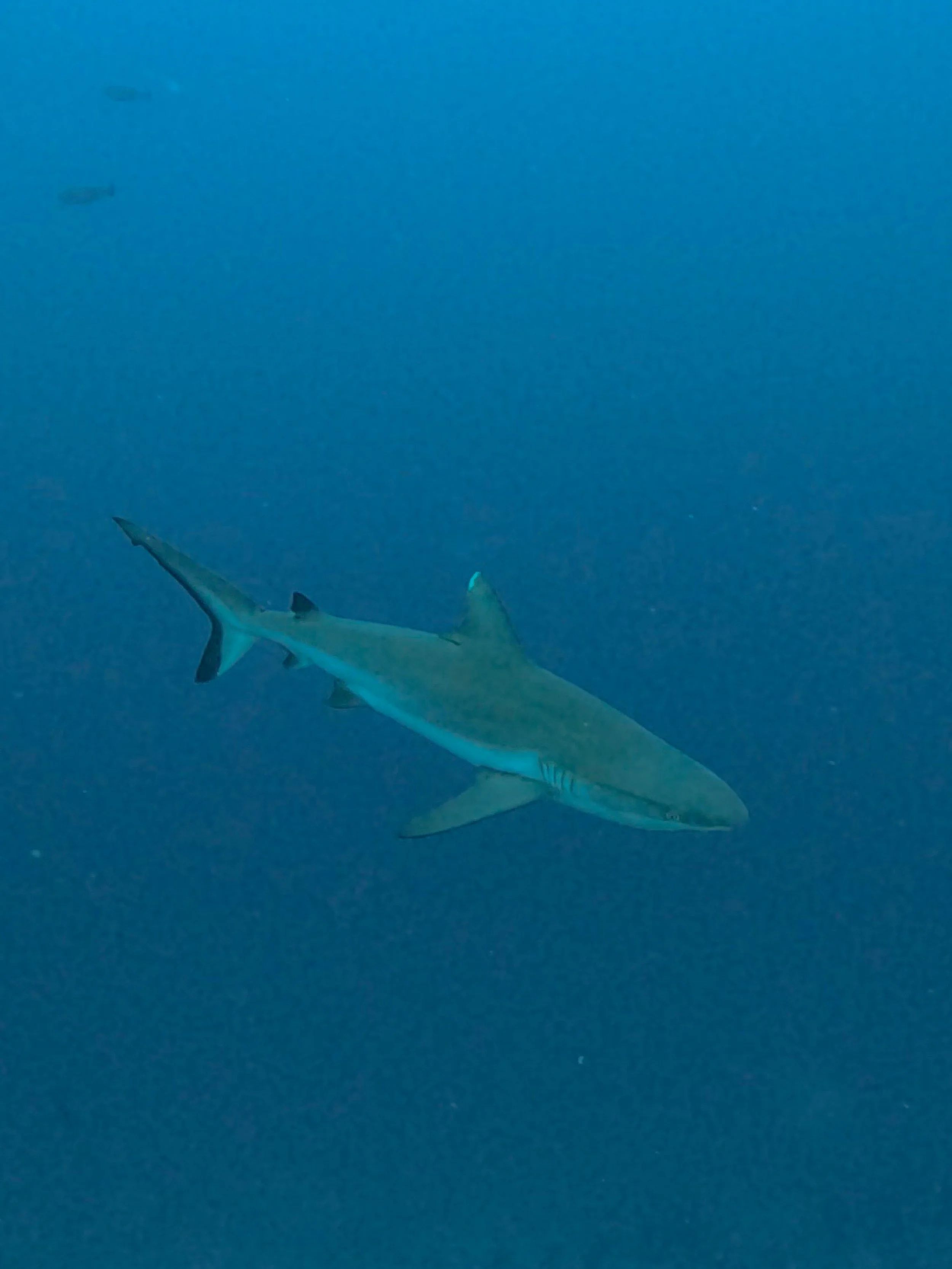
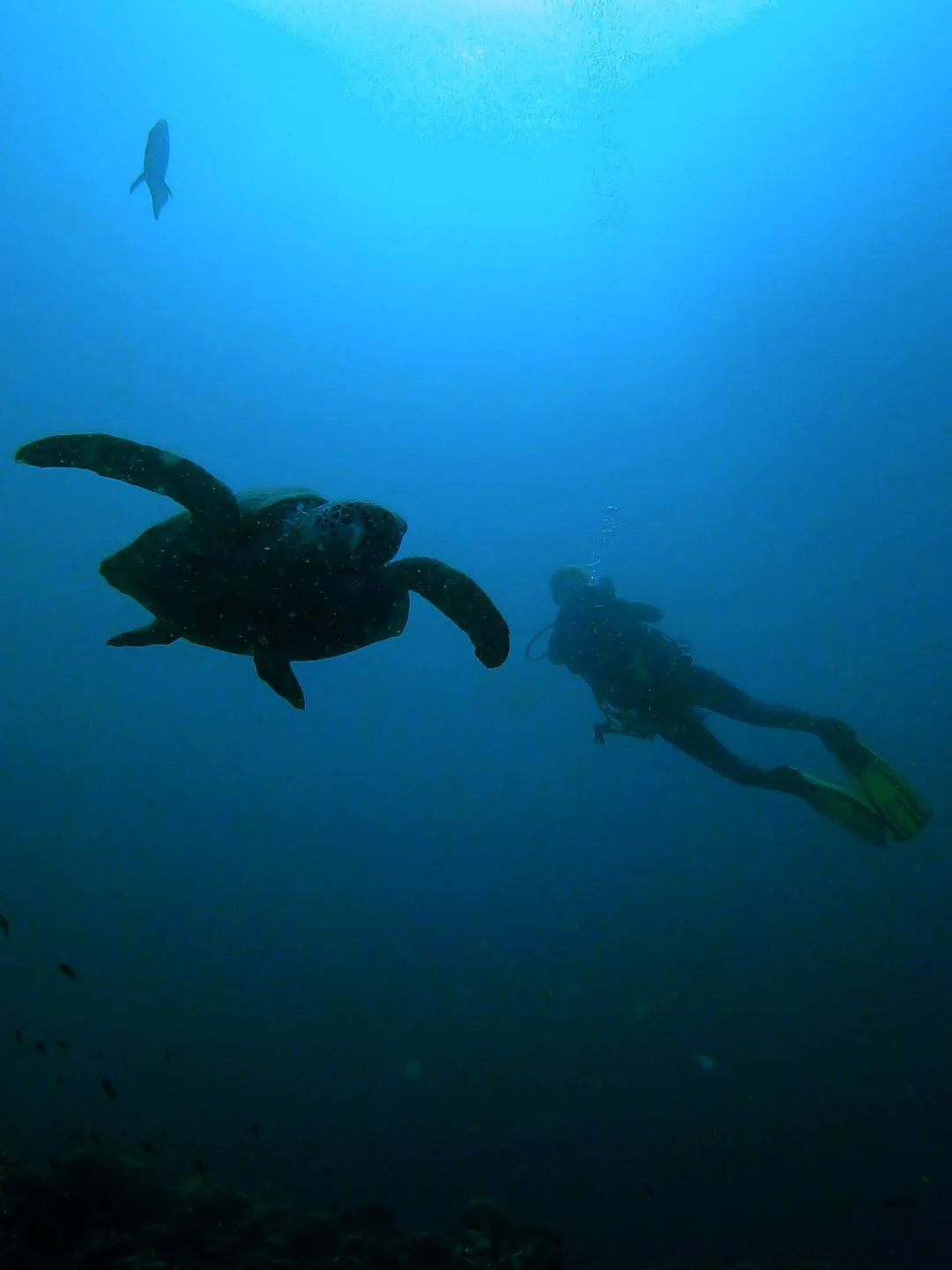
After lunch, we headed out on the boat with Faisal to a thila. Thila is the name used in the Maldives for a submerged coral reef or an underwater island. Diving on the thila, we did not see a Manta but had a nice encounter with a Hawksbill sea turtle and saw some reef sharks in the distance. The visibility was rather poor due to increased plankton and other biomaterials in the water, which is the reason the mantas come to feed here.
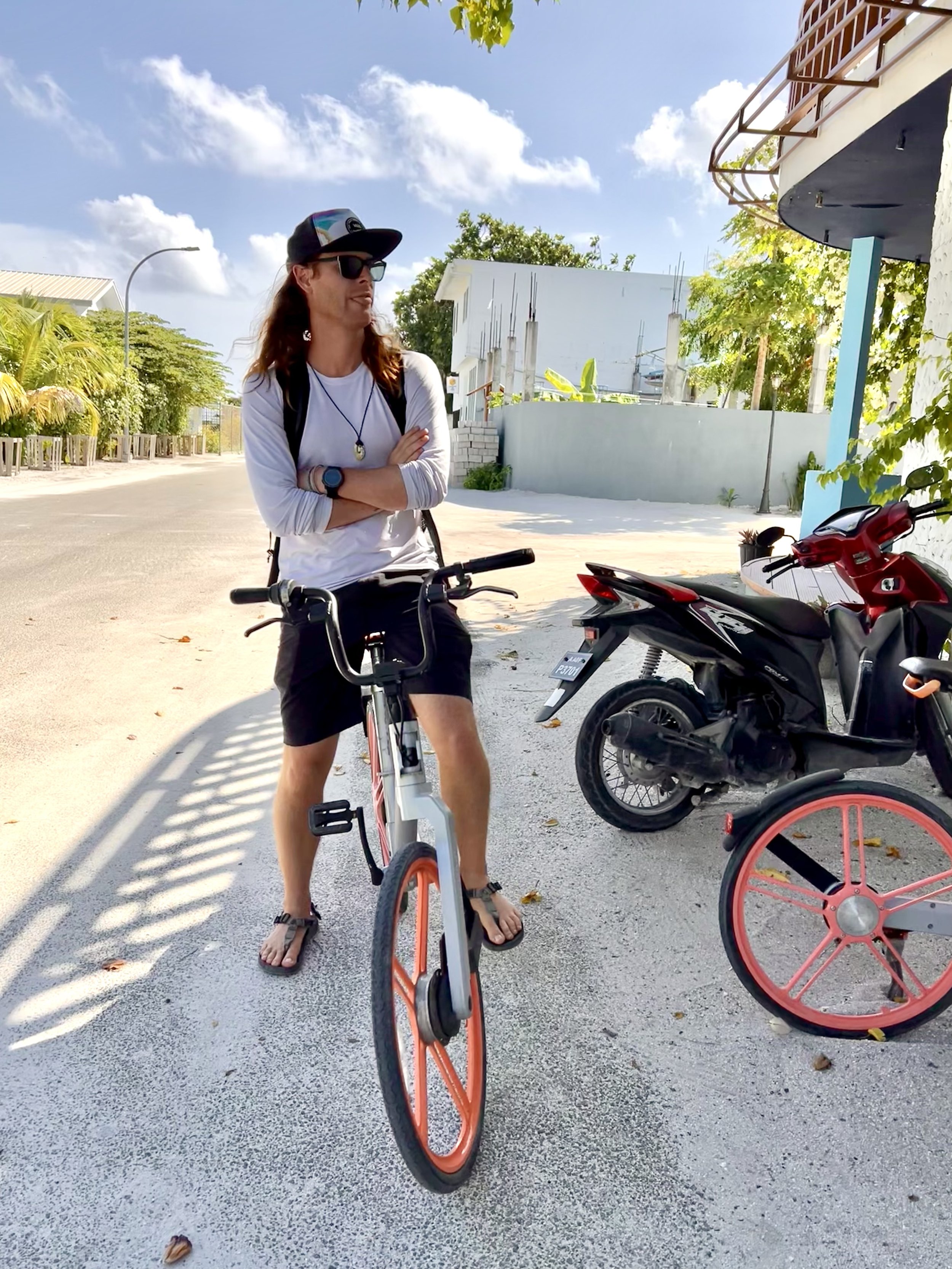
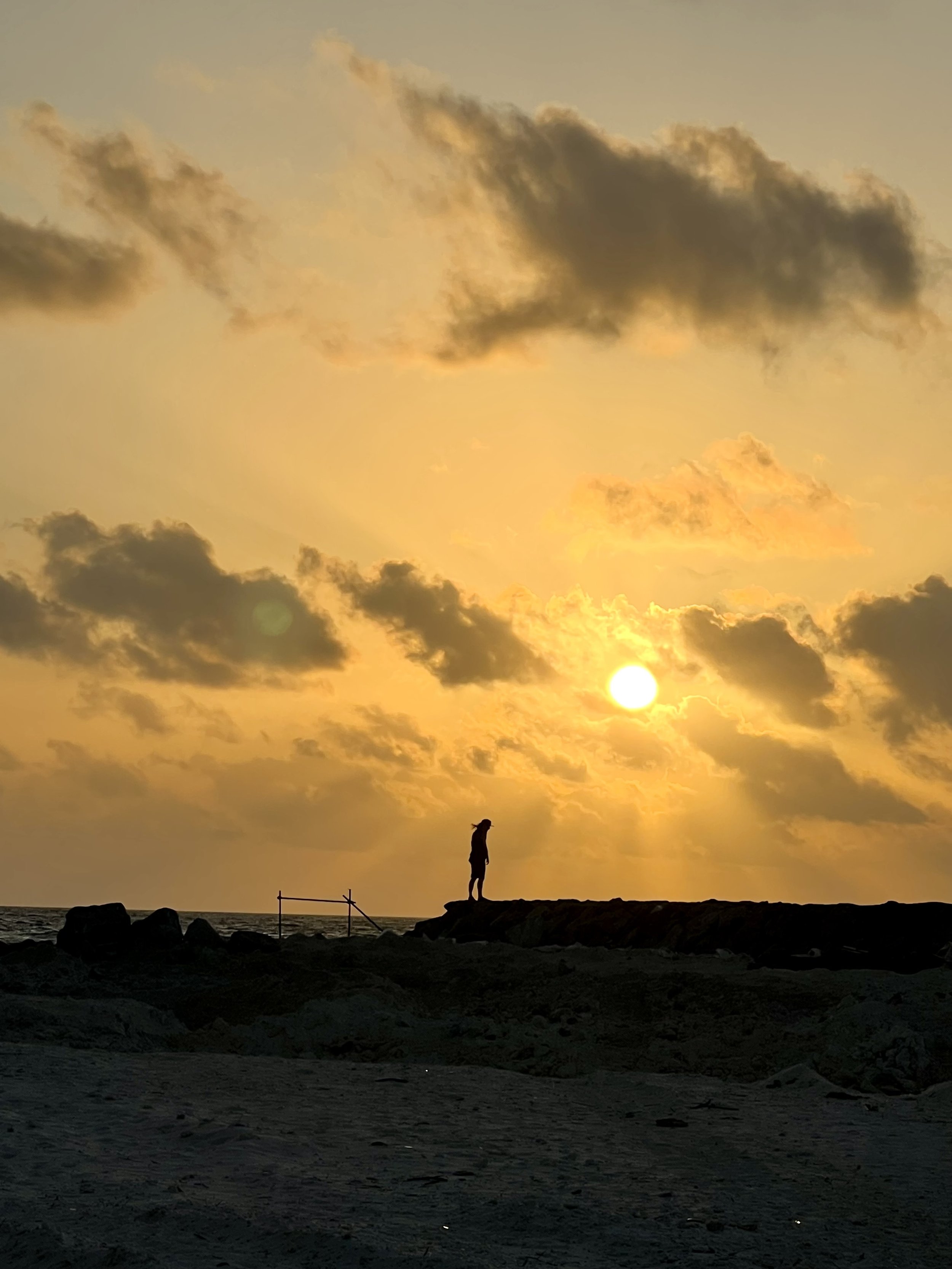
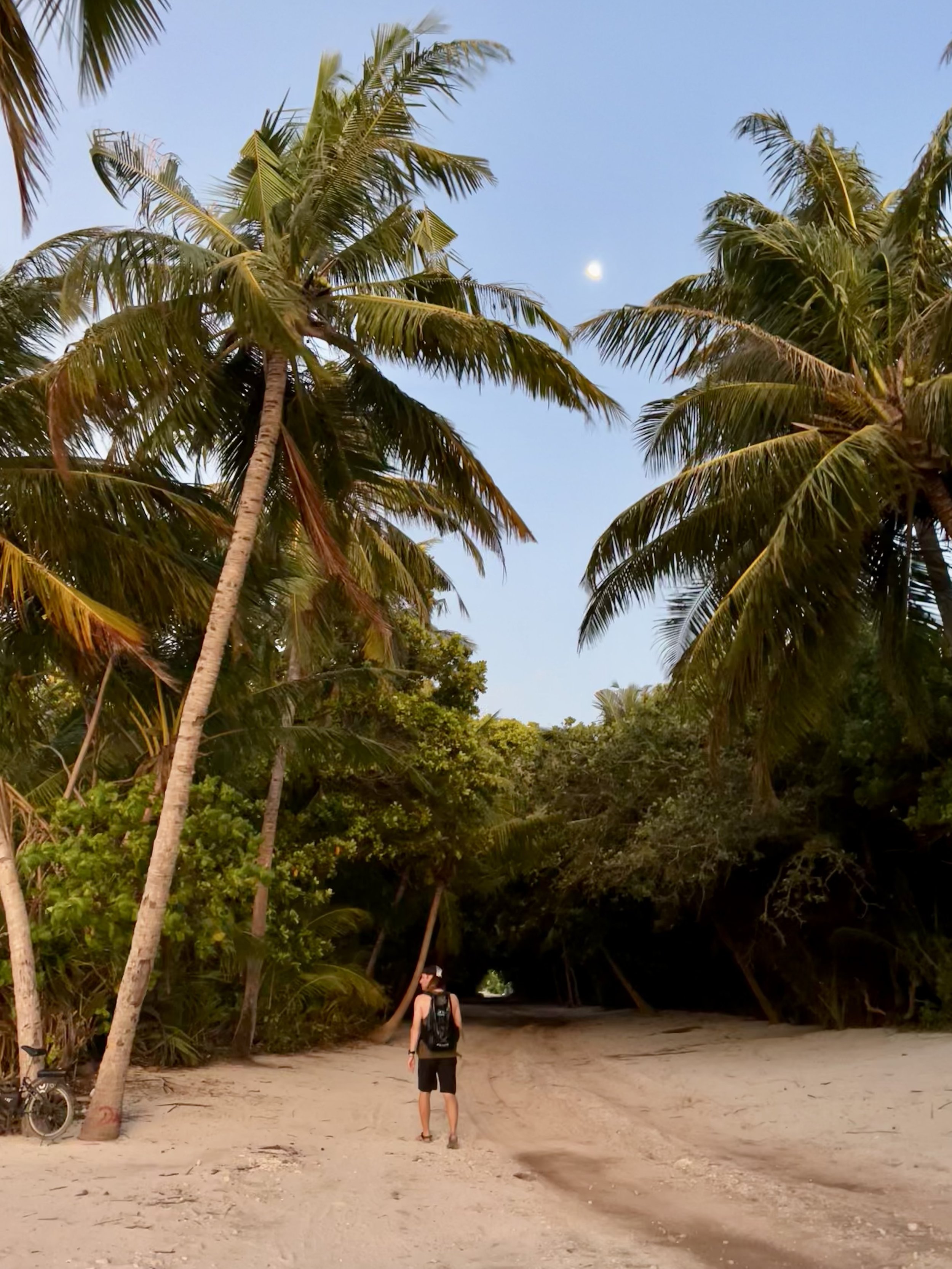
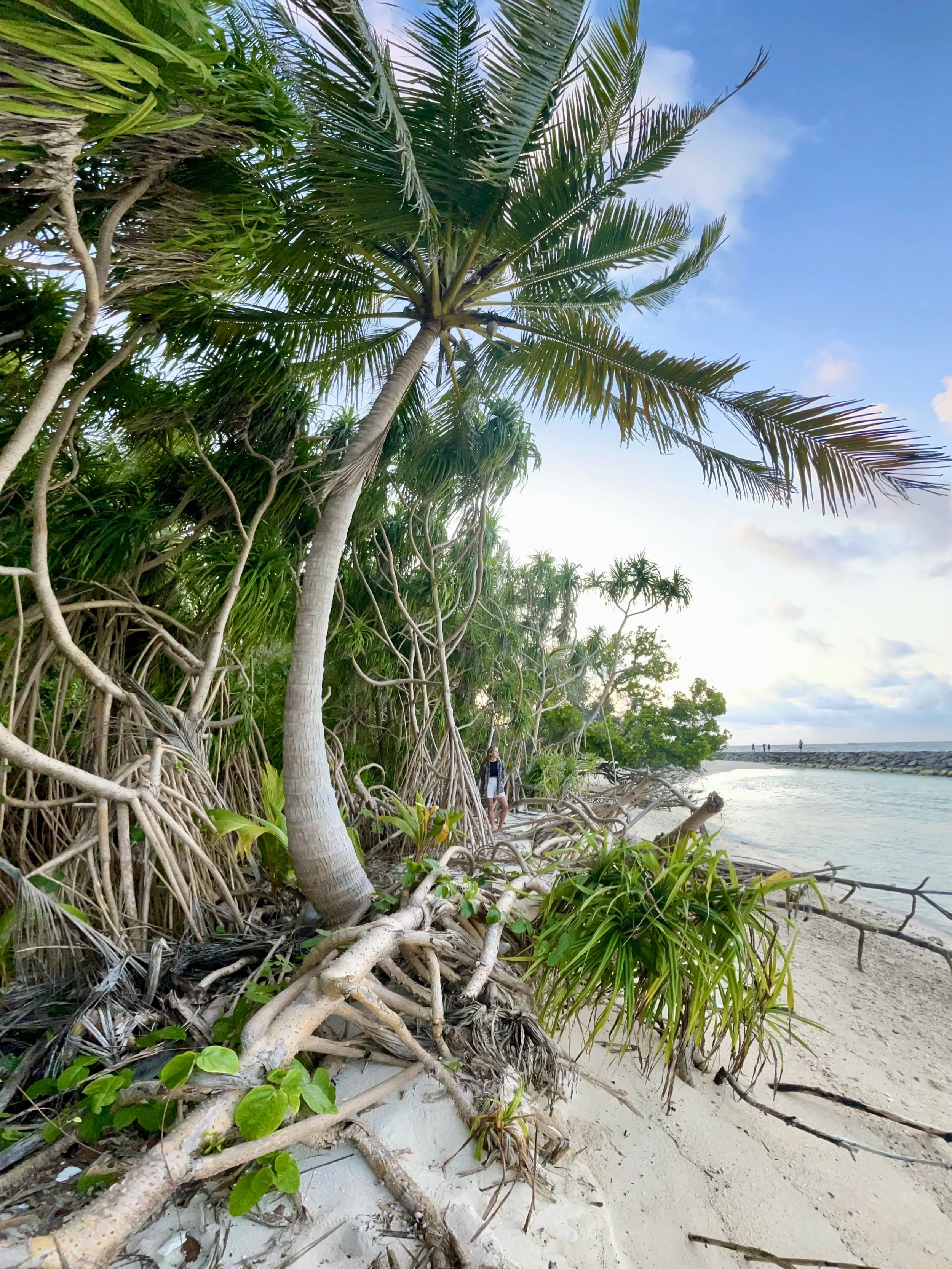
That evening, I wanted to see the sunset, so Maria and I rode bikes the hotel provided to an area south of town, then walked along the beach to the west side of the island to watch it.
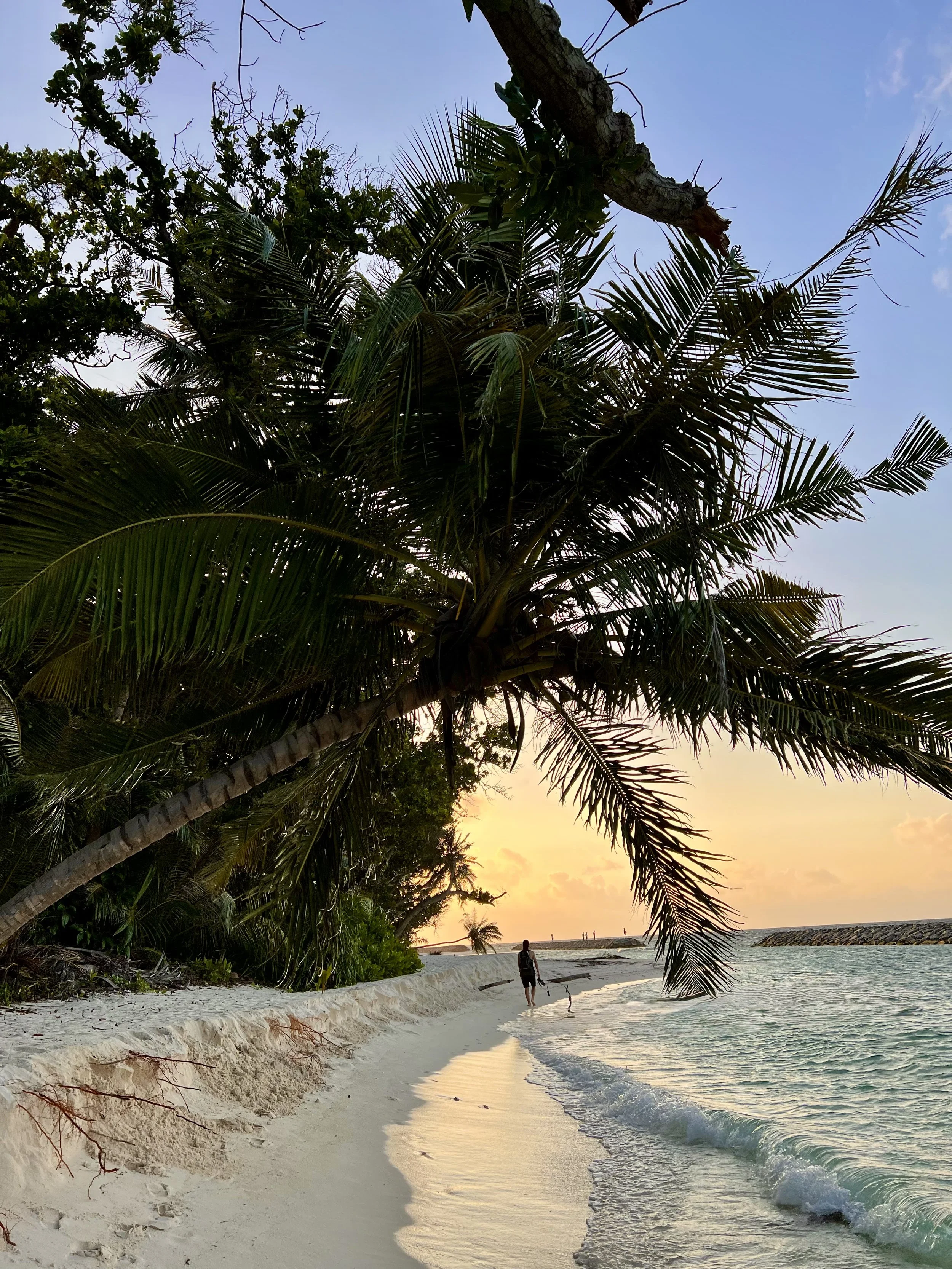
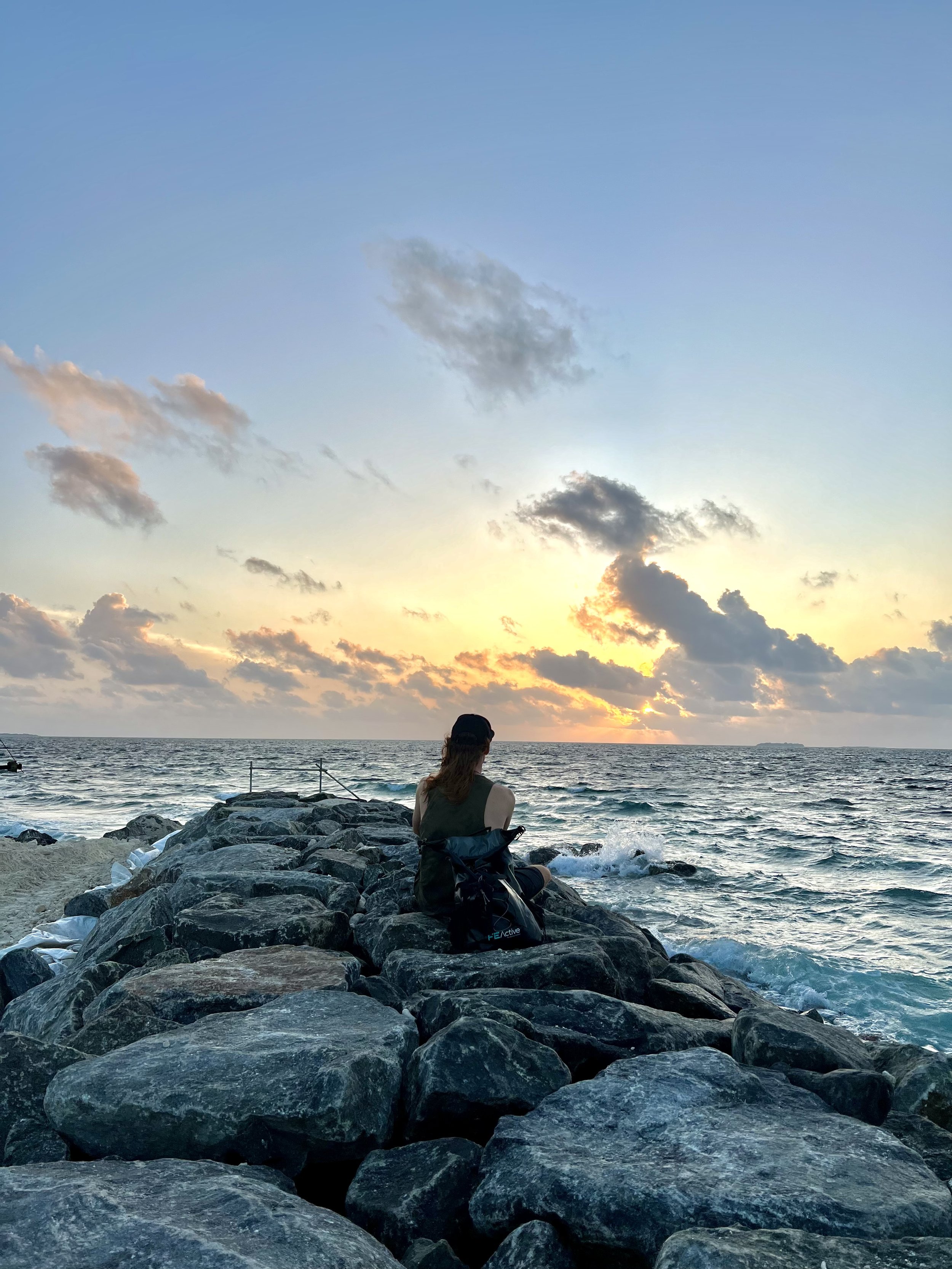
Faisal pointed us to a local spot for dinner. We had rice, dahl, veggie curry, and a piece of wahoo fish for dinner. Maldivian food is simple and draws on influences from Sri Lanka and India.
October 7th
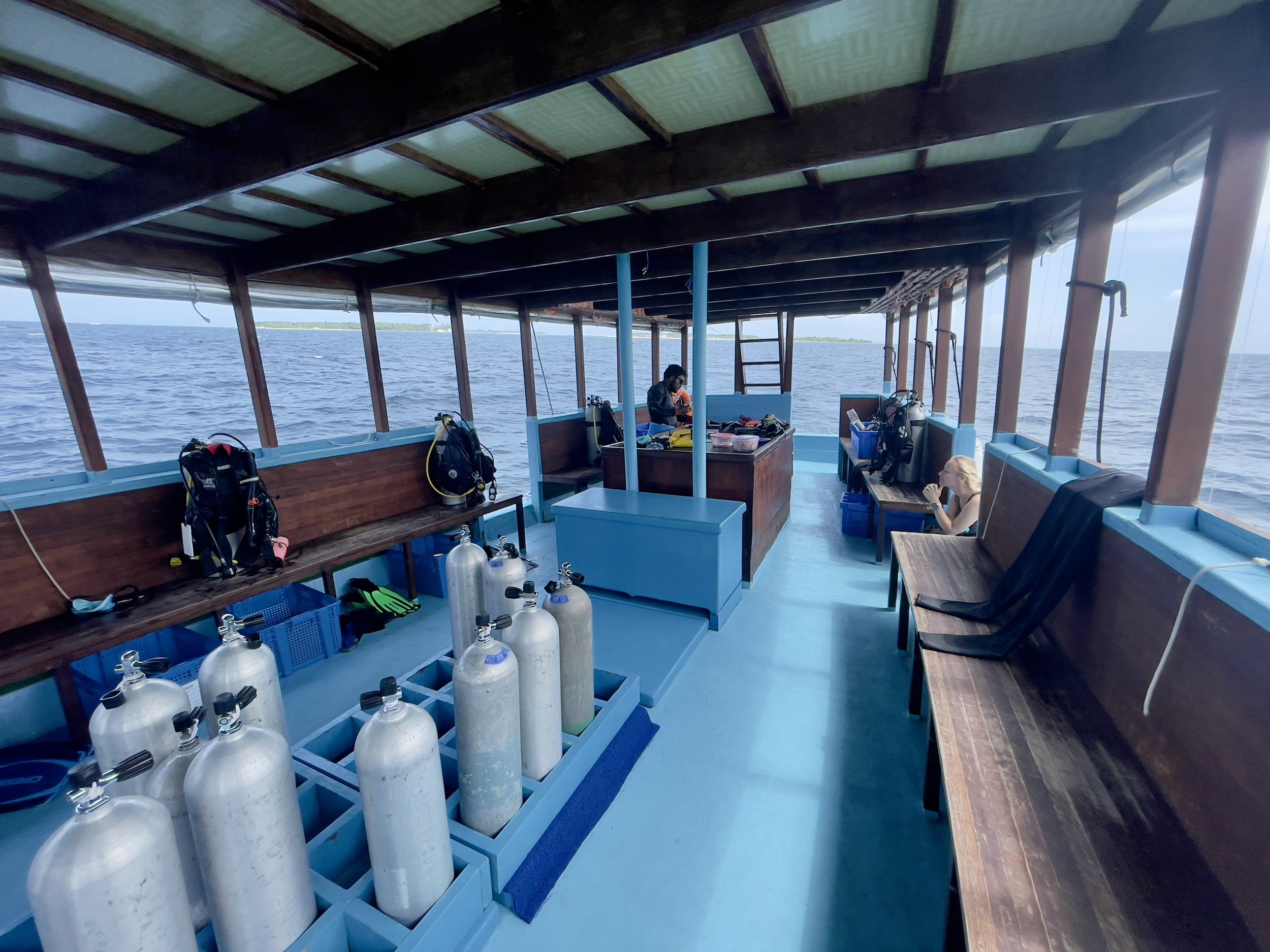
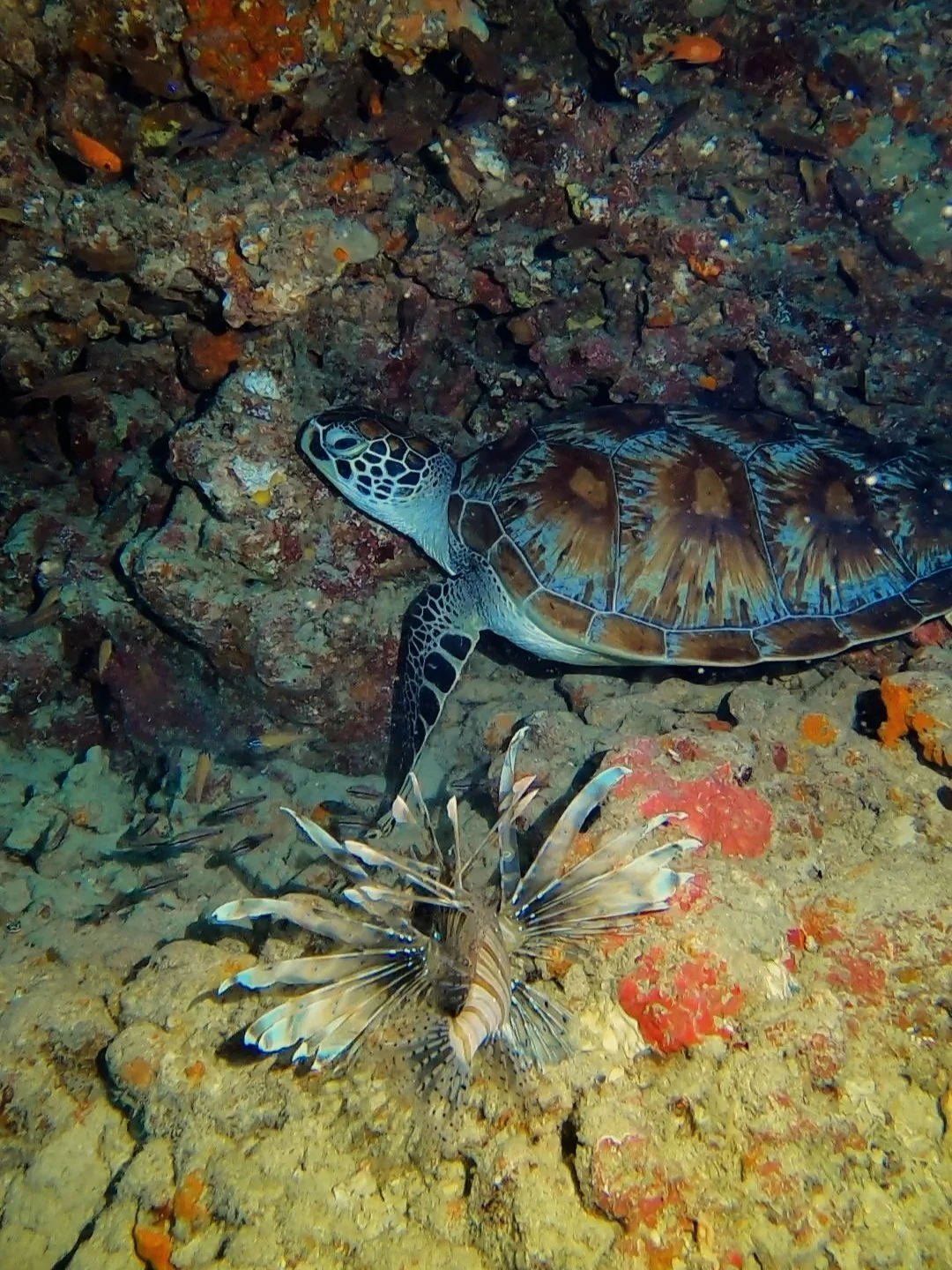
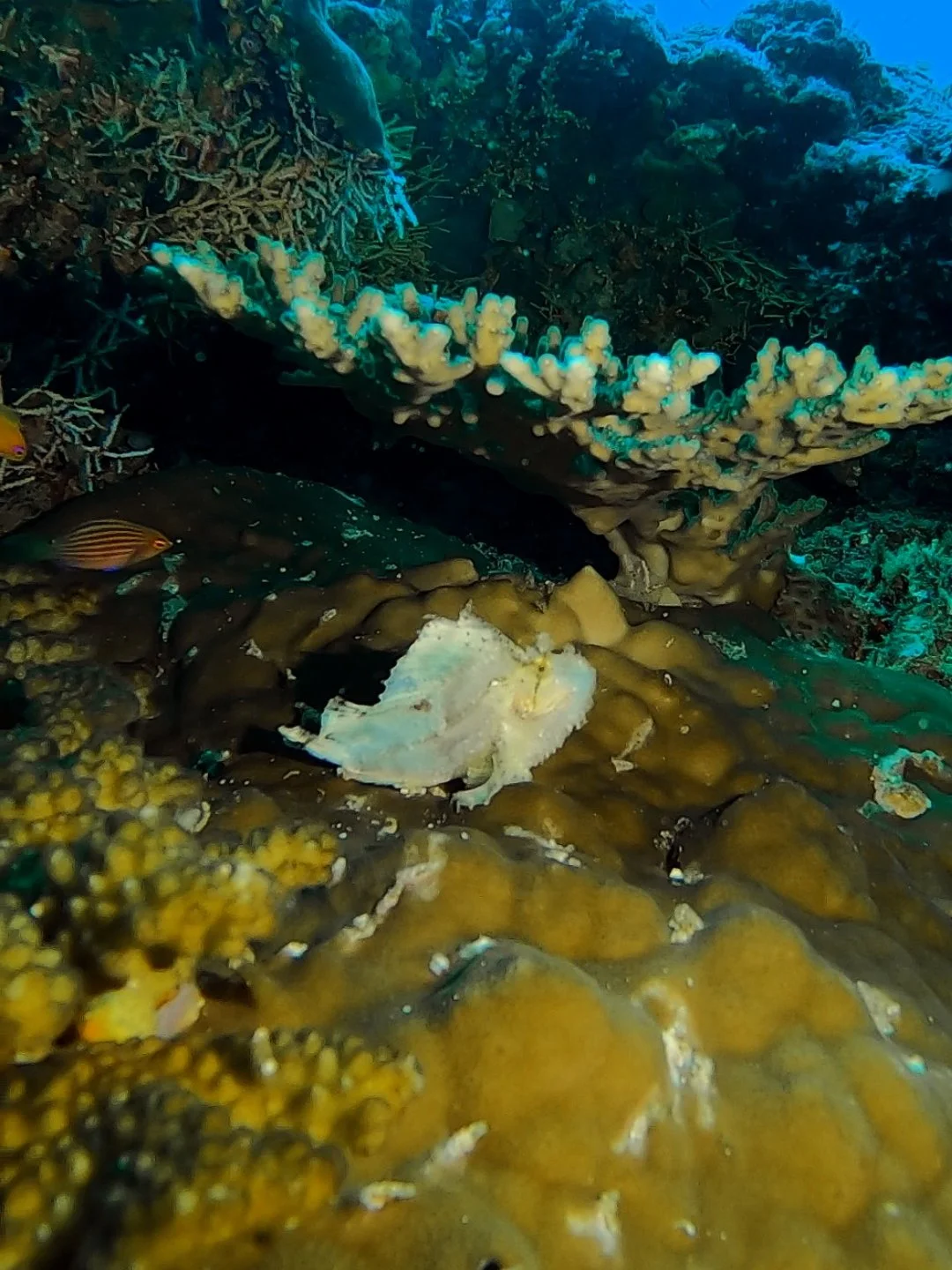
I woke up at sunrise and headed to breakfast. Even though I had spent the last three months in the Maldives, I had not tried the local breakfast dish Mas Huni yet. Mas Huni consists of canned tuna, coconut shavings, red onion, chili, and lime. I have never liked stinky fish, which I associate with canned tuna. I used the unleavened roshi bread to scoop it up and was totally surprised by myself. It was delicious! I could not get enough of it for the rest of my time in the country. After breakfast, we headed for the dive boat. The way it works here is that everyone is on standby for the mantas to enter the bay, which can happen at any time during the day. You just hope it is not when you are underwater on a dive. Lately, they had been coming in the afternoon, so we went ahead with our first dive at a spot called Bodugaa Thila. I told our guide that I wanted to find macro, so we went down to a spot where he knew a cool macro creature hung out. He pointed at a white leaf on a coral patch, and it took me a minute, but then I saw the eyes and mouth and knew this was a leaf scorpionfish. I had never seen this color variation before. The ones we saw were black and yellow. There was a pair hanging out together. I dropped to the bottom of the thila and spotted a large female green sea turtle resting under a ledge at around 28 meters. I noticed a lionfish beside her, which made for a cool multispecies photo. The thila was small enough that we could dive from the bottom and circle to the top, which sat around 12 meters deep.
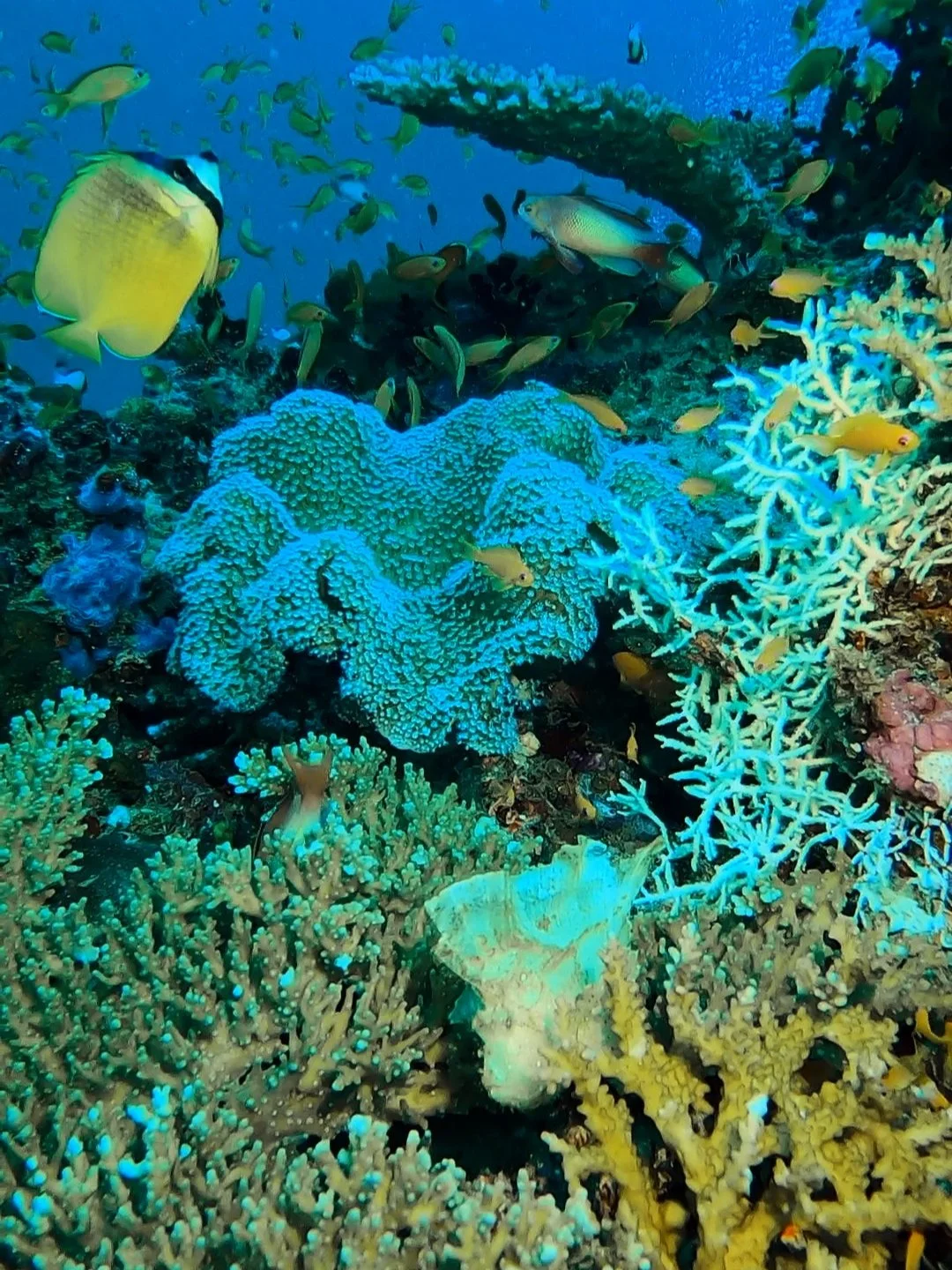
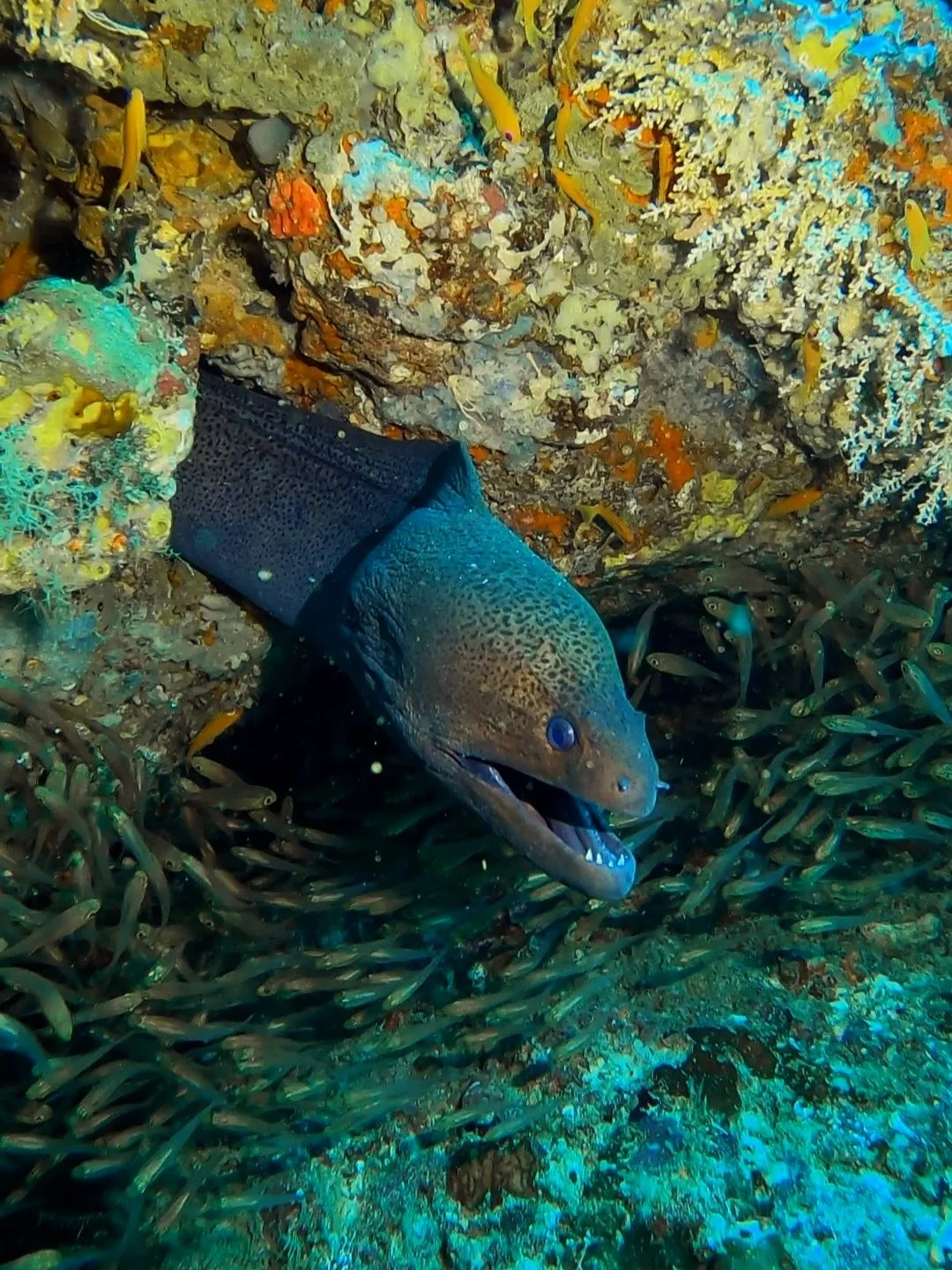
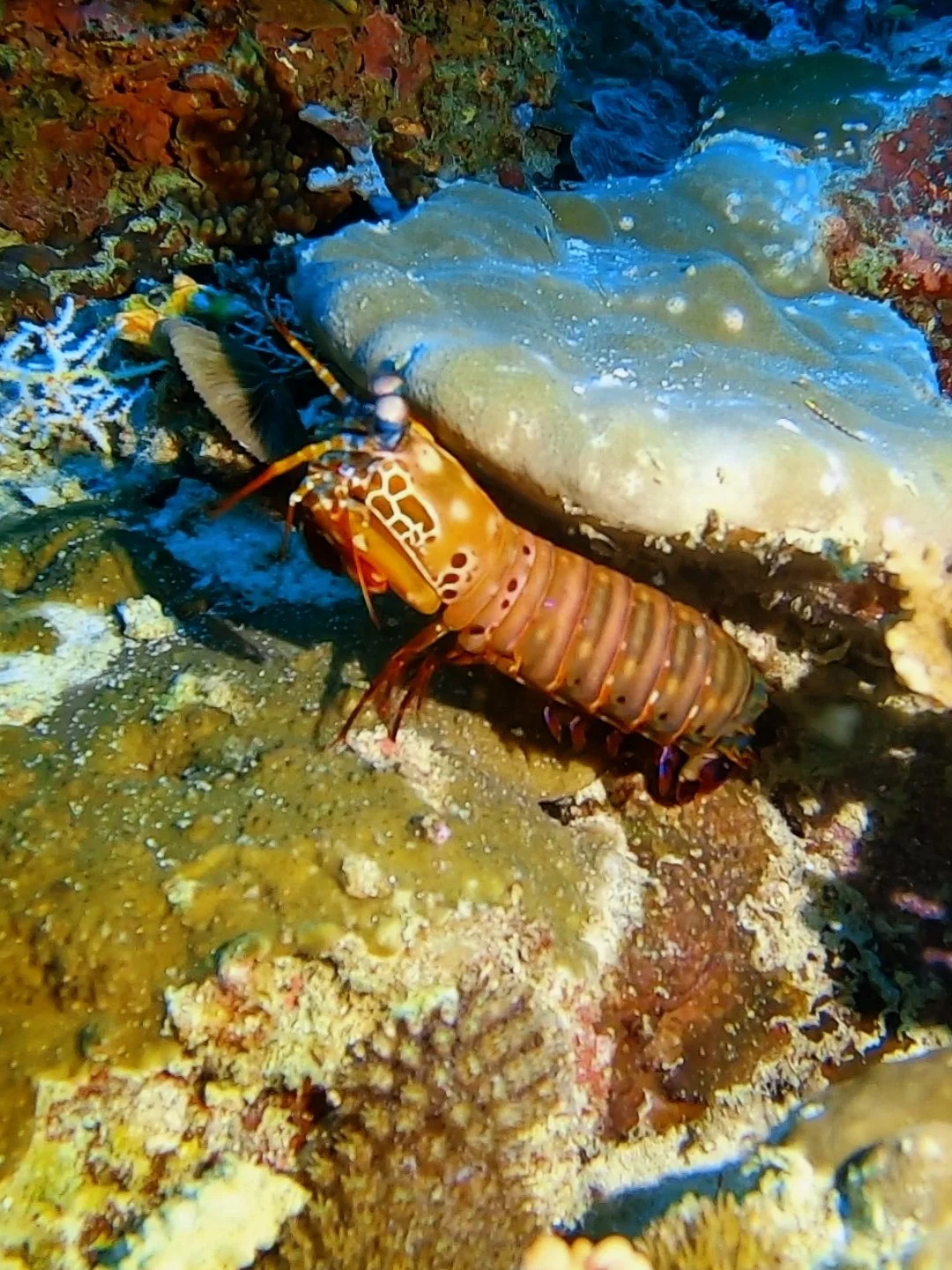
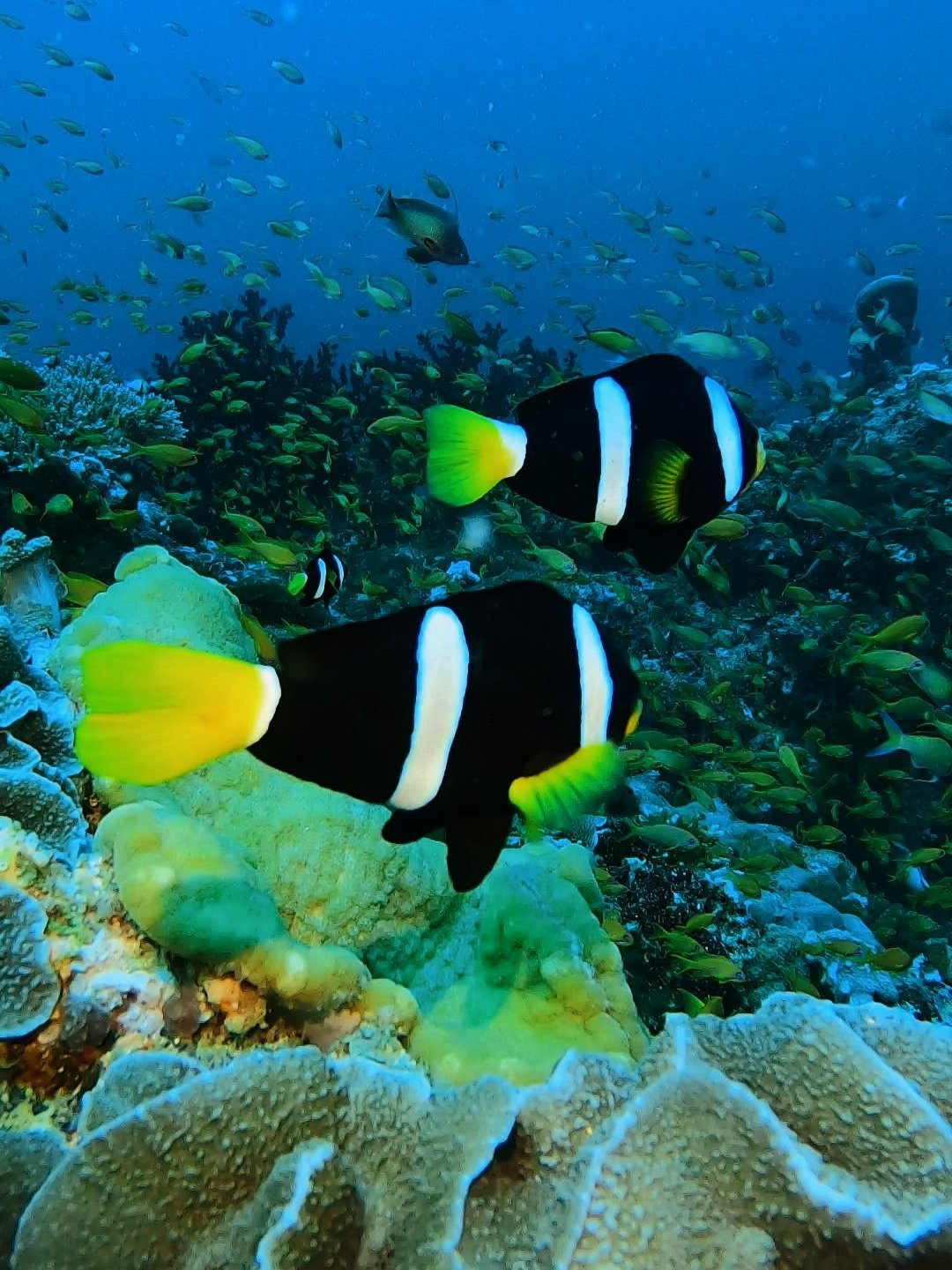
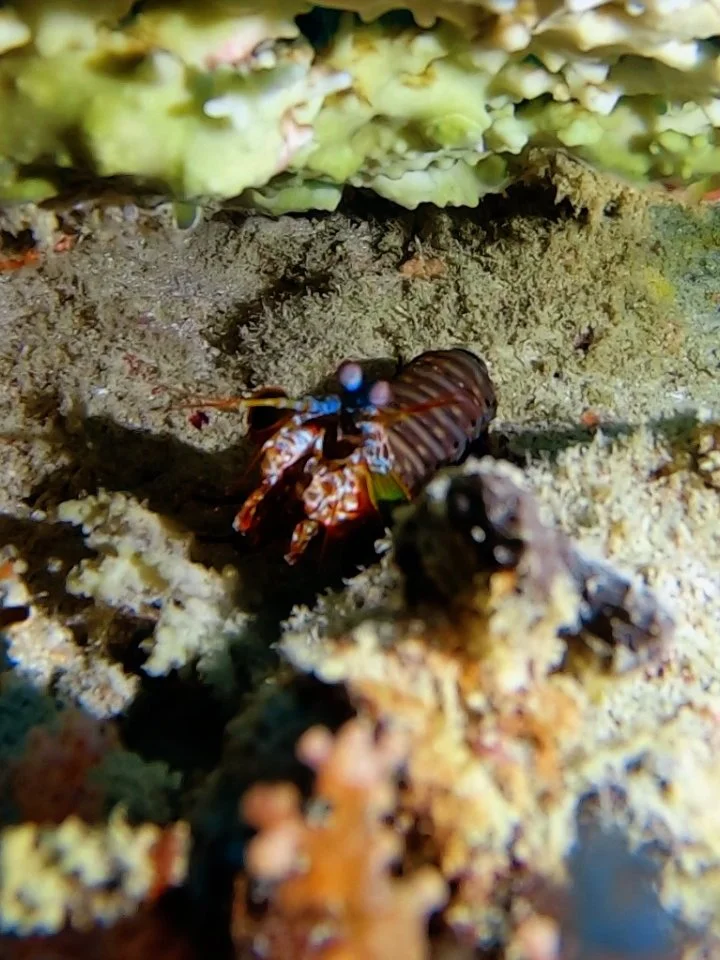
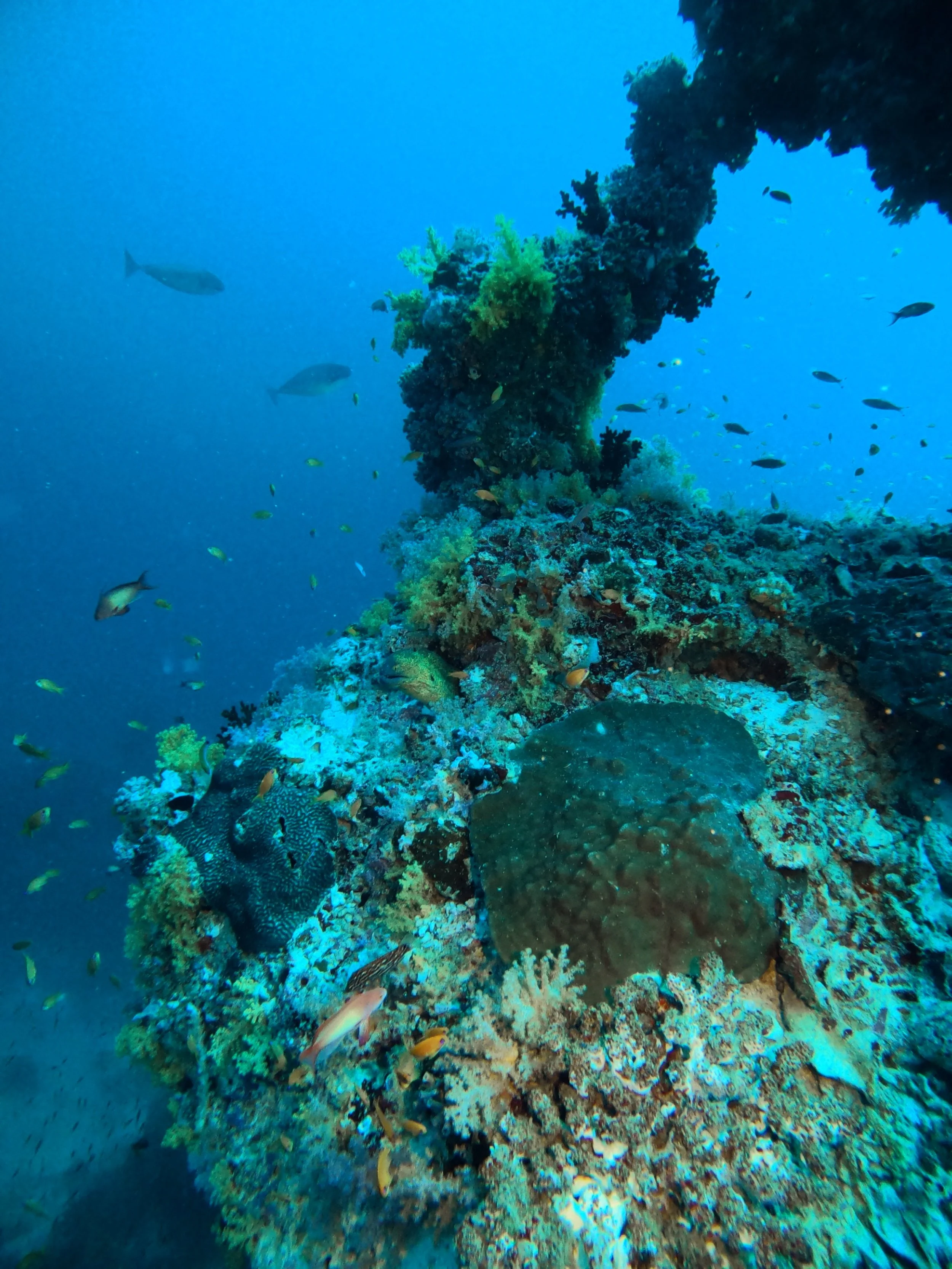
I spotted a beautiful giant moray sitting among several small baitfish and snapped a photo. Moving on, we saw some Clark’s anemone fish, and circling the top, I spotted one of my absolute favorite animals hiding under a table coral, the peacock mantis shrimp. They are one of the most epic animals on the planet, and with their ability to pounce so hard, they create a cavitation bubble that implodes at 5,000 degrees Celsius. They also have the most complex eyes in the animal kingdom and can see in ultraviolet, infrared, and color vision. This one was unique because it was primarily orange. When I saw them in the past, they have been green.
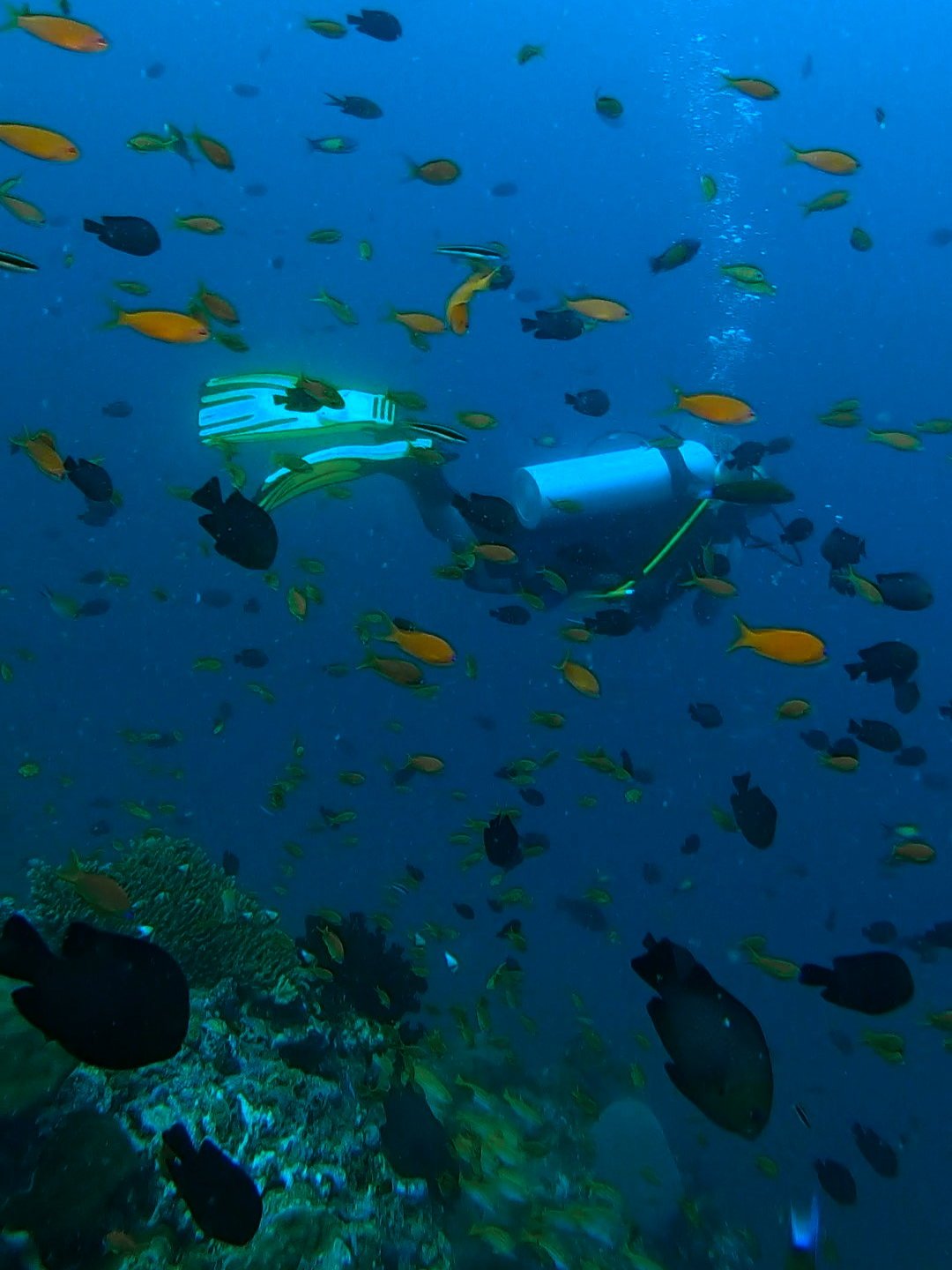
Afterward, we headed to the wall to explore before hitting the surface.
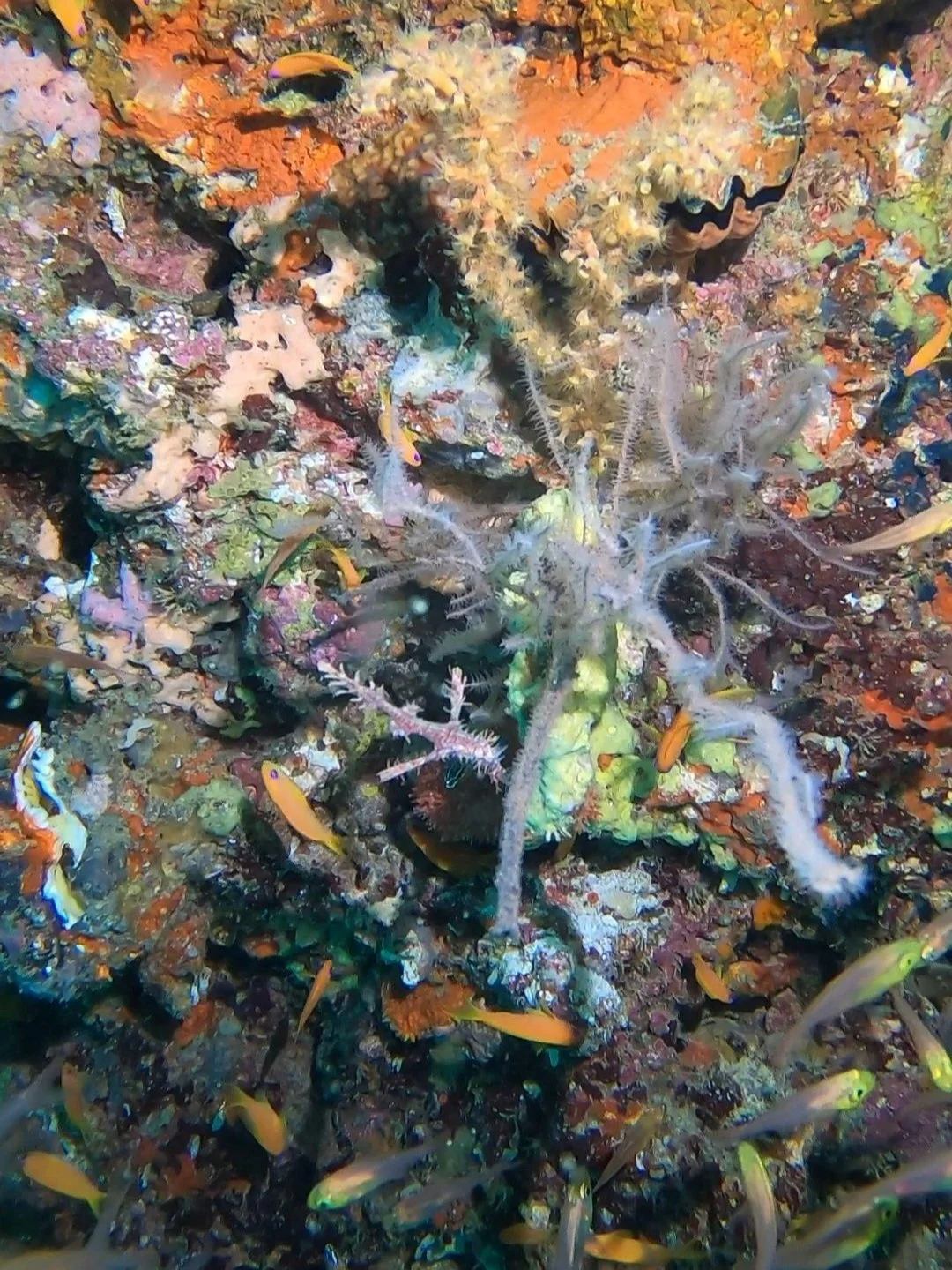
No mantas turned up in the bay during our surface interval, so we got ready for our next dive at a manta cleaning station. Our guide knew of a spot where we could find another very cool macro species I have always wanted to see. At about 32 meters, he pointed at a fan coral. Tucked around the side, trying to act like a piece of coral, was my first ornate ghost pipefish! These experts on camouflage are related to seahorses. They camouflage themselves to blend into their environment, avoiding predators and helping them hide from their prey. They come in a variety of colors, but this individual was pink and red. As we made our way to the manta cleaning station, out of the depths of the blue, a shadowy figure appeared. As we got closer, we could see a beautiful manta in its sublime state, dancing over the cleaning station. We gave it plenty of space while we admired the majestic animal. We watched for another 10 minutes, then swam to another coral area and a cool thila that was covered in scorpionfish.
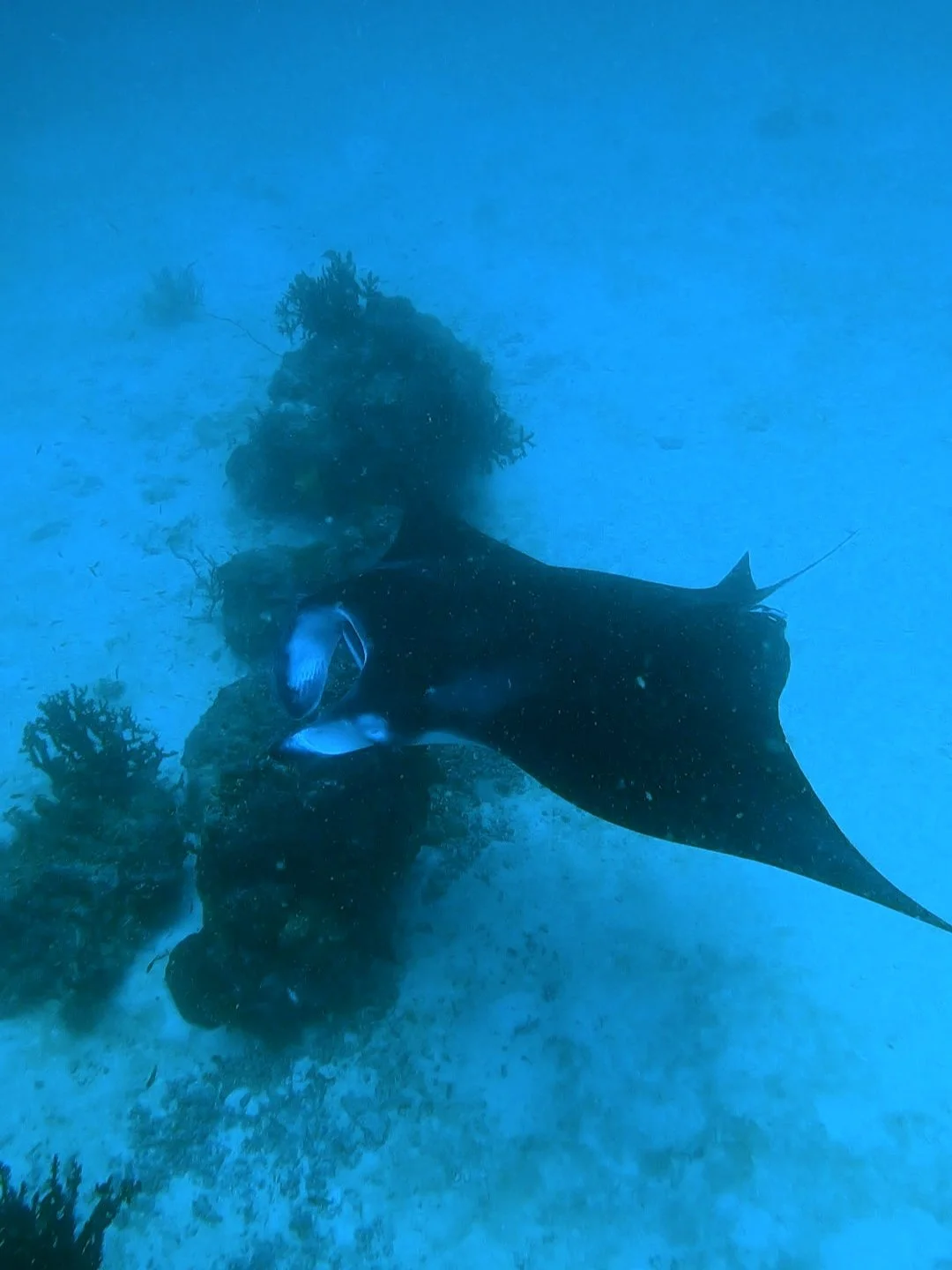
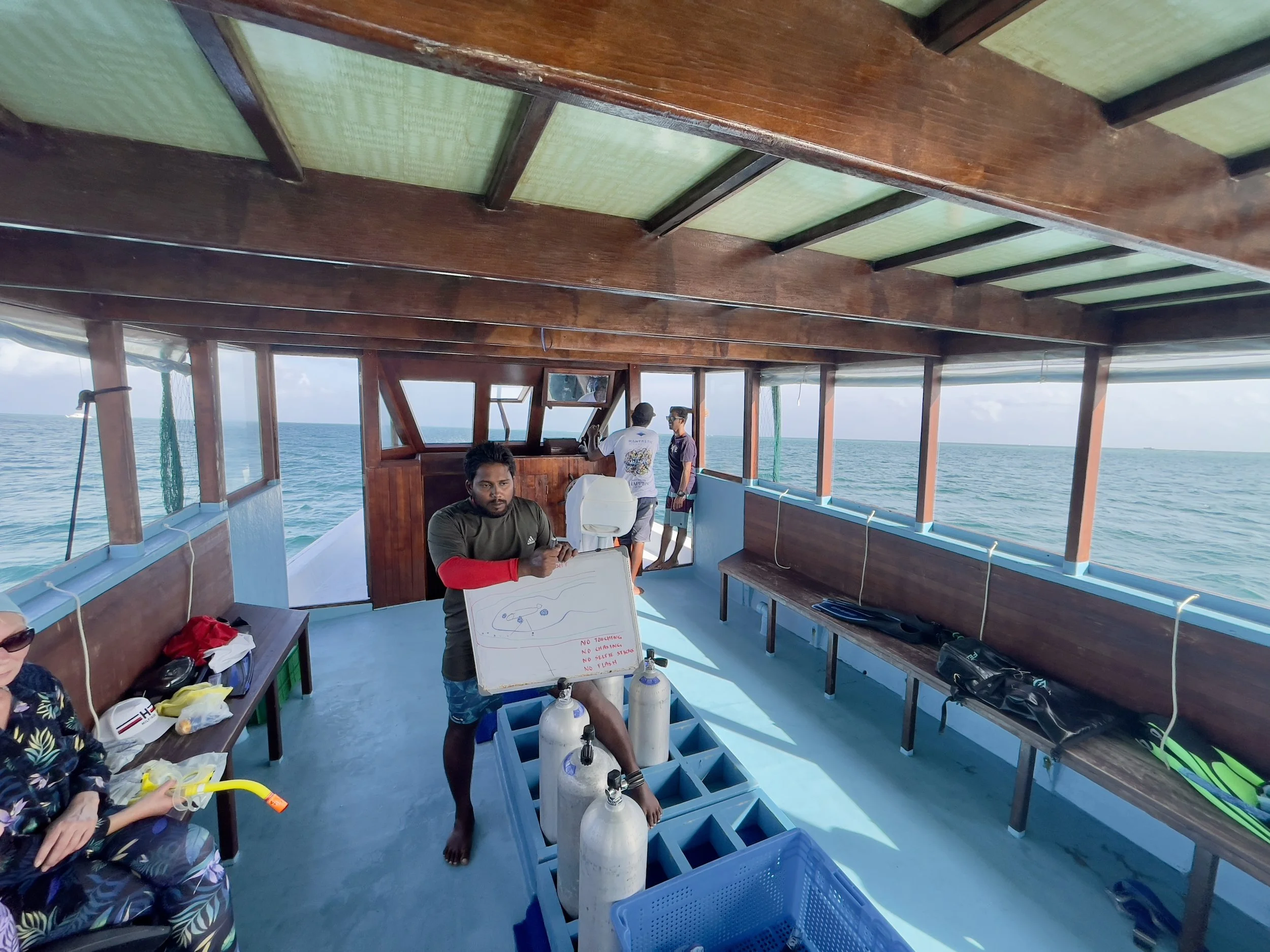
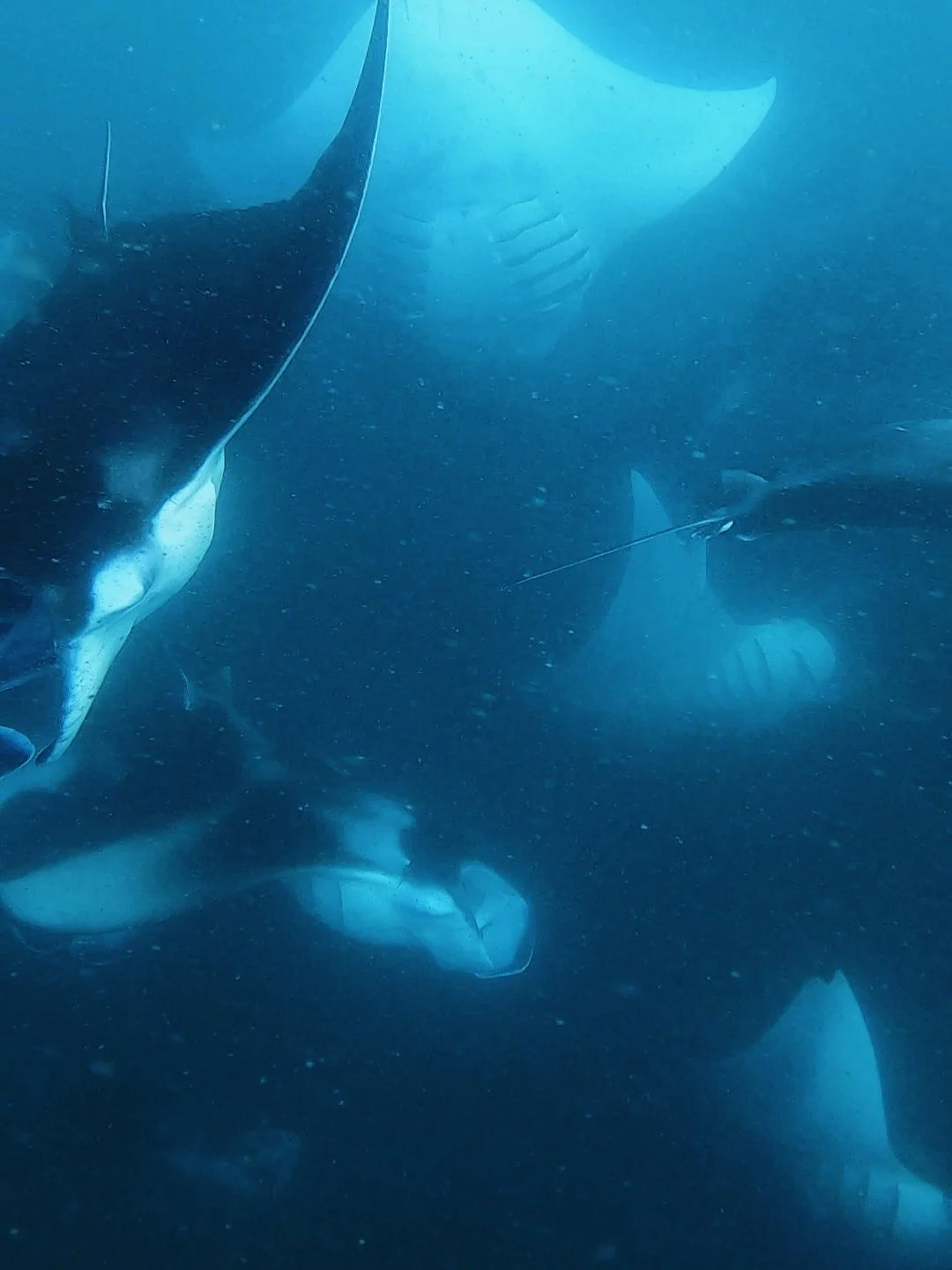
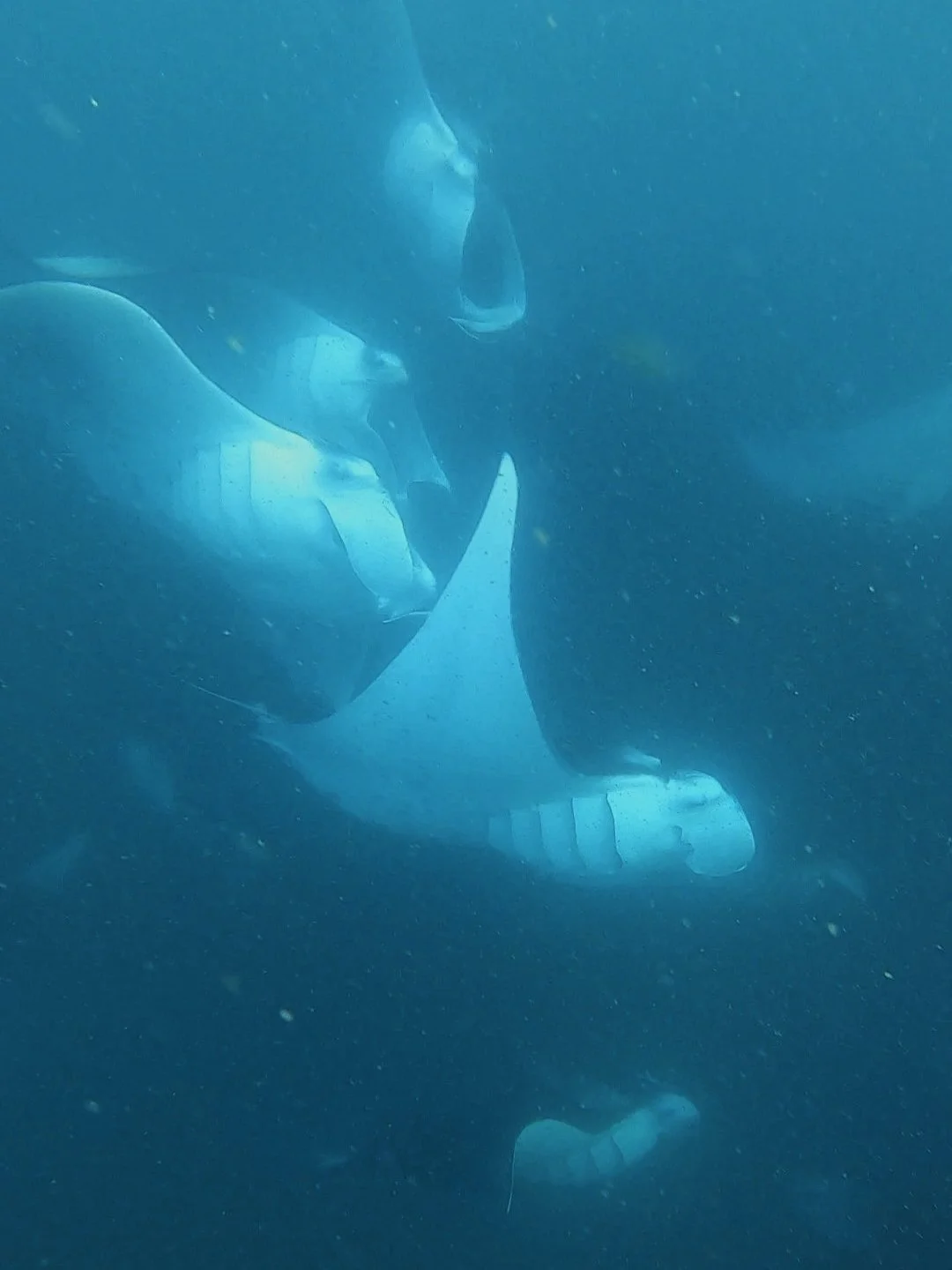
After our dive, there were still no signs of mantas in the bay. Maria and I had worked up quite an appetite, so Faisal took us to his new burger joint, which was good. We then went to our separate rooms for a nap. I went through my photos from the morning when we suddenly got the text “mantas; be ready in 15.” It was 3:45 when we got the message, so we scrambled, grabbed all our gear, took a buggy to the boat, and drove the 25 minutes to the bay. We were then briefed on how to interact with them and on all the following rules. We have 1 hour to enter the water with the mantas. From the boat, we could see the frenzy, with their wingtips popping out of the water, in a feeding train with probably 10 mantas we could see just from the surface. I jumped in the water, and it was a struggle to find ones to photograph because there were so many. I managed to do some free dives at a safe depth (since I had been diving that morning, I did not want to risk the bends). It was amazing having so many mantas come across you at once, with their mouths wide open, swimming under and circling around you. There were approximately 70 mantas in this gathering. The water was murky, but it was still fascinating and exciting to see for the first time.
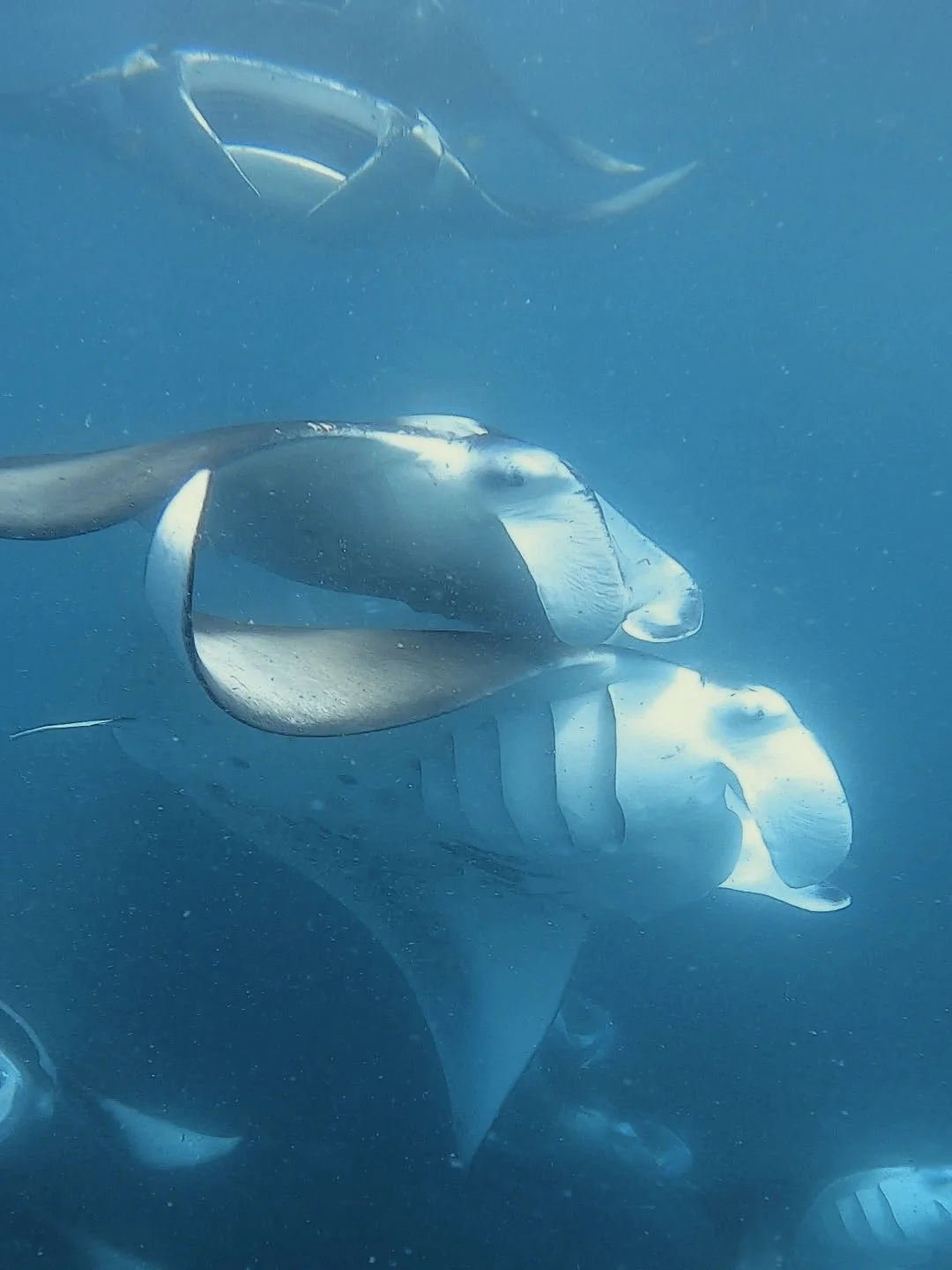
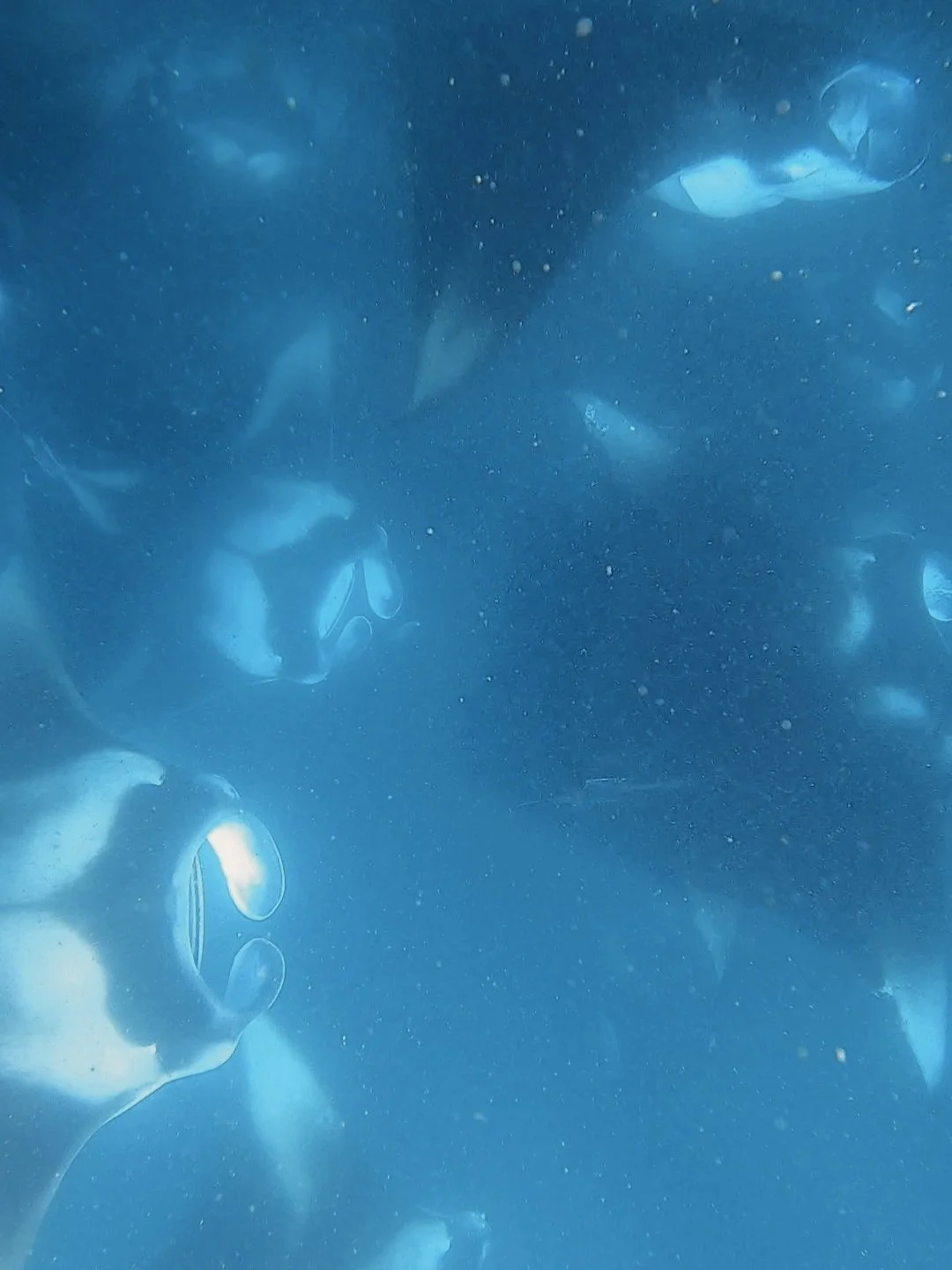
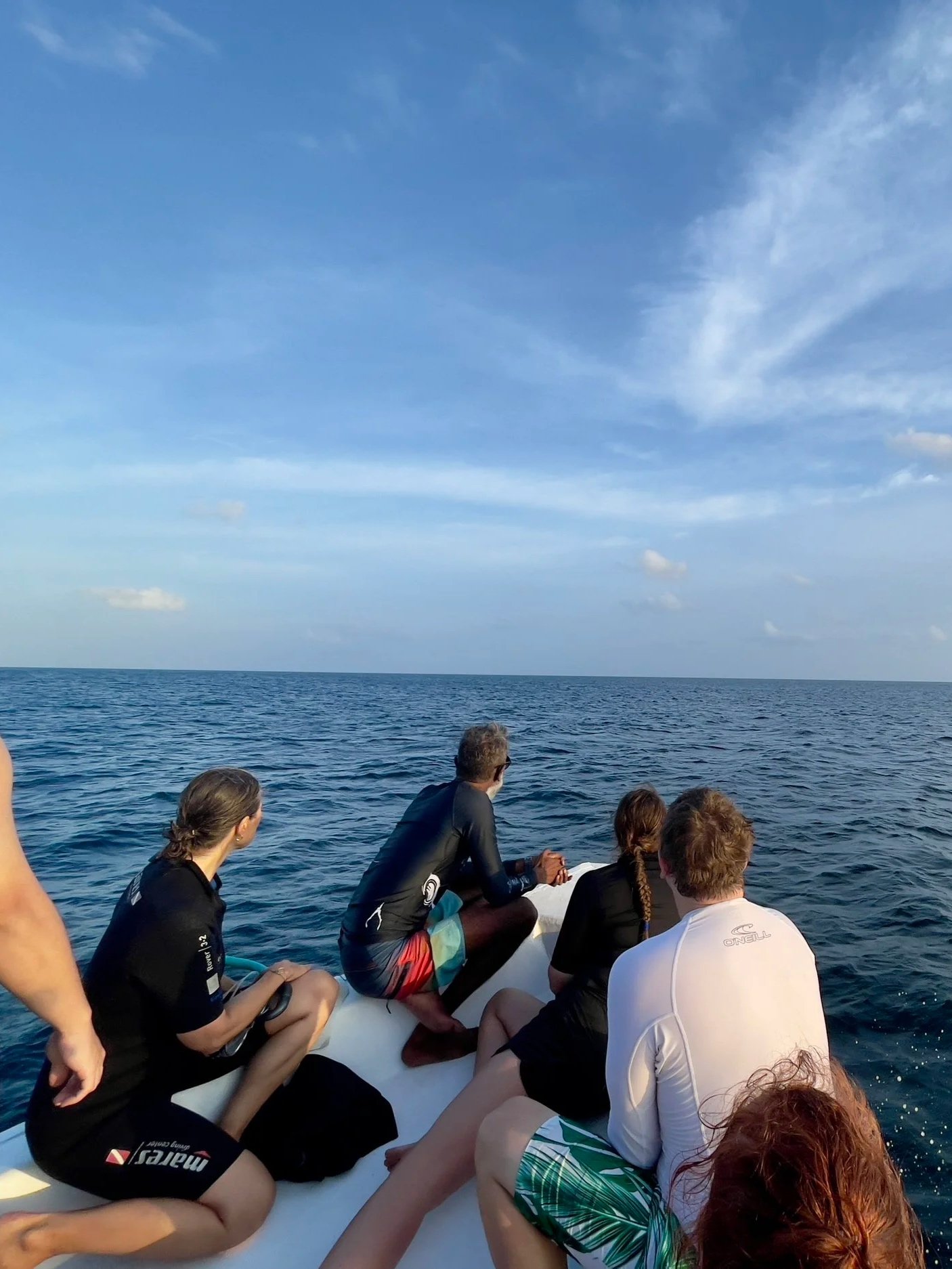
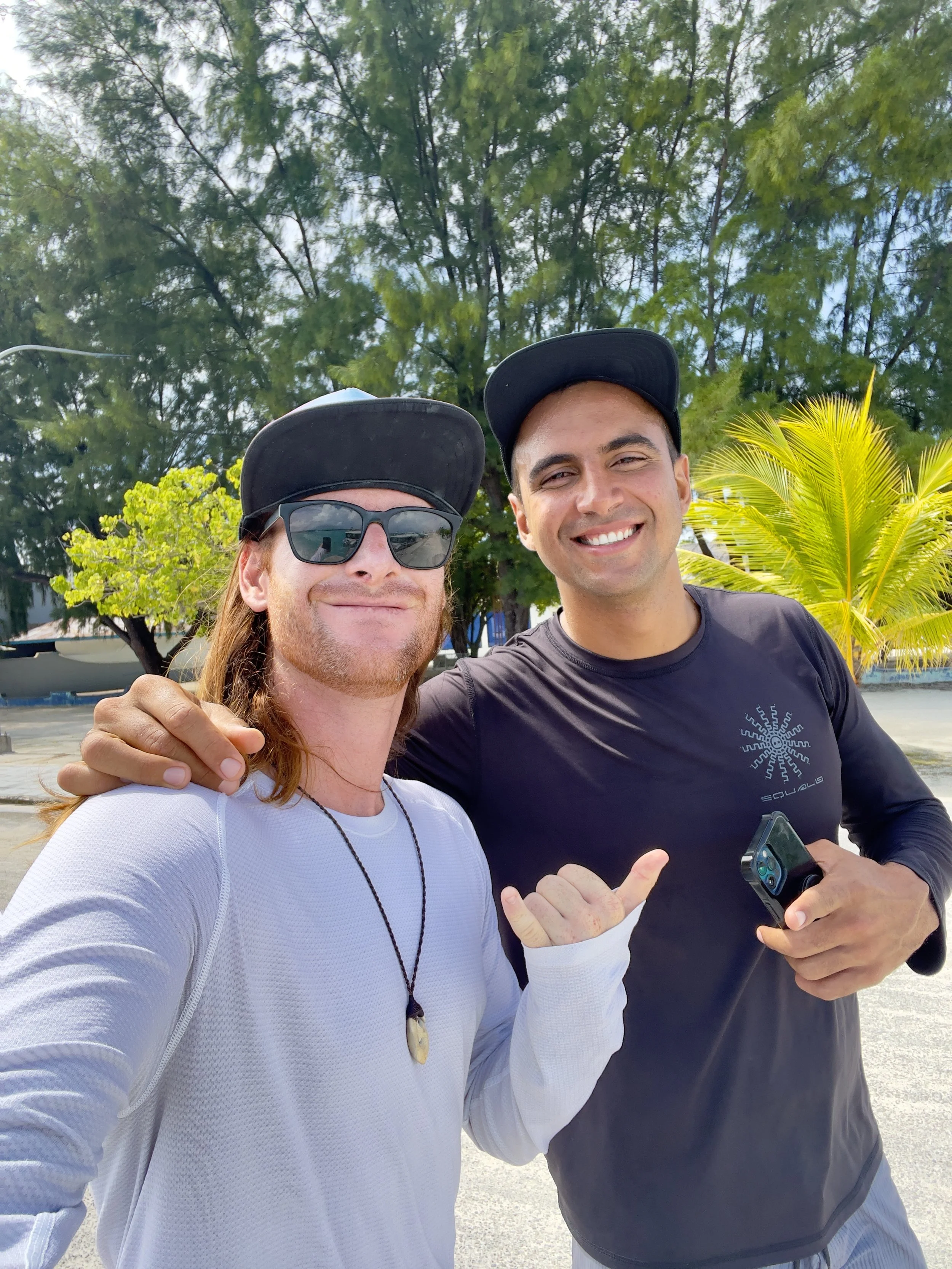
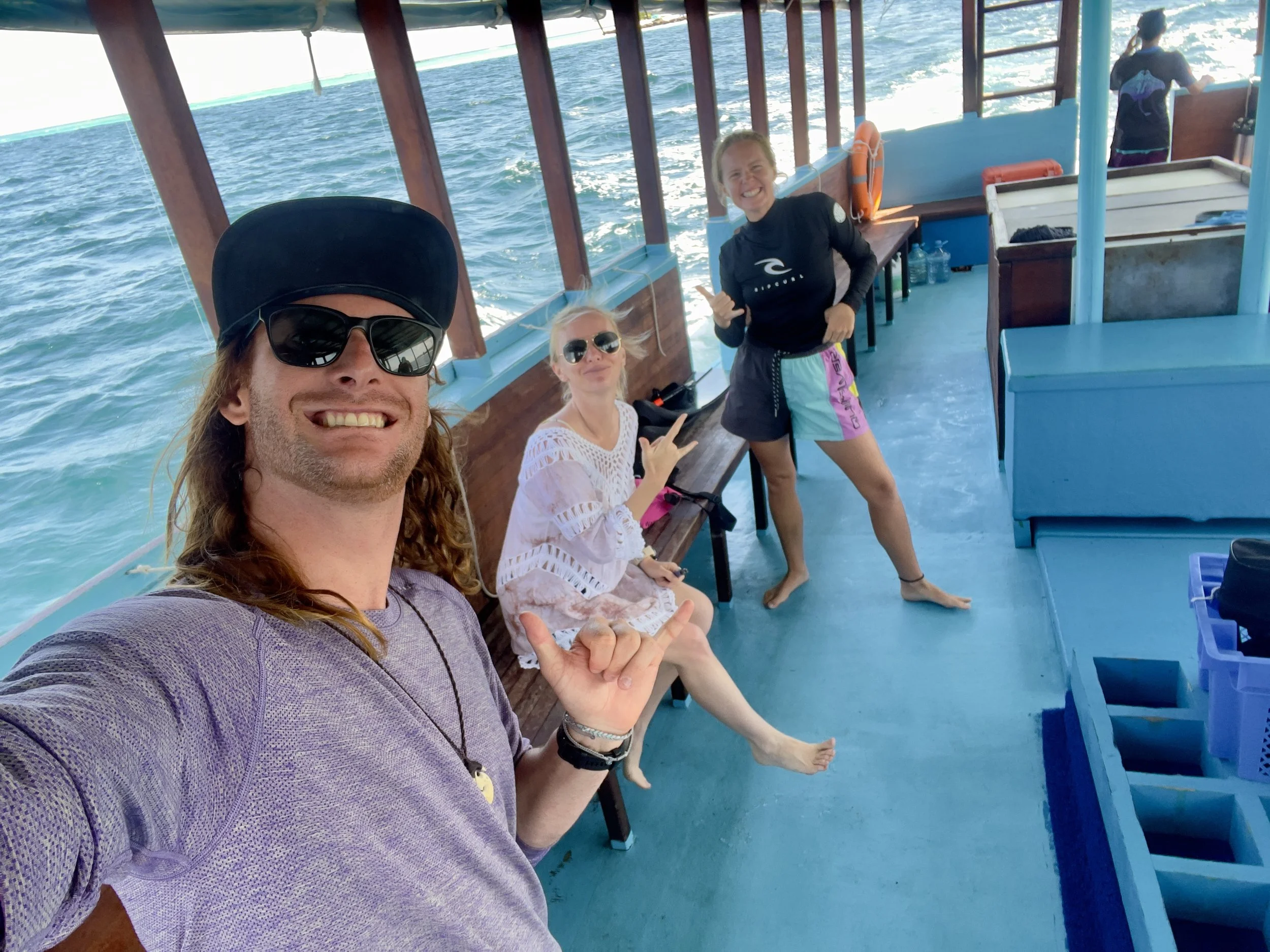
Once we were out of the water, another group got on our boat to head back to the island with us. I was sitting on the bow when I spotted some spinner dolphins, and I struck up a conversation with the gentleman leading the group, who was talking about what he did. He looked familiar and said the same to me, and then he said, “Are you @thewildgingerbeast?” I was like, “Yeah, are you @alexsharks_?” and he was like, “Yeah.” What a coincidence! We had been following each other for at least a year, and out of all places around the world, we ran into each other on this specific boat in Hanafaru Bay, the Maldives. Alex runs tours mainly in Baja California and has some of the most extraordinary encounters with marine megafauna there. He has a breathtaking Instagram page with beautiful photos highlighting marine life. We missed sunset, so back on shore, we headed straight to dinner and went to bed early, since we knew we had another epic day ahead of us.
October 8th
At breakfast, I went right for that Mas Huni again. Today, we wanted to focus on the mantas, and I was hoping to free-dive with them more, since they sometimes go deeper. We had a snorkel day planned on the boat in case the mantas came into the bay. On the boat, I met Vincy, a very cool person from London who was traveling on holiday from a job in Male. Once we were in the water, I spotted a couple of Hawksbill turtles, which are gorgeous. I am used to seeing the ones in the Caribbean with very pretty shells, but out here, they tend to eat more algae and therefore have dirtier shells. Then I spotted some green sea turtles and got gorgeous shots of them with their beautiful shells. What is nice about these turtles is that they are used to people, so they are not as startled by your presence as are most turtles in other parts of the world.
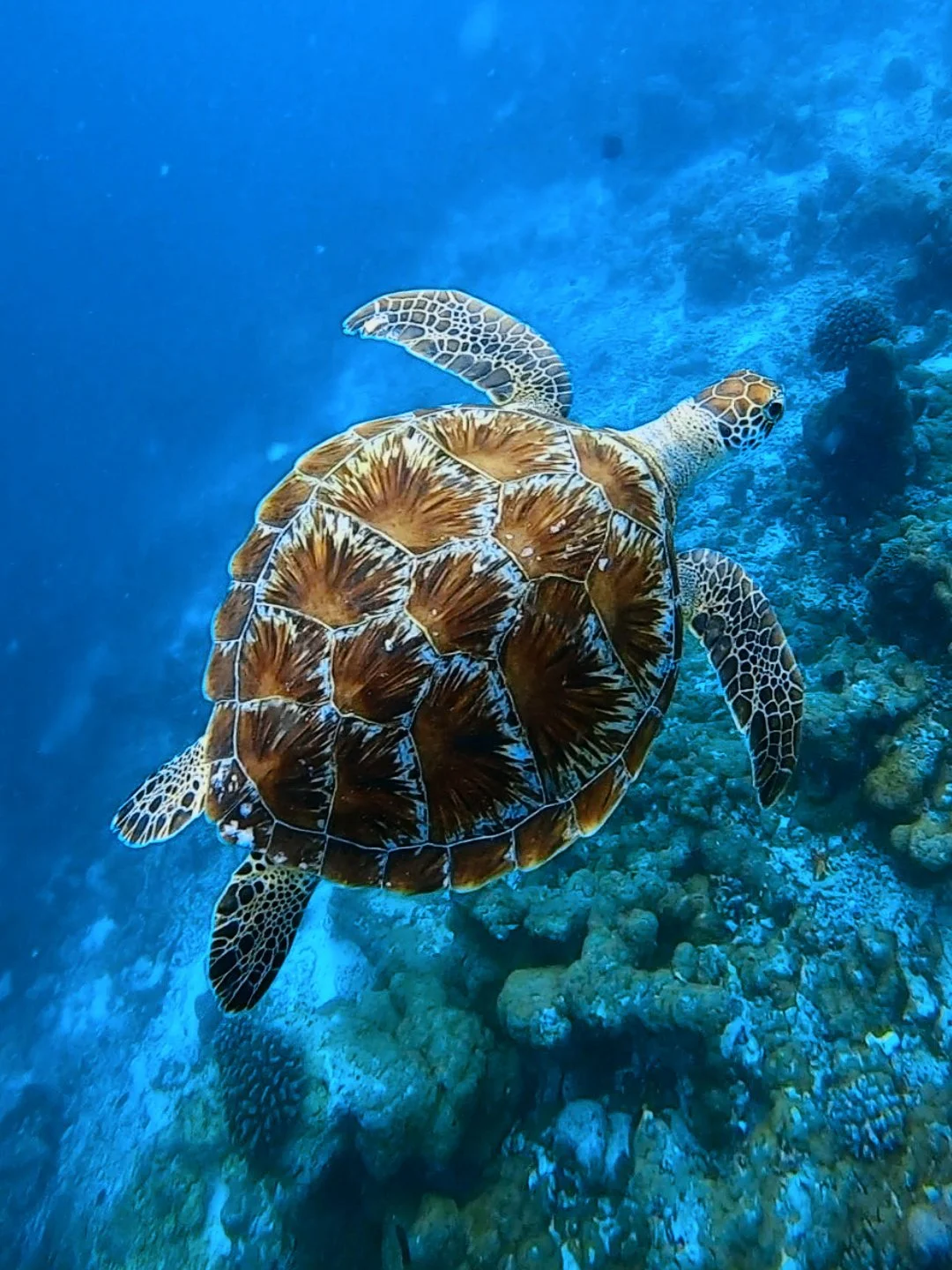
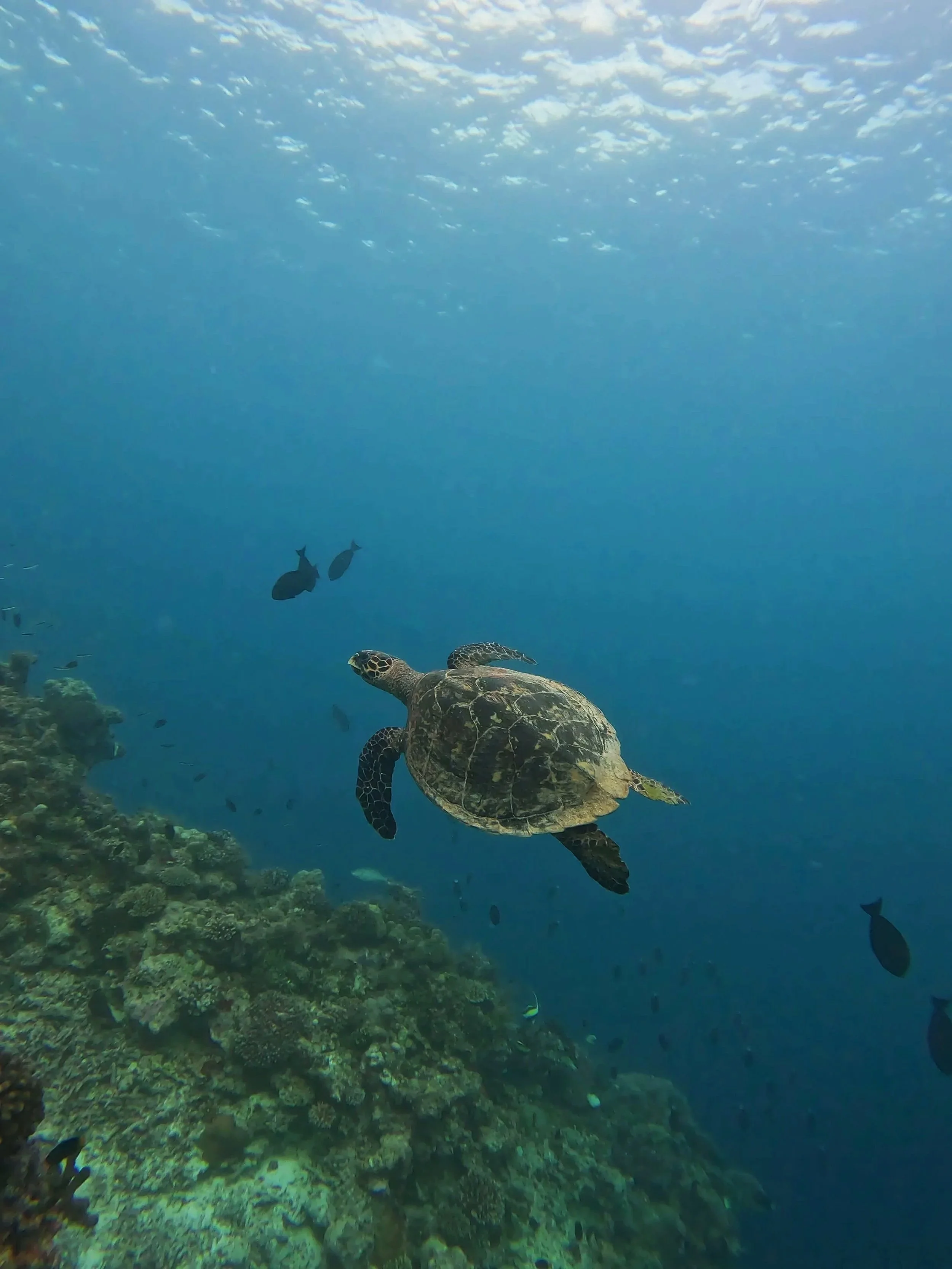
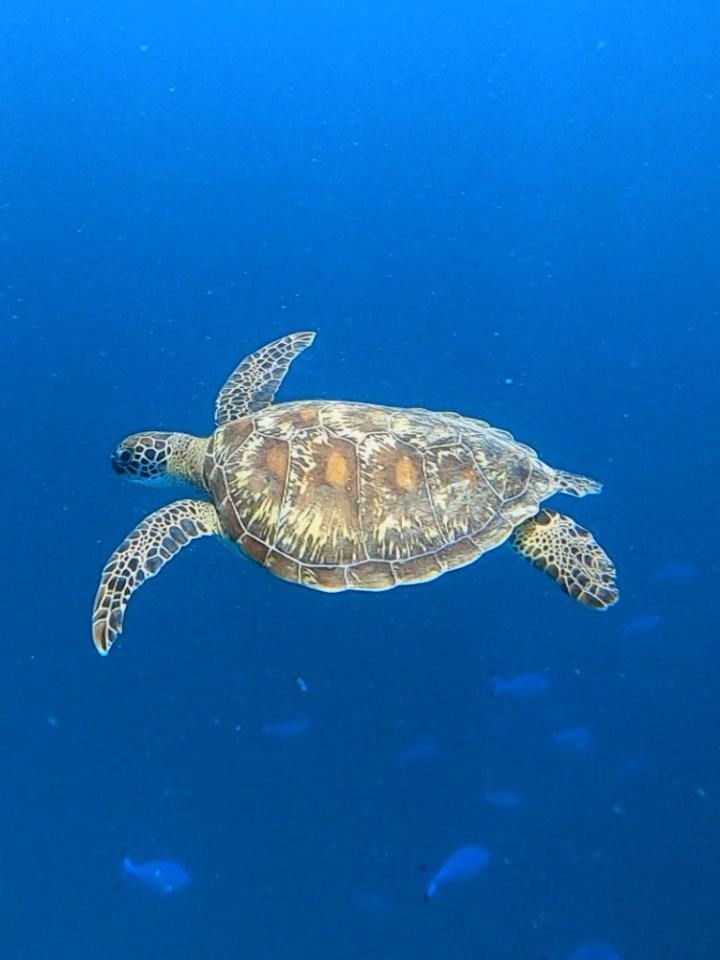
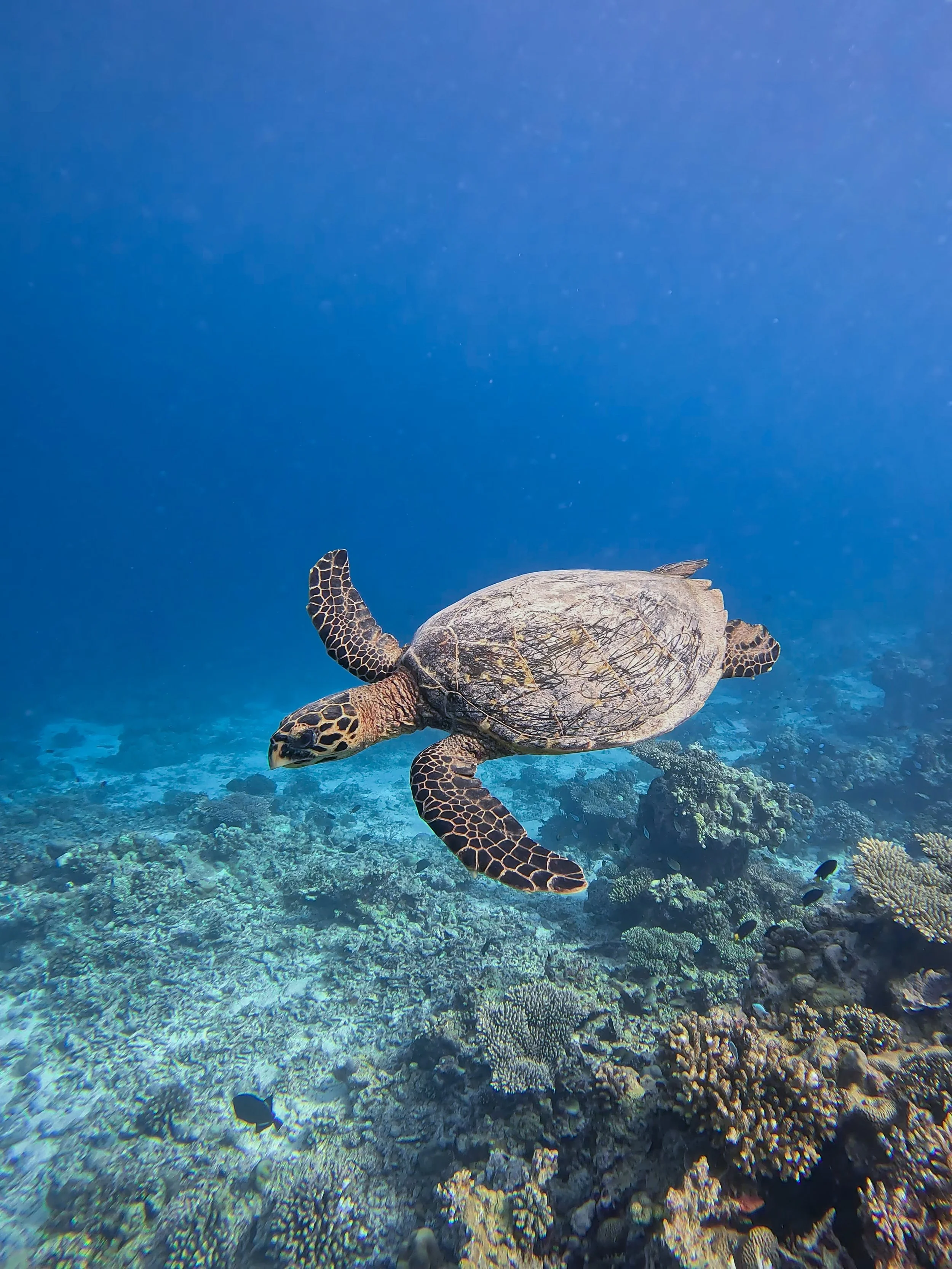
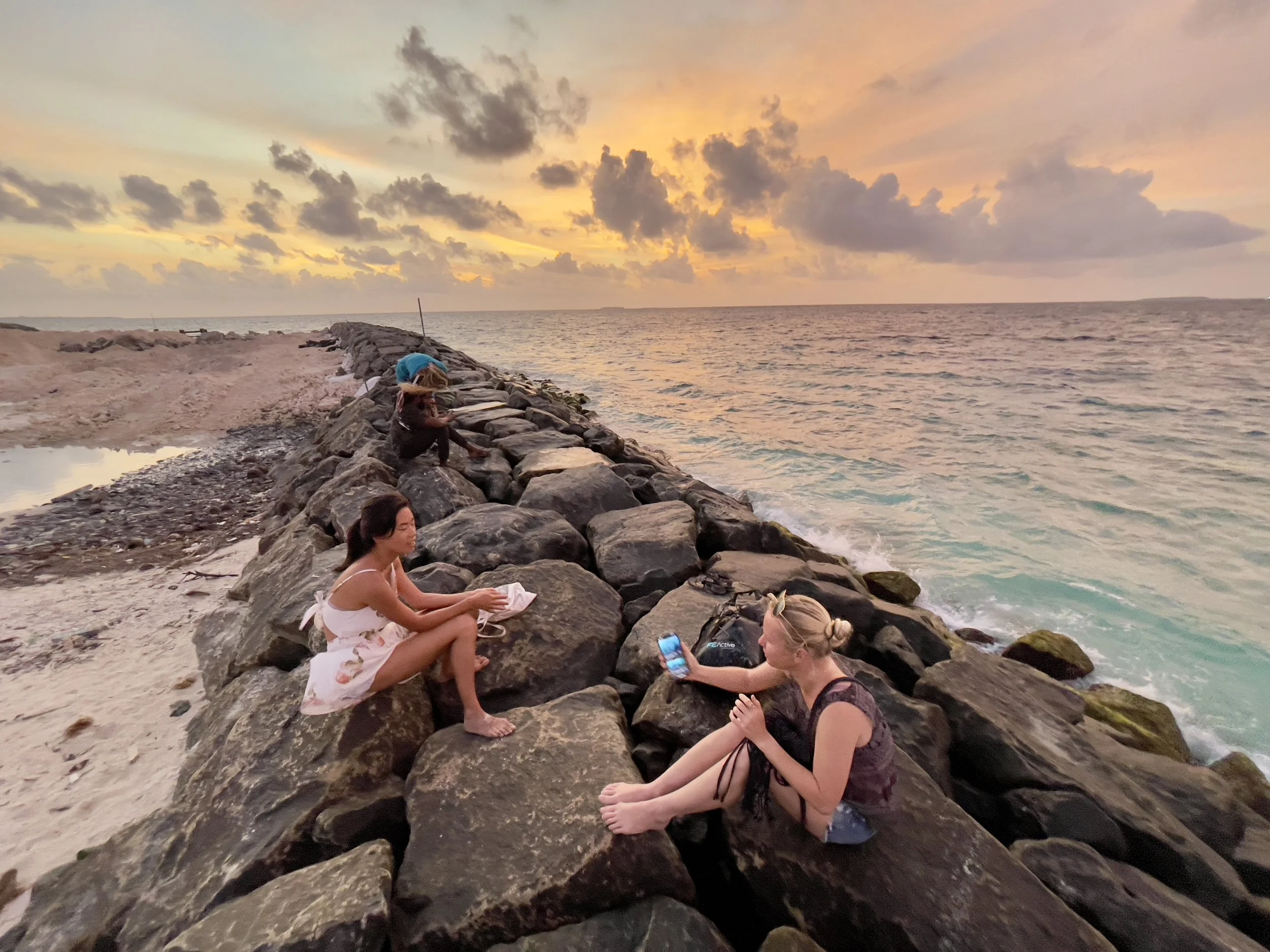
We got the call for mantas, but Faisal told us not to go, as only 10 had gone into the bay (can you imagine we did not go because there were only 10!). That evening Vincy, Maria, and I went to the sunset spot and met some new friends who worked at Club Med, a French-owned resort in North Male Atoll. At dinner, our group had great conversations about life before heading to bed.
October 9th
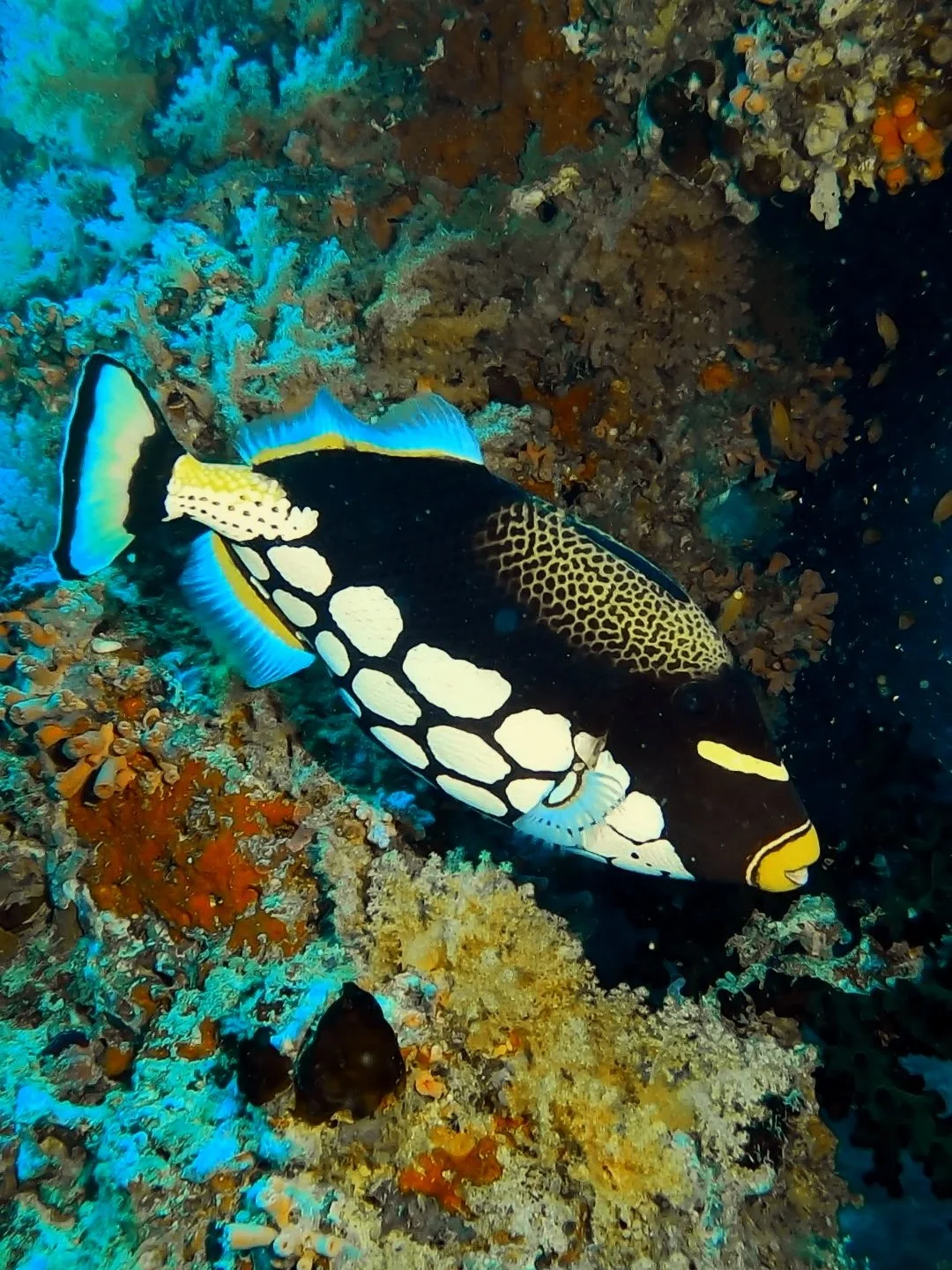
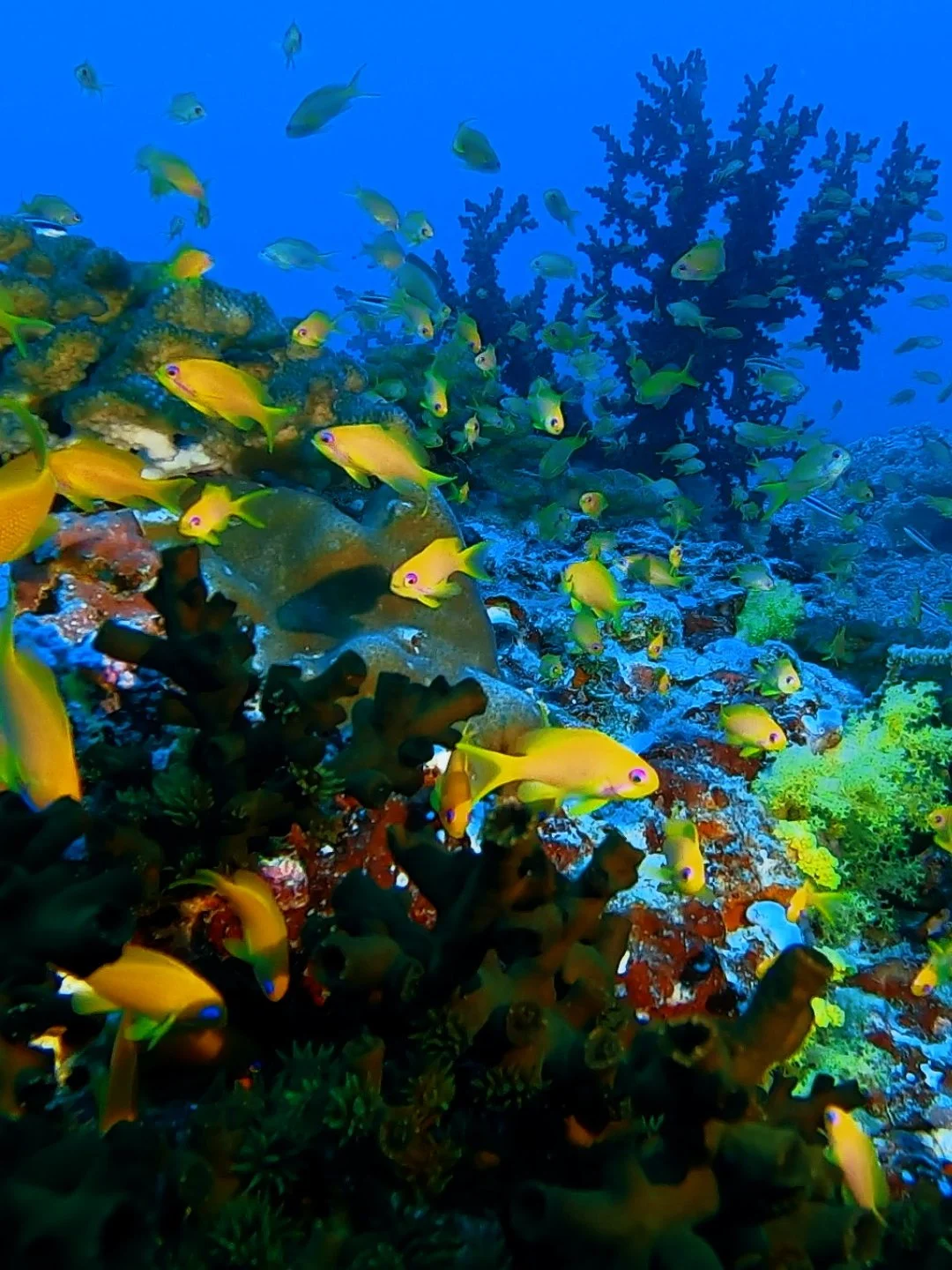
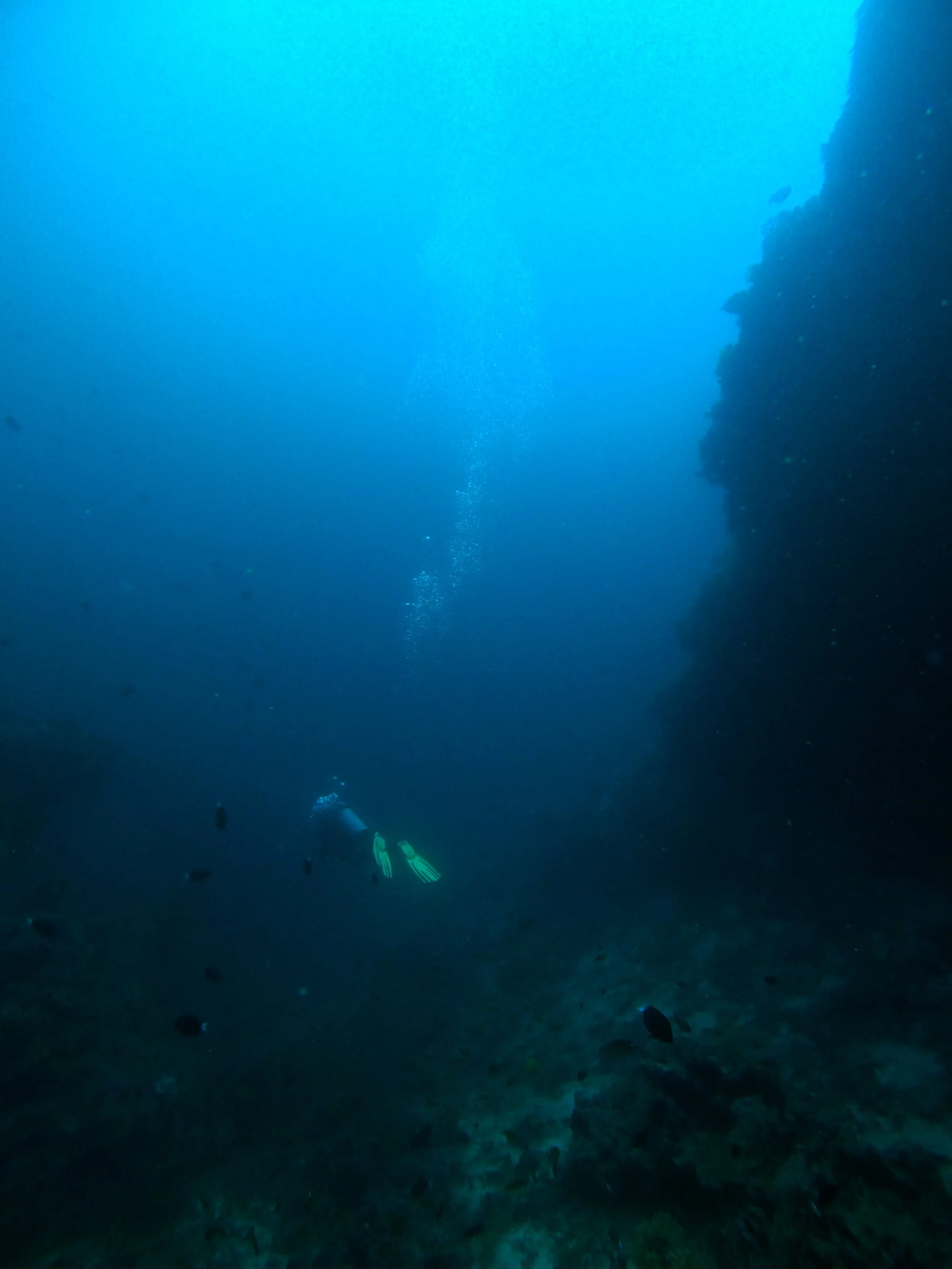
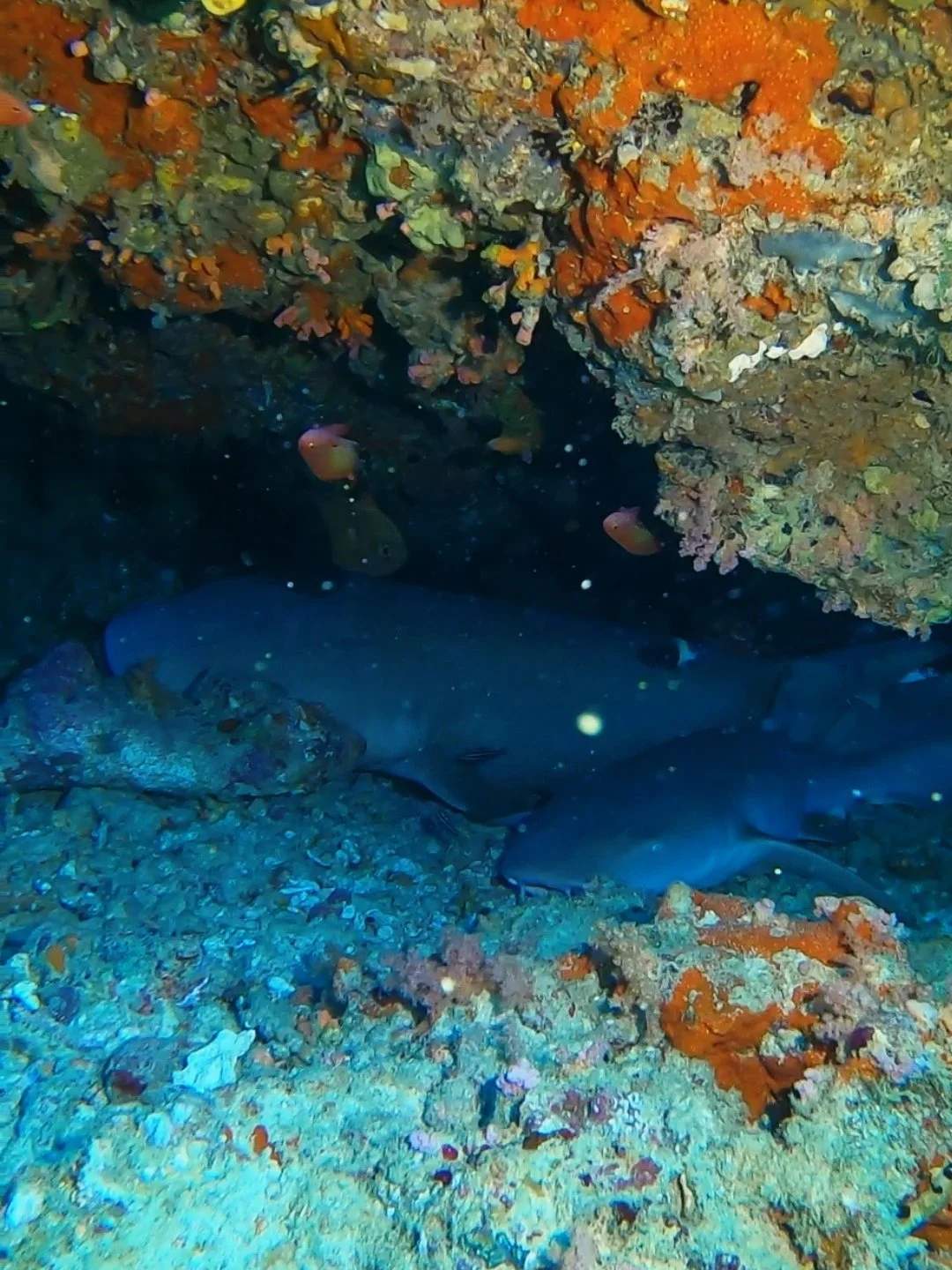
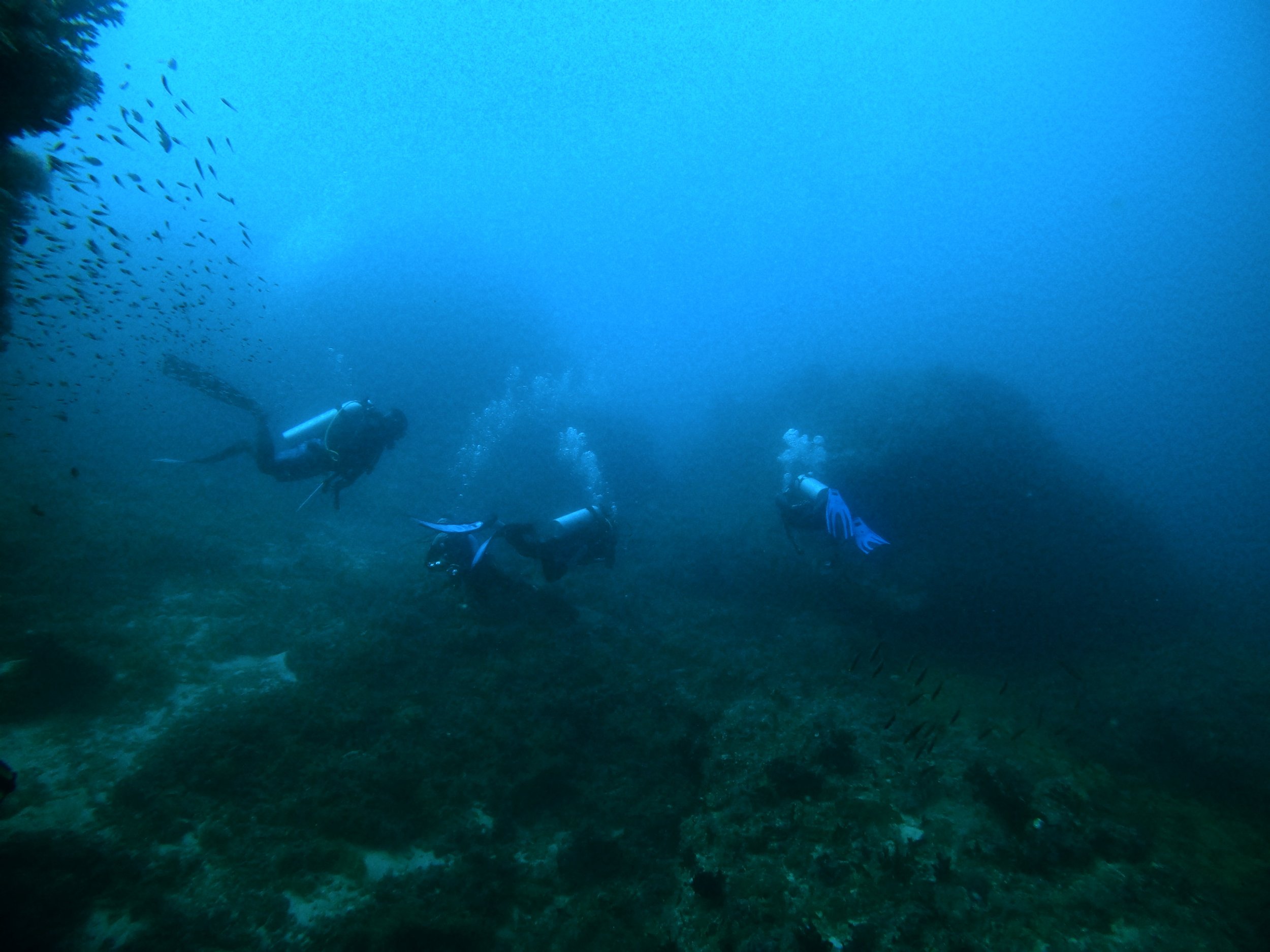
We had a good group of people today. Everyone had been at the sunset spot from the night before. Our first dive site was in an area that had a steep wall. Mantas can usually be found here because there was a decent amount of macro moving past it. We got in the water and headed down to the edge of the ledge. We found a nice clown triggerfish and some other reef fish. We then made our way around a large rock area with many orange basslets, and, underneath a ledge, I spotted a couple of white-tip reef sharks resting. A manta appeared out of the deep blue, but it was too far away to get a photo. We saw another peacock mantis shrimp, which was impressive amongst the other beautiful reef fish.
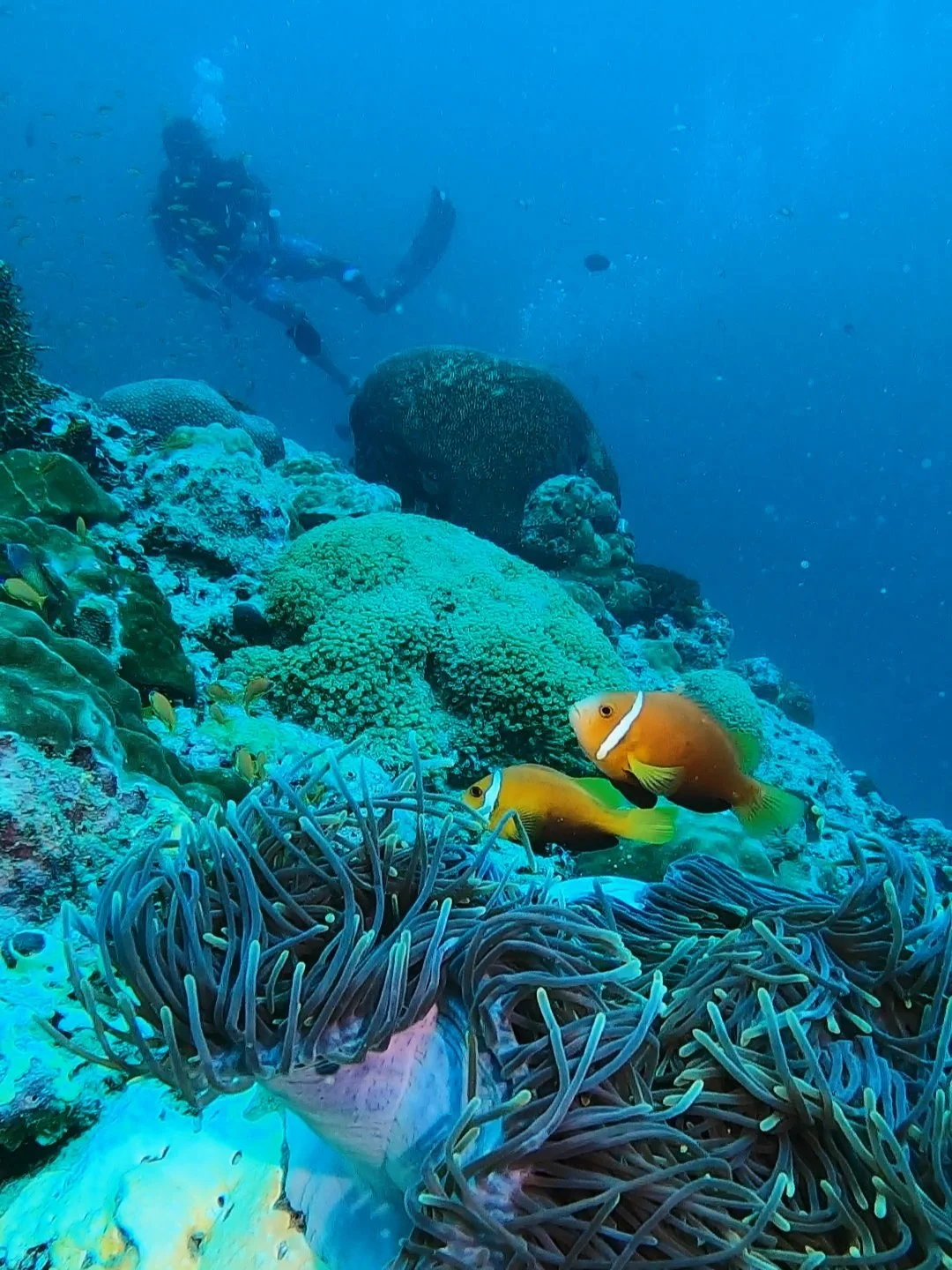
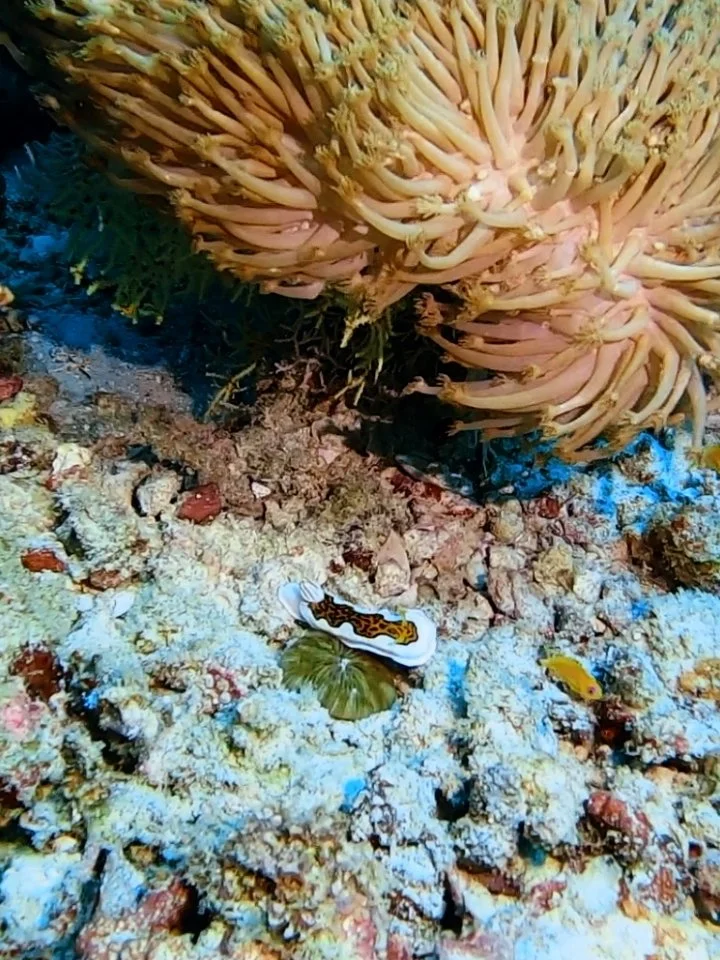
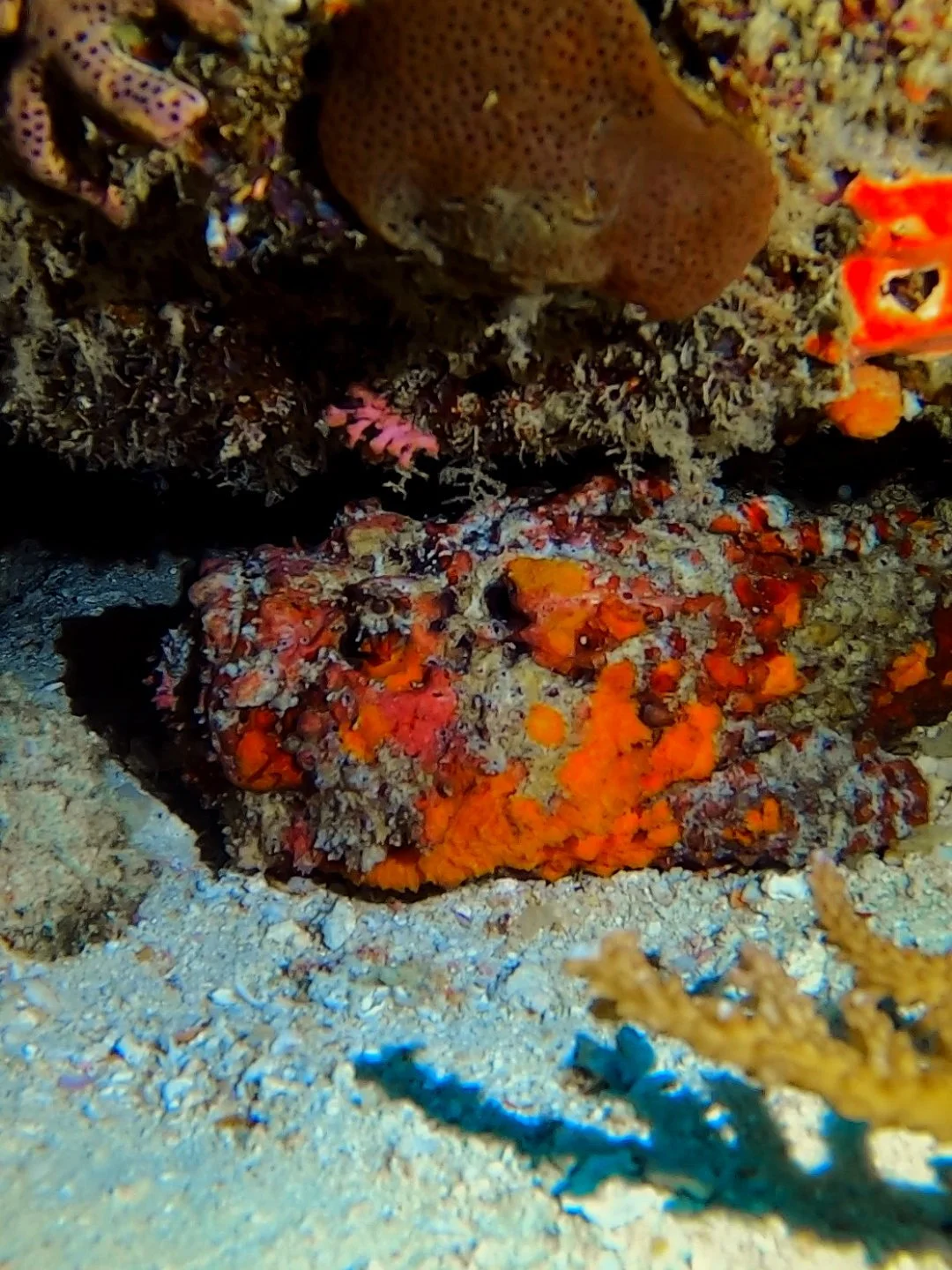
The second dive site we visited was the same location as that great macro dive from the previous day. We did the same dive, started from the bottom, and made our way to the top. About halfway up, our guide pointed at something in a hole, and at first, I could not see what it was, but then I noticed the rock had an eye! This was a gorgeous stonefish with nice orange and red coloring. He was wedged in the hole, so I could not get a great photo, but it was a proof shot. We saw lionfish, and Maria spotted a cool nudibranch I had never seen before. The Maldives also has its own species of clownfish, so it was cool seeing them everywhere.
When I got to the hotel, I met another marine biologist named Jesse, who worked at one of the resorts in South Ari Atoll, which is special because she gets to see whale sharks all the time. She was also here for the Manta Magic season. Maria and I went for a burger and as we were getting our food, we got the call that it was manta time, so we quickly grabbed our things and headed for the boat. We got on and headed to the bay. There was more activity this time in the water, and our captain took us to the east side of the lagoon. We saw mantas swimming in a school, which is called a squadron. Around 20 were right at the surface, so I jumped in as soon as possible and had 10 in front of me. This bay area also has a cleaning station, and six mantas were circling around the pinnacles. There was not much action around here, though, so I looked up and saw a crowd of people around 300 meters away and had a hunch that I should go over there. I swam in that direction and, now and then, spotted several mantas under me, but as I got closer to where the others were, I looked down to see an absolute manta cyclone. Around 50 individuals were circling in this area, so I dove down and got some amazing shots as they swam past me. This was better than the day before. I hung out there taking in the magic for the next 15 minutes, and then they disappeared. I saw my friends in the water around us, and everyone talked about how epic that was. I thought it was over and was heading back to my boat, but as I glanced downward, there was another cyclone of mantas forming and I was the only one seeing this.
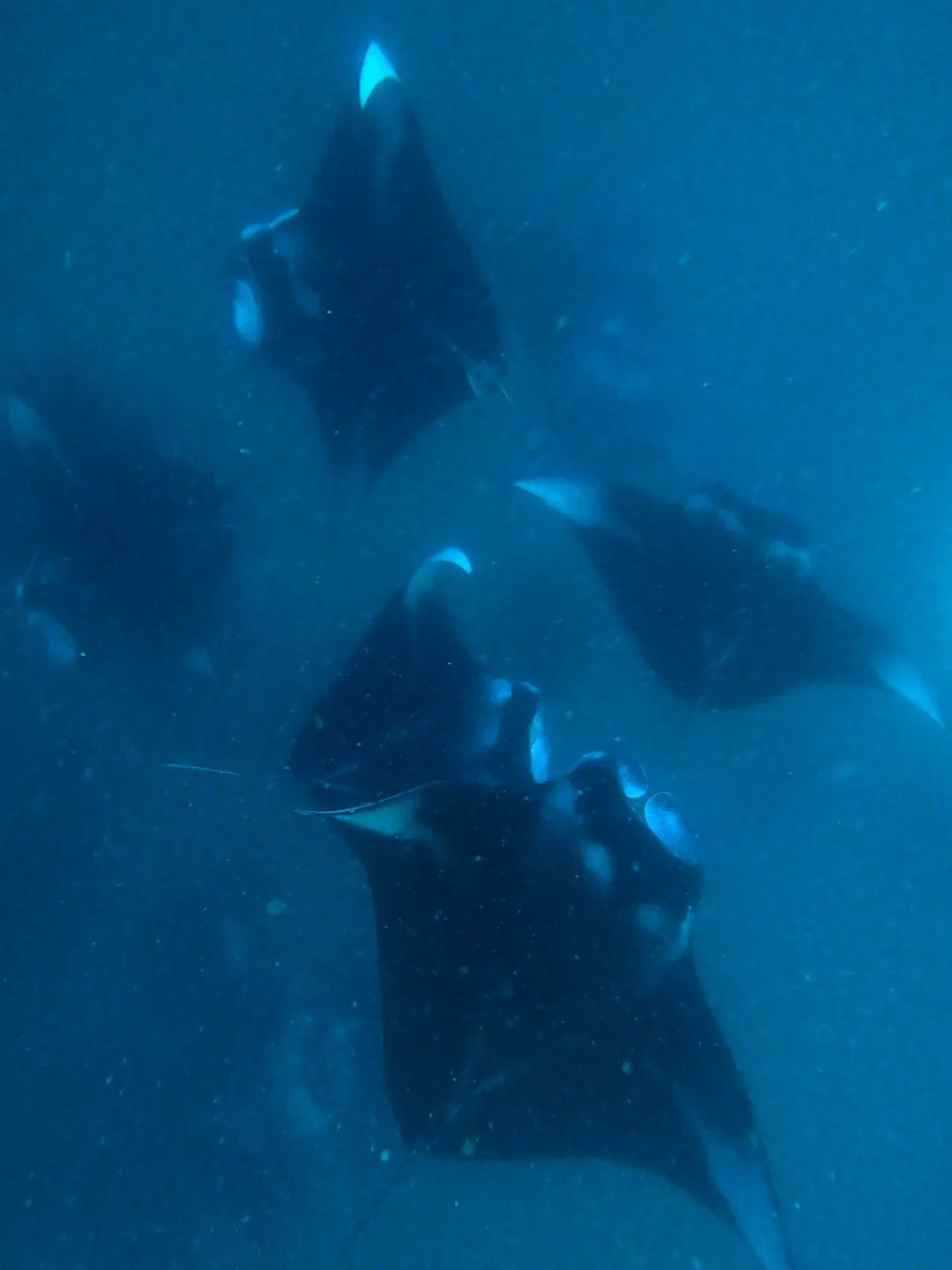
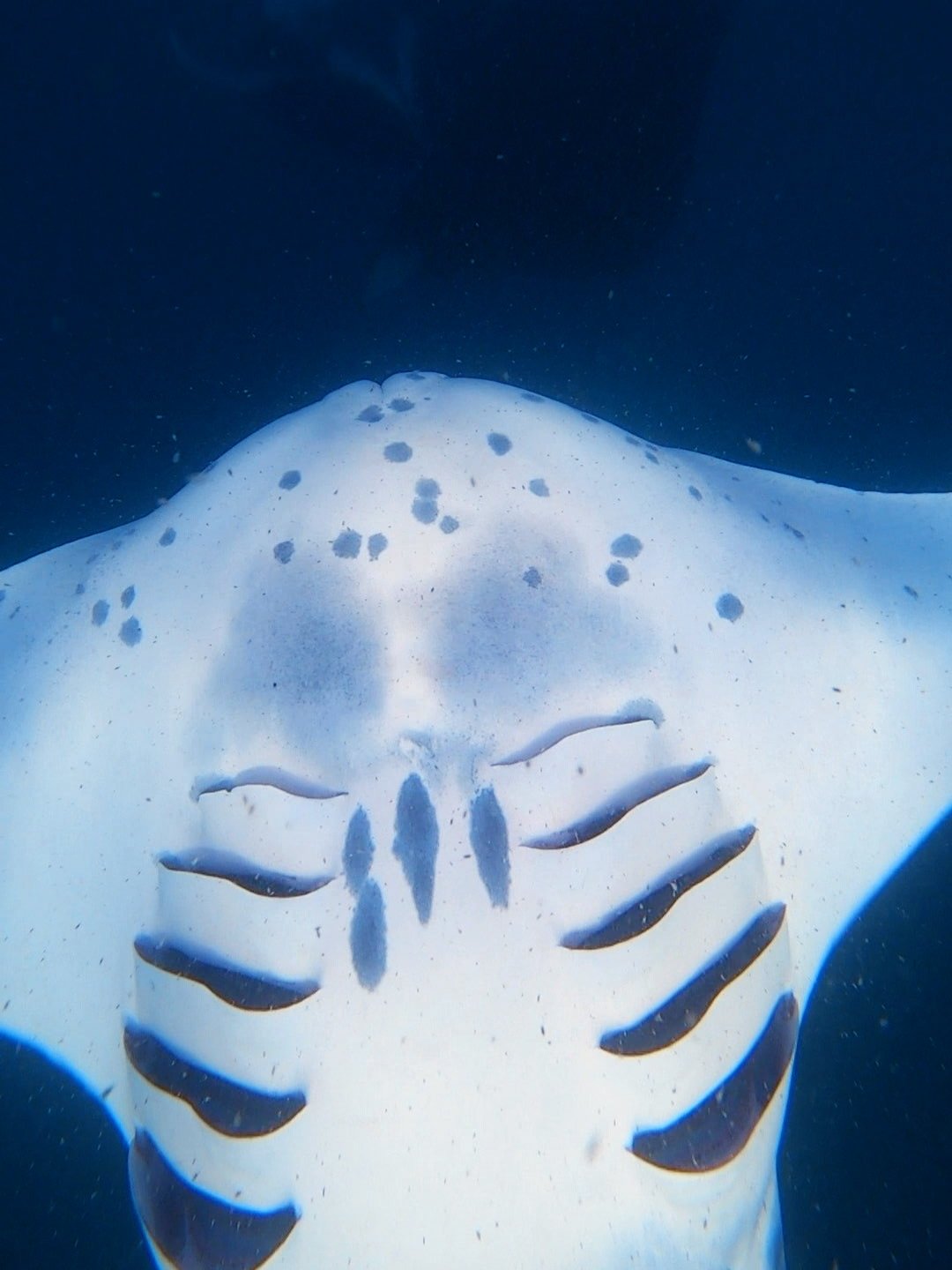
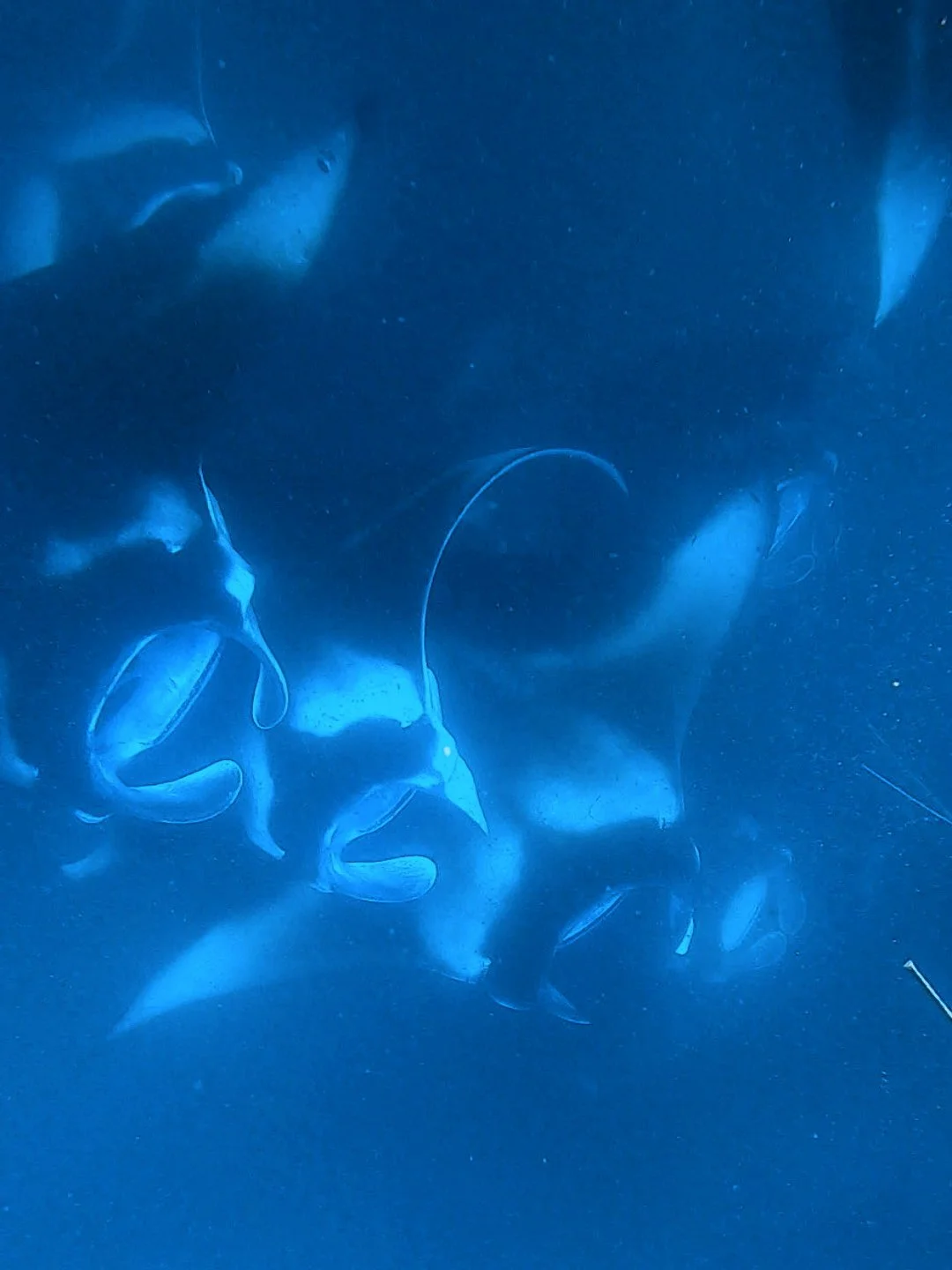
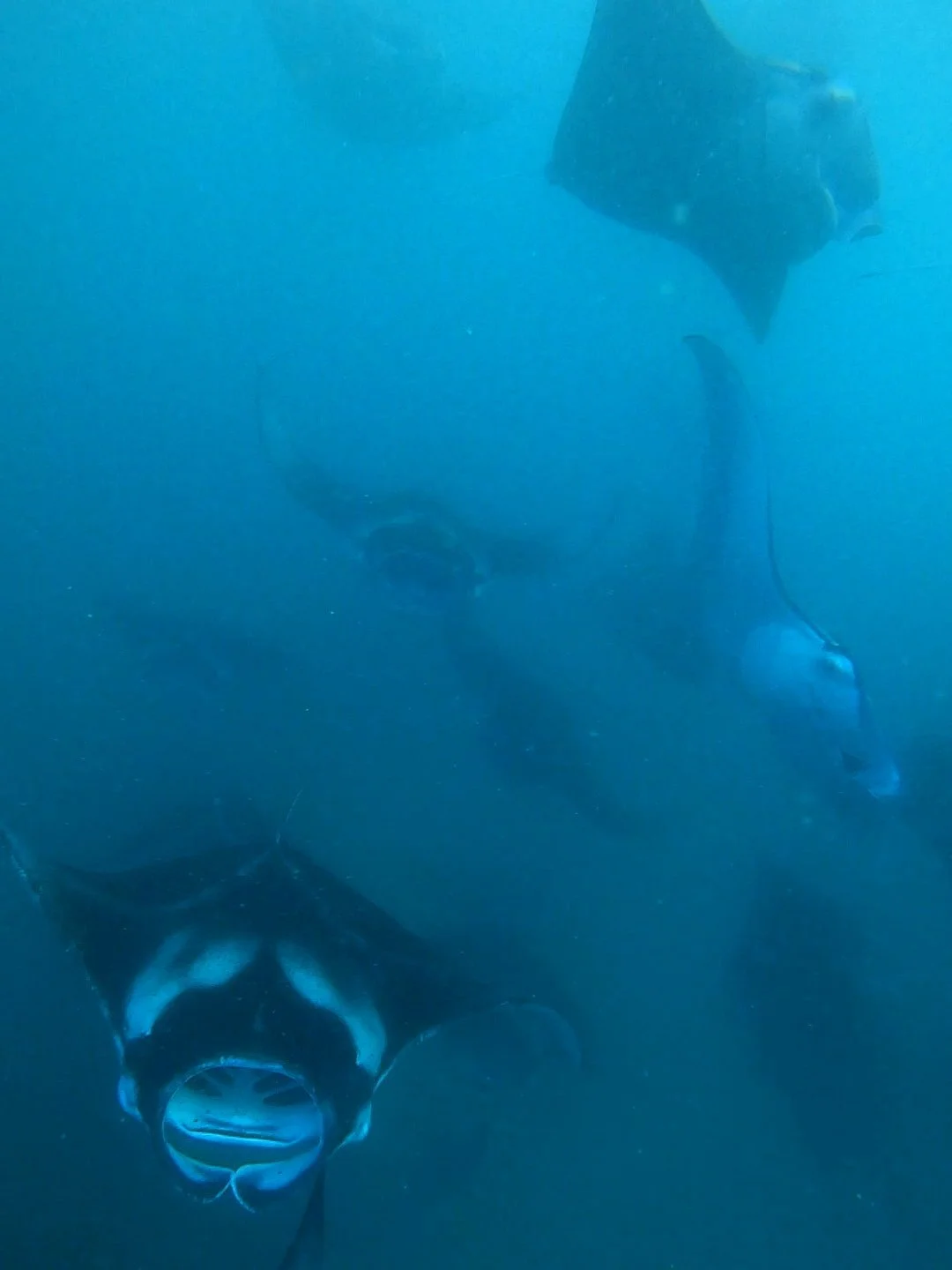
Hence, I got a special 5 minutes with this amazing spectacle before other snorkelers discovered it. When the mantas left, I finally got back to the boat and asked the other, “Did y’all see that craziness?” They looked at me like I was lying, then saw in my face that I was deadly serious. They had only hung out at the rock the entire time, so they only saw 10 mantas at most. This was unfortunate for Jesse because she was leaving the next day. She jumped back into the boat for another session with some of the other guests, while I stayed behind, very satisfied with my encounter. It costs 60$ USD per entry for an hour in Hanafaru Bay. Jesse returned after an hour, but they missed the manta cyclone, only seeing about 10. What a drag for them. That is wildlife, though. You sometimes need plain luck to be in the right place at the right time.
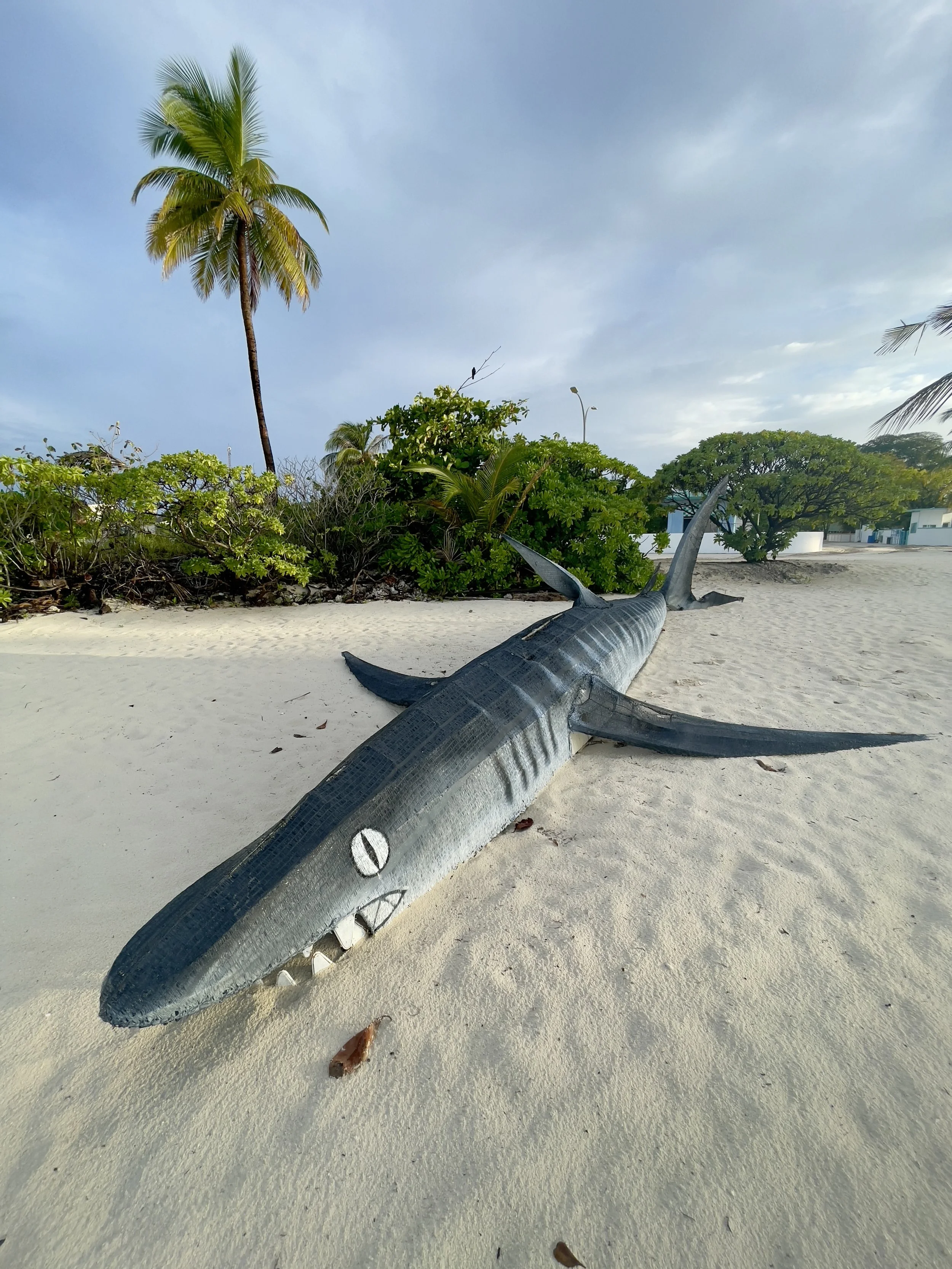
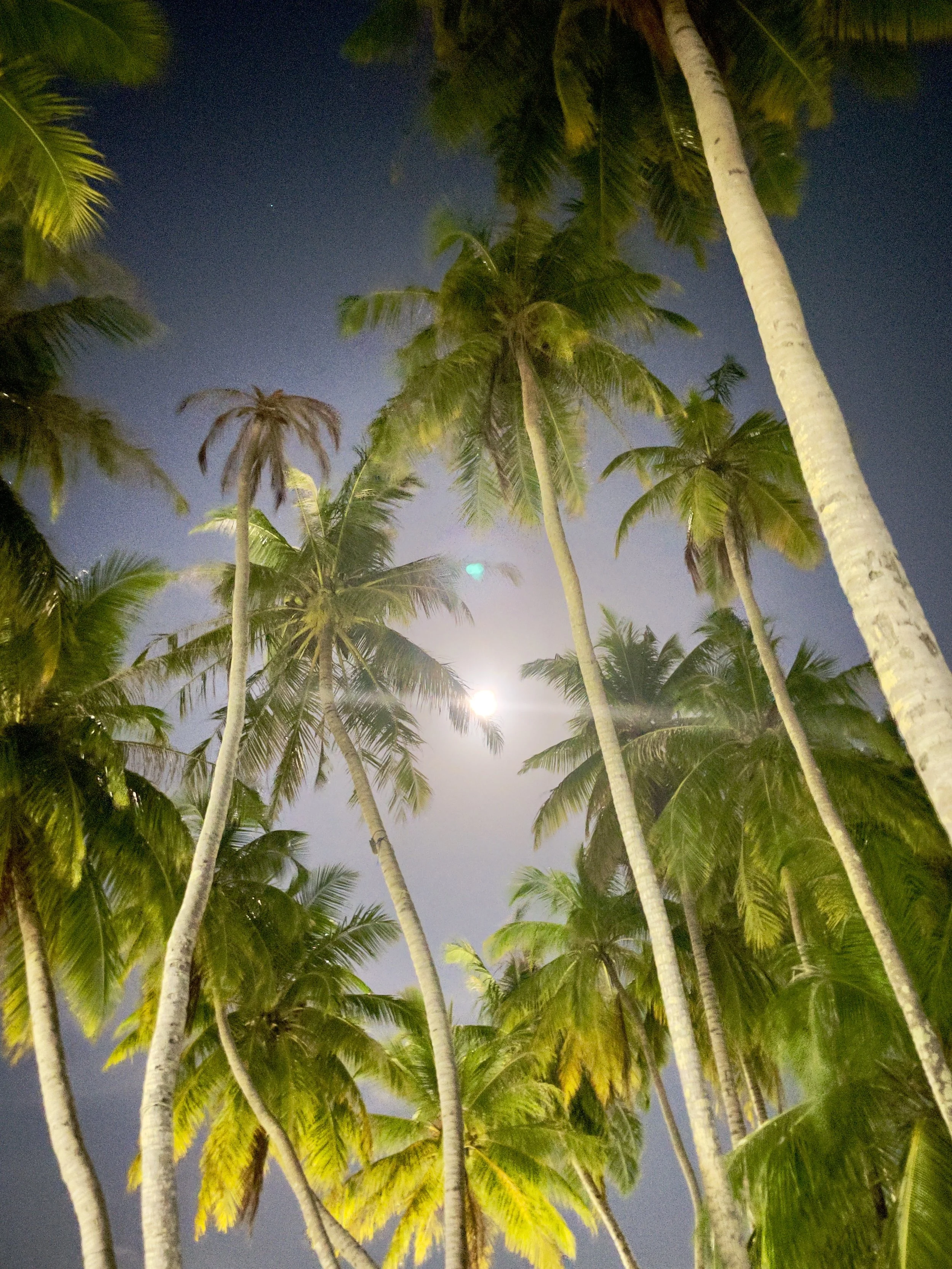
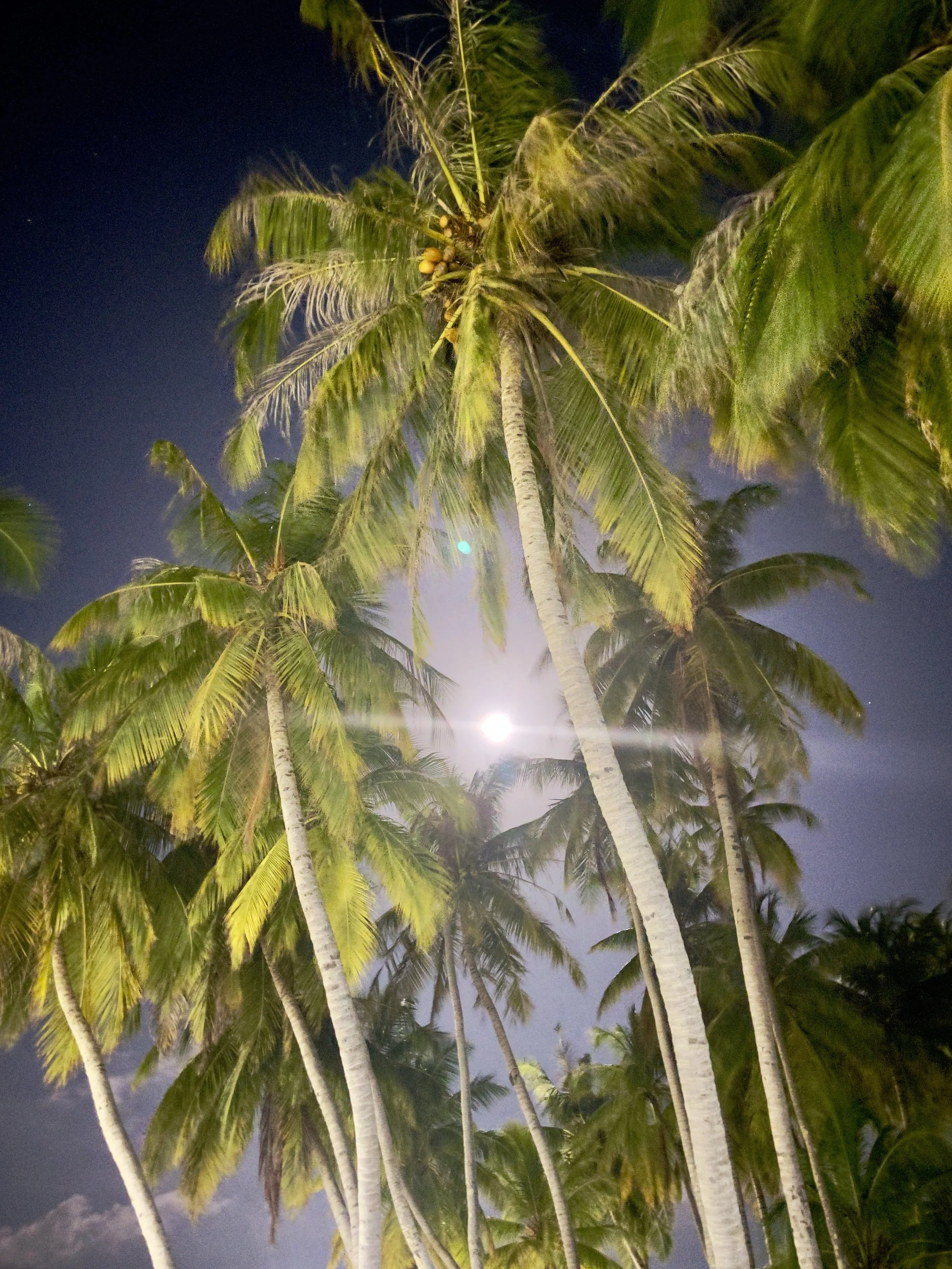
That evening, we walked to the sunset spot and passed the funny whale, tiger, and shark sculptures on the beach. I put it on my Instagram story, saying how sick it is to see these majestic animals dead on the beach, and got a chuckle from some of the reactions, thinking I was serious when it was very clearly fakes. That night, the full moon was amazing, glowing through the palm trees. It had been a wonderful trip but the next day, we would be heading back to work in this island paradise.