Black Tip Reef Shark Genetic Research
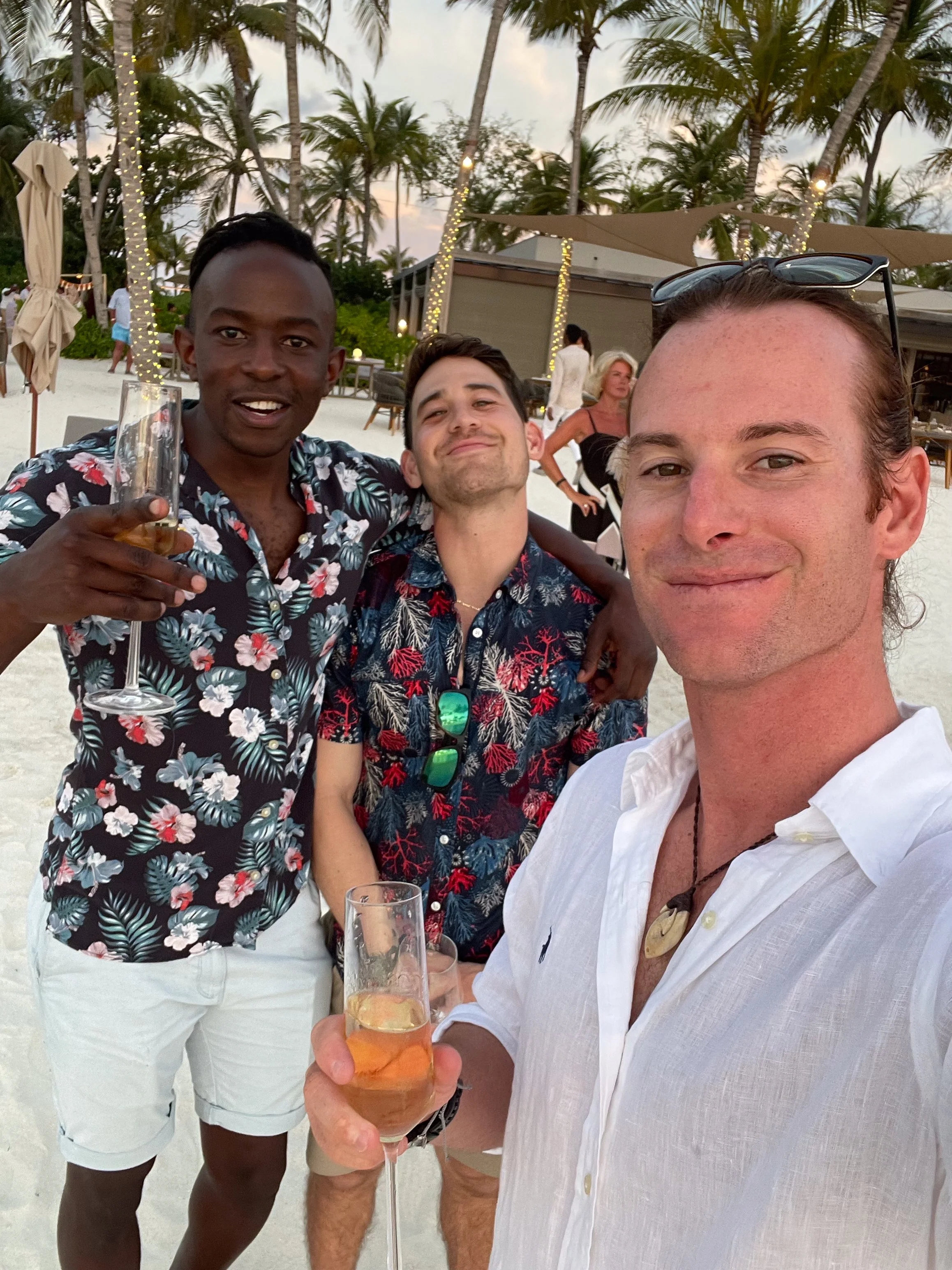
While I was working at the Ritz-Carlton Maldives, we had an impressive program called Visiting Heroes, where we brought marine science experts from around the world to our resort to use as a base for their research. One of our visiting heroes was the National Geographic Explorer Gibbs Kuguru, a shark specialist. His purpose was to study the genetics of blacktip reef sharks. There is a large presence of these sharks in the Maldives with the recessive leucism (loss of melanistic pigment) gene. He also brought the legendary angler, Walker Nambu.
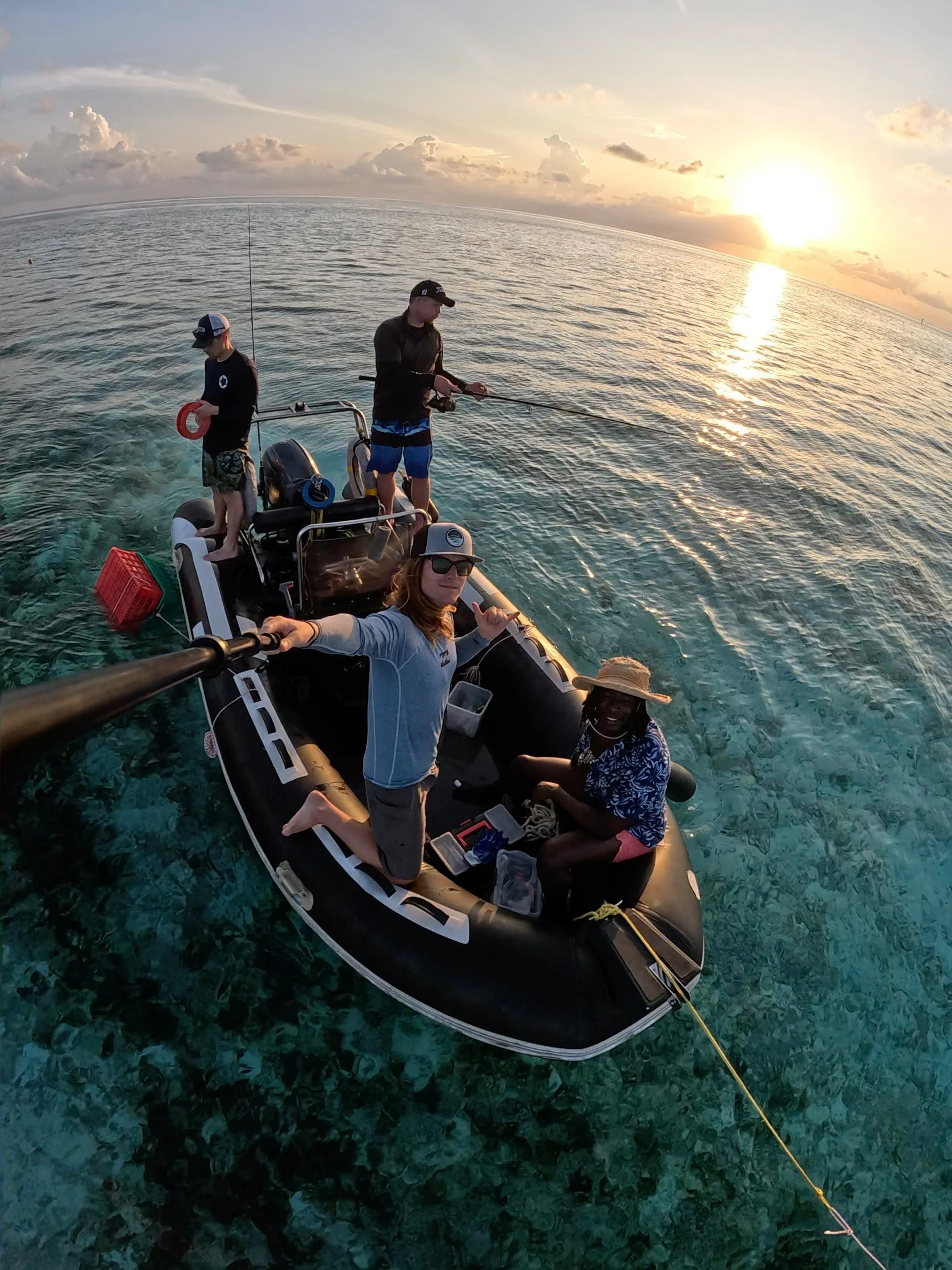
Let me introduce them to you:
Gibbs Kuguru
Gibbs Kuguru is a Kenyan shark scientist who studies shark DNA. Working with great white sharks at a cage diving company, he honed his shark wrangling and seafaring skills and applied them to several shark species, including hammerheads, threshers, blues, and sand tiger sharks. Kuguru is using his genetic research to better understand the unique elements in DNA that shape shark populations in the blue wilds of the world. Kuguru is currently completing his Ph.D. in genomics at Wageningen University, where he is revealing the causes behind a rare skin disorder affecting blacktip reef sharks in the Maldives. His research may reveal insights into how these animals survive in the face of extinction caused by overfishing and climate change. Kuguru is a 2022 National Geographic Wayfinder Award recipient.
Walker Nambu
Walker grew up fishing the lakes, ponds, and rivers of Massachusetts before heading to Florida in 2010, where he earned his bachelor’s in marine science at Eckerd College and a master’s in marine biology at Florida Atlantic University. Walker has studied sharks for over ten years, including great whites in South Africa and various species in the Bahamas, as well as blacktip reef sharks in partnership with a National Geographic project in the Maldives. Walker guides in Islamorada, Florida during the winter season and focuses on a variety of fish species including tarpon, snook, permit, and bonefish. A long way from the clear waters and white sand beaches of Florida, he fell in love with the Kenai River in Alaska, its wildlife and world-class fishing, which is where he guides in the summer.
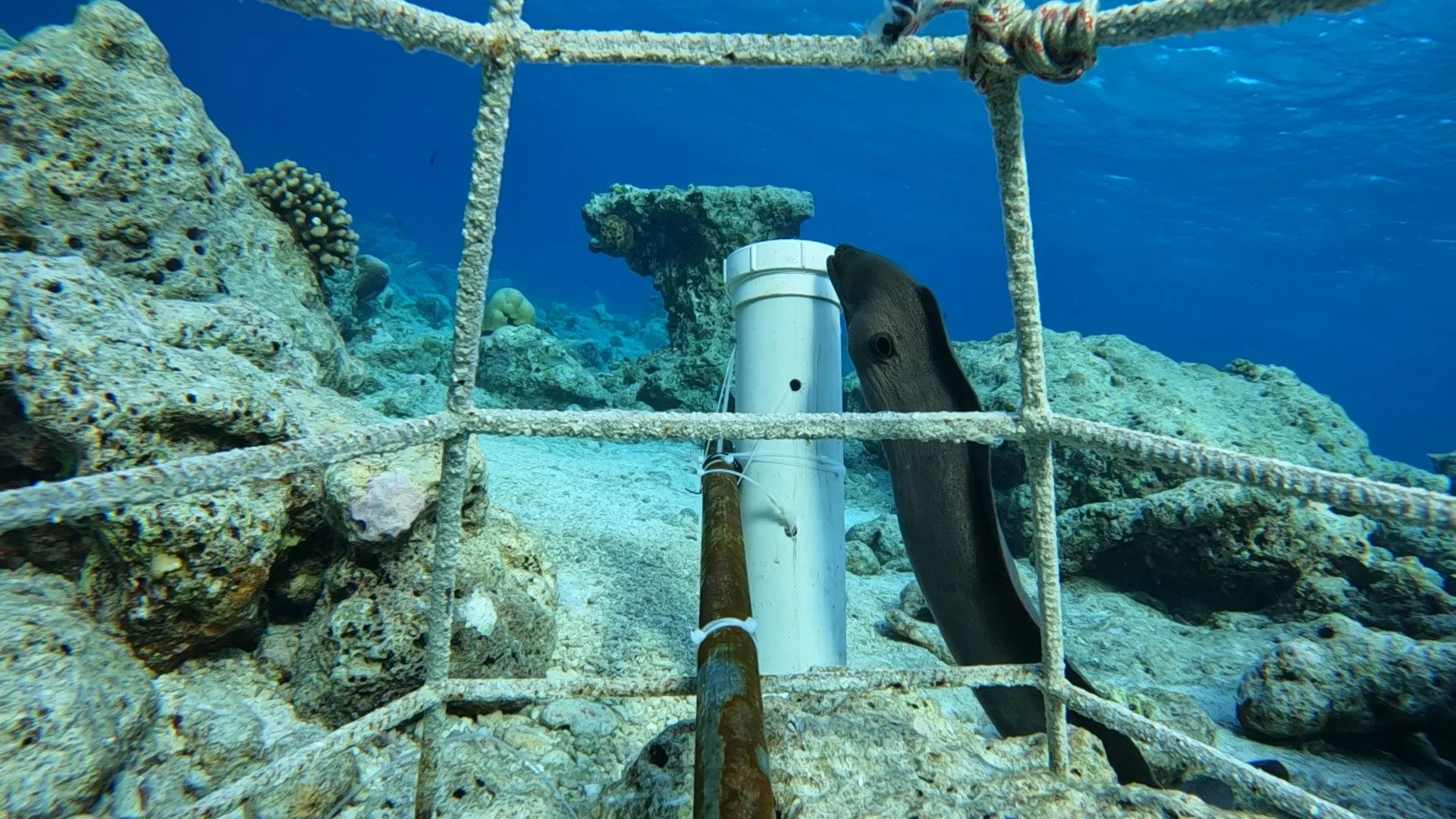
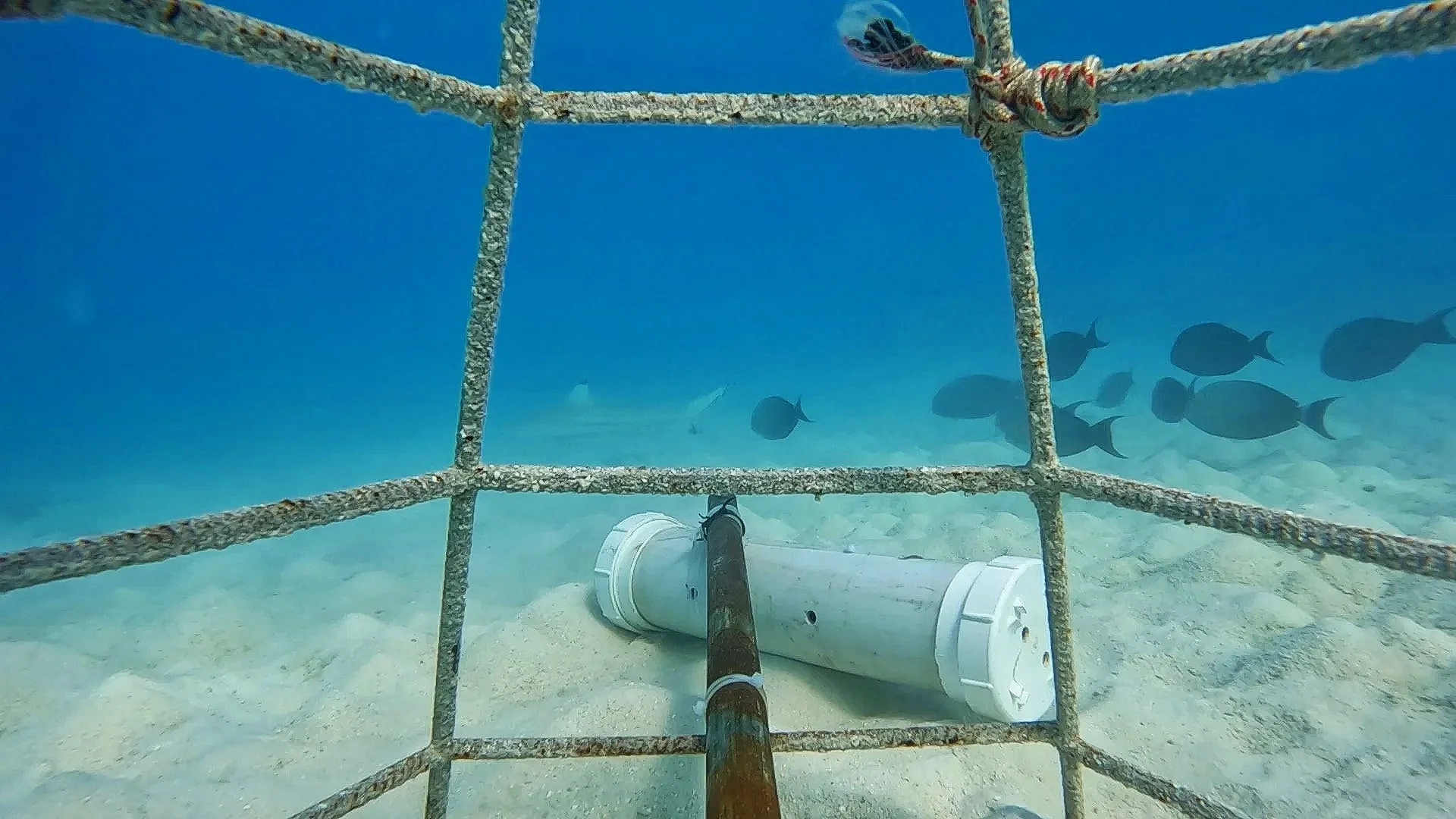
Daia, one of the Naturalists I worked with at the Ritz-Carlton, and I started their mission by laying down BRUVs (Baited Remote Underwater Video) to find out where the sharks were hanging out. We “MacGyvered” a coral frag tower using some PVC pipe and a GoPro, then added bait and dropped it off in an area we thought would be good for sharks. There were not a lot of sharks, but we did see a blacktip on the camera, so it was a success.
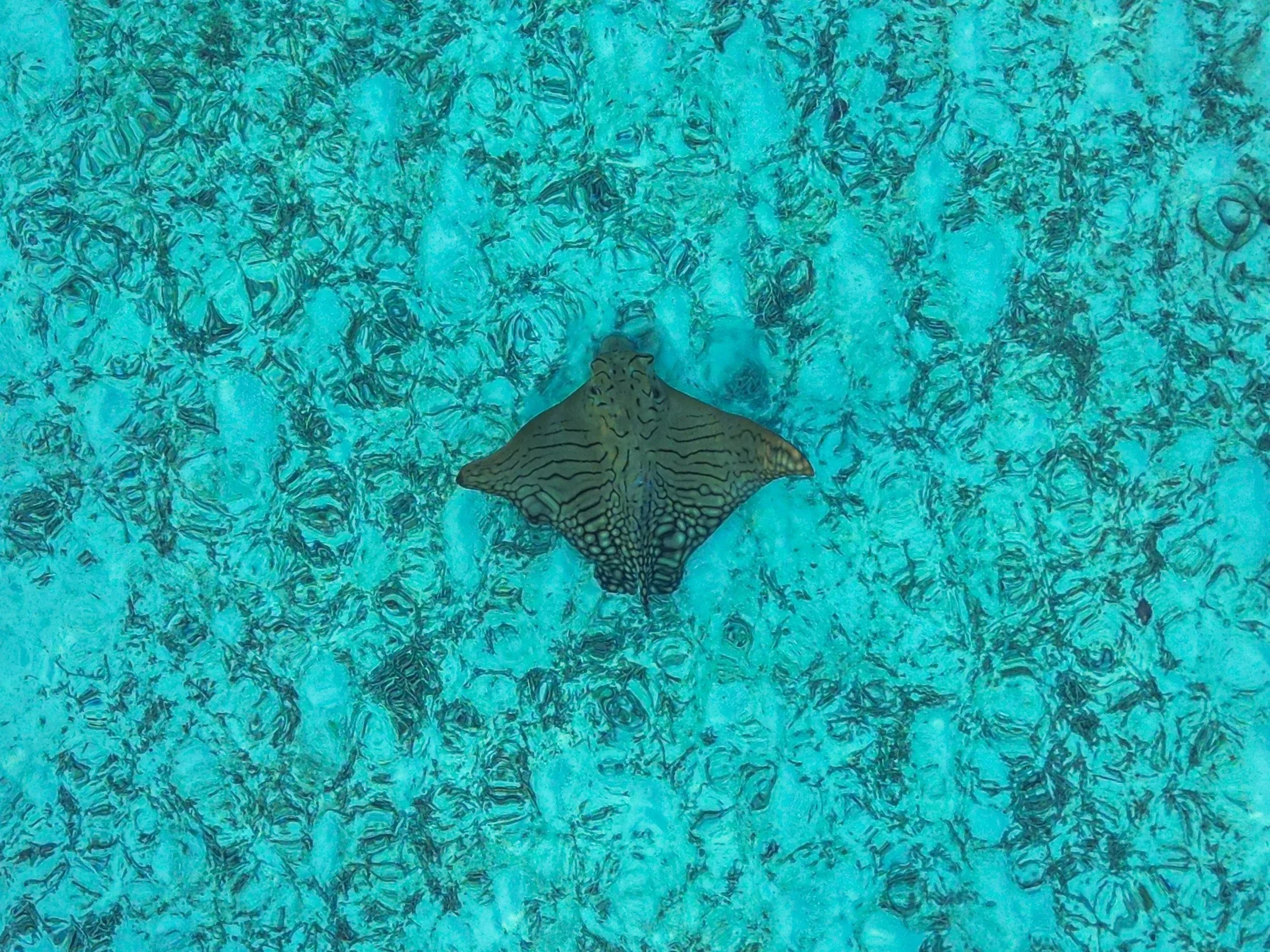
When Gibbs and Walker first arrived, we spent our mornings and evenings fishing for sharks from the Zodiac boat. For the first few days, although we only managed to catch some non-target fish, we had some other incredible ocean wildlife encounters. As part of my job, I flew the drone at sunset either before night snorkeling with guests or conducting wildlife surveys. In the shallow lagoons, I always spot the usual eagle rays, cow-tail stingrays, and the occasional blacktip reef shark. On this evening with Gibbs and Walker, it was a little windy, so the water was wavy, but I saw an eagle ray, (they are unmistakable due to the diamond shape of their bodies), but this one was massive, even viewed from 100 meters up! That got us extremely excited because of the possibility that it could be a rare species of eagle ray found only in the Maldives. I dropped the drone to about 10 meters above the ray, and we could clearly see the olive golden color and the tiger stripes. This was the first time any of us had ever seen what marine enthusiasts call the unicorn of the sea, the Ornate Eagle Ray. Unfortunately, this one did not have its tail. It is common for eagle rays to lose their tails, as they are a favorite prey for some shark species. Ornate Eagle rays can grow to around 2-3 meters (8-10ft) wide and be anywhere from 4-5 meters long (12-16ft). The largest on record was over 3 meters wide and weighed 530kg.
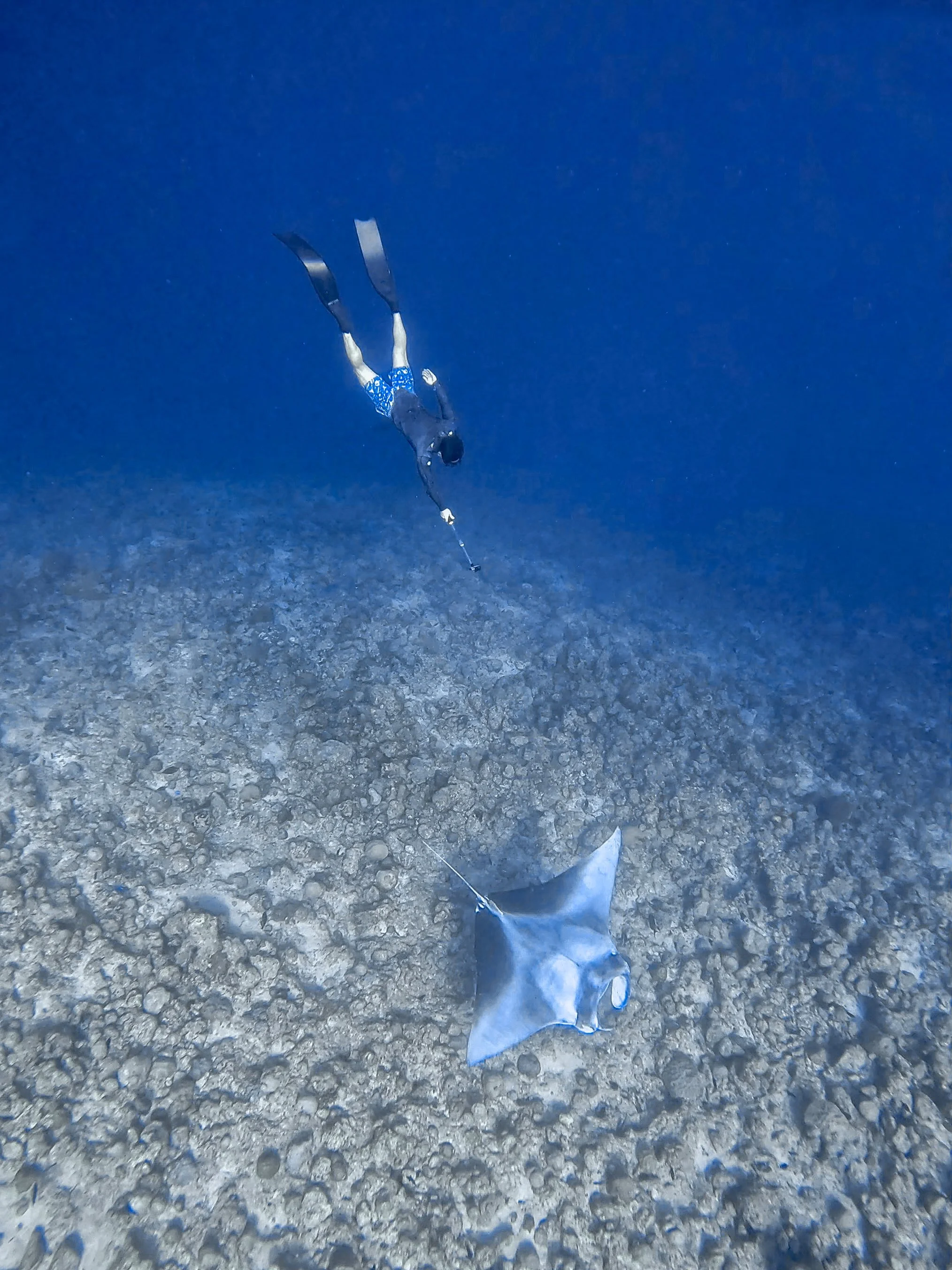
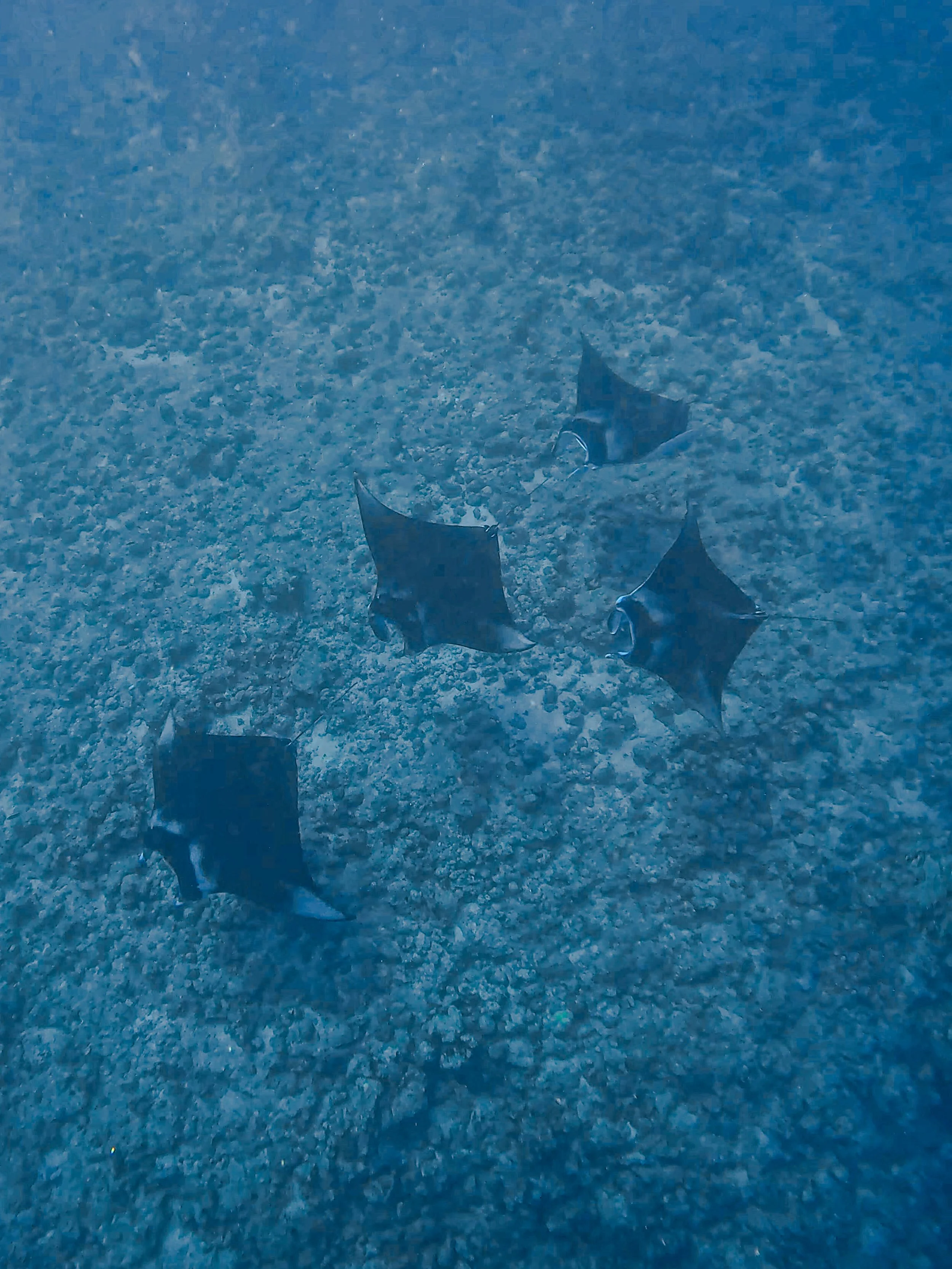
While Gibbs was here, we did special shark snorkels with him as our expert. We took guests to some of the more sharky reefs around the islands, then to the Manta cleaning station on the other side of the atoll. We had been having great luck with this spot. I spotted the mantas with my drone, then Gibbs, Walker, and I jumped into the water with them. There was a large female being chased by some males, and another one with some high whites on its body, which is always stunning to see. We dove there and marveled at the mantas performing their unique dance around the station.
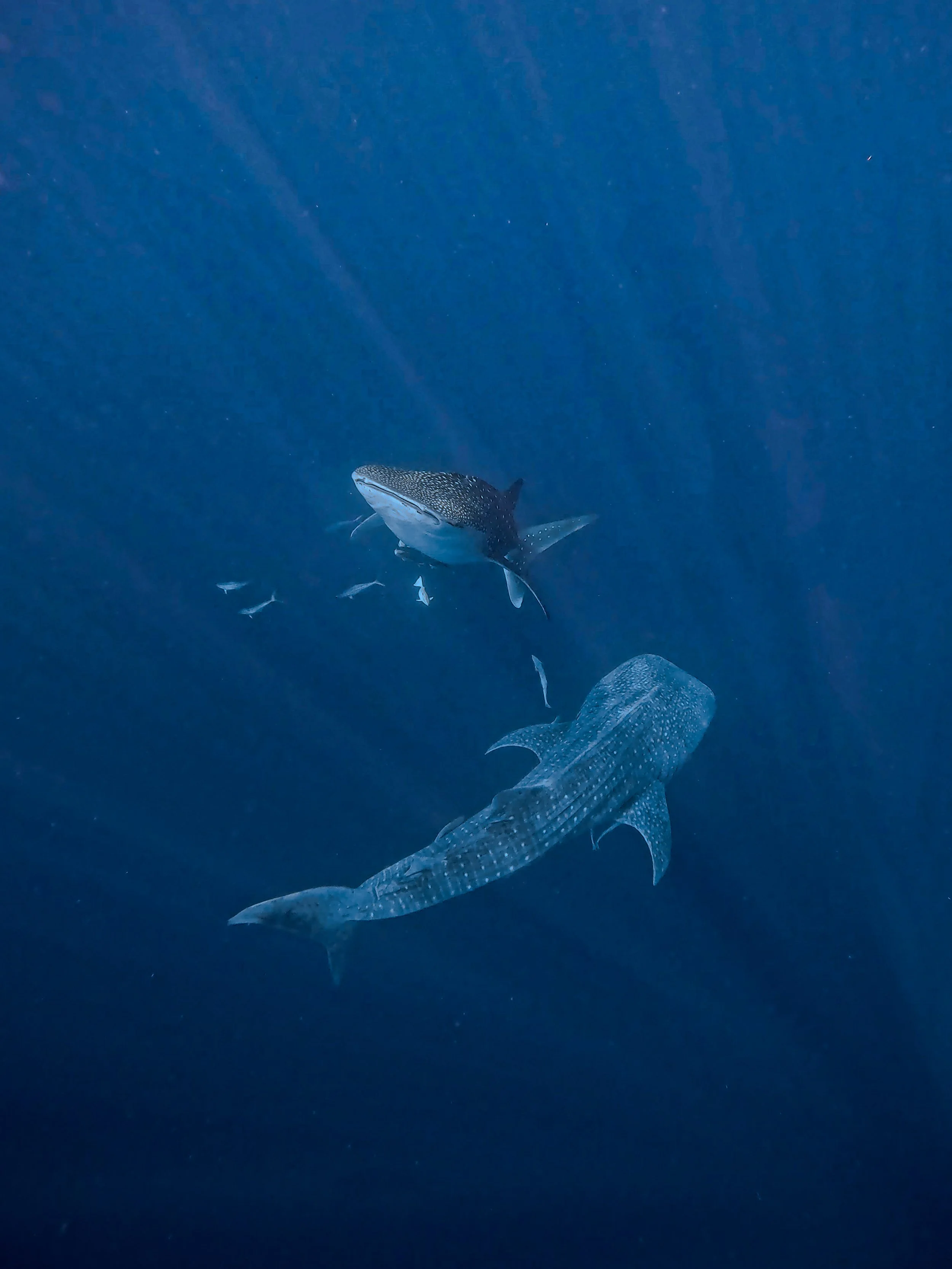
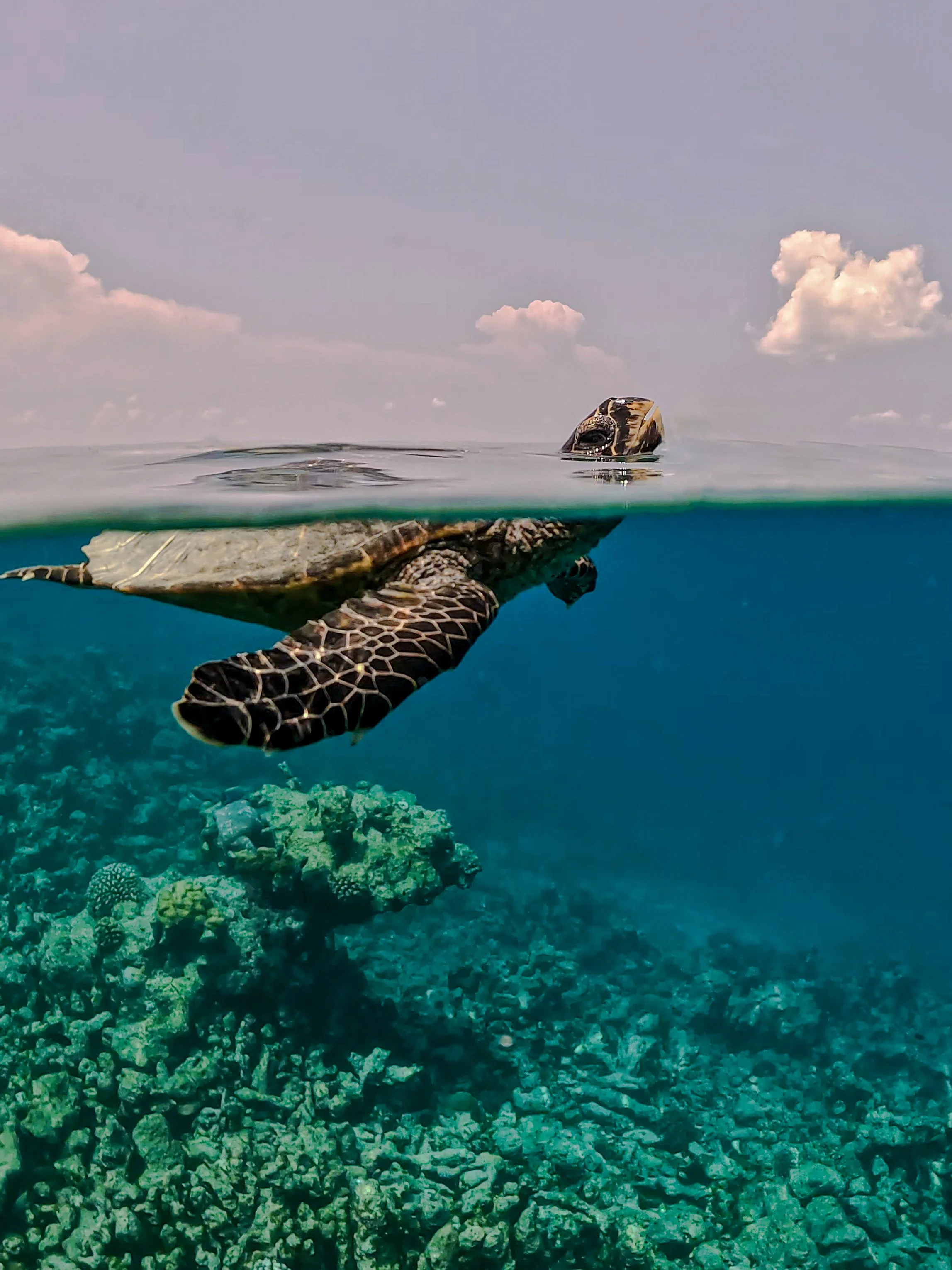
The next day, Gibbs and Walker joined me in taking a guest out to find whale sharks, and we scored because there were two feeding together. Unfortunately, there were a lot of people in the water. This spot is popular in the North Male Atoll because it is an active cleaning and feeding station for the area's mantas. We jumped into the water but as we got closer to the shark, unfortunately a tourist couple was trying to touch the shark. This behavior is not allowed and usually results in them diving deeper. Everyone is briefed on this before they get into the water with whale sharks. Touching whale sharks can stress them and alter their behavior. It is not just unethical — it is selfish to ruin the experience for the other travelers who came specifically to see them. After our whale shark encounter, we headed to a turtle snorkeling spot known for its many hawksbill sea turtles, a critically endangered species. It is always nice to see them in robust numbers.
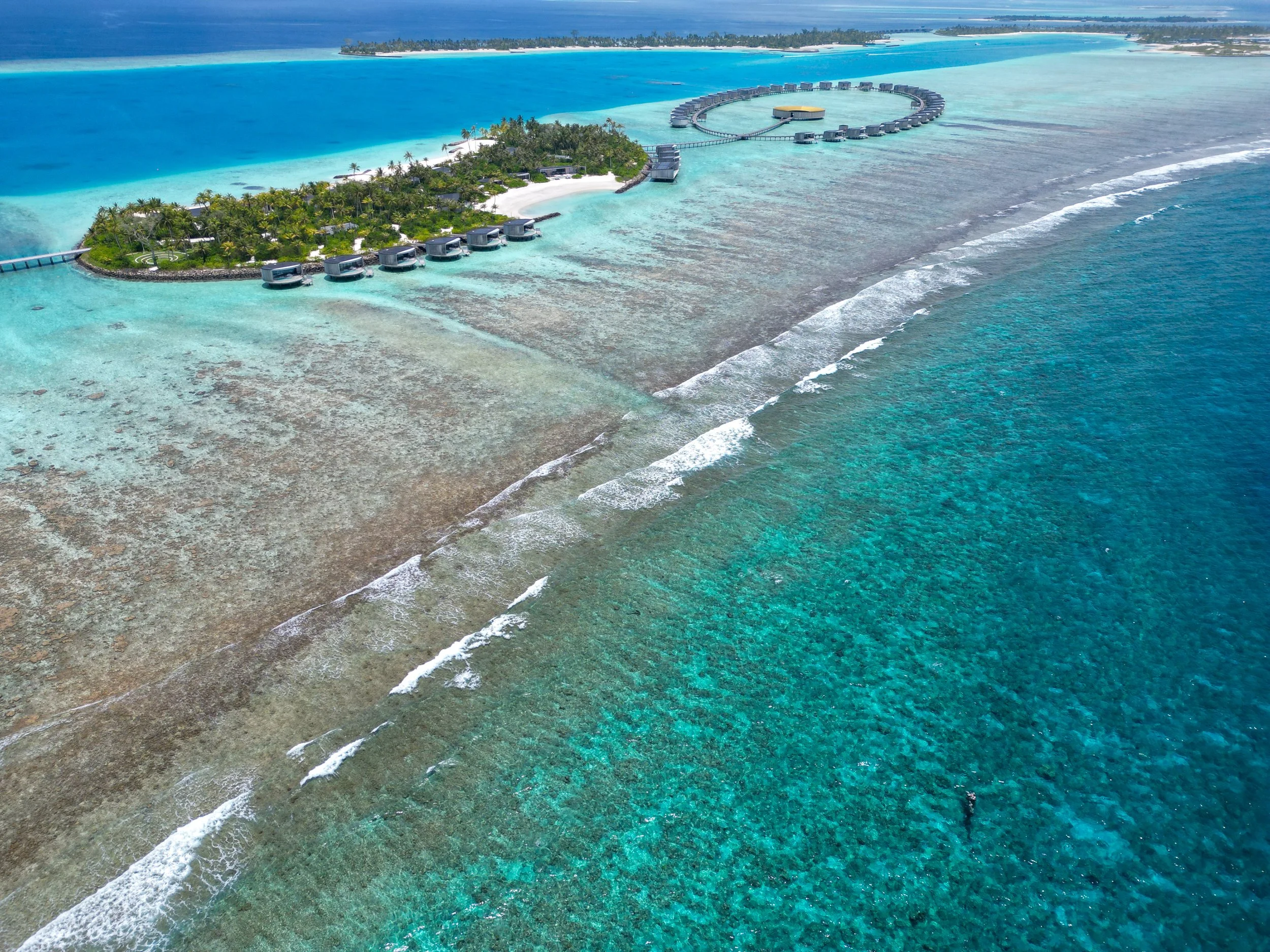
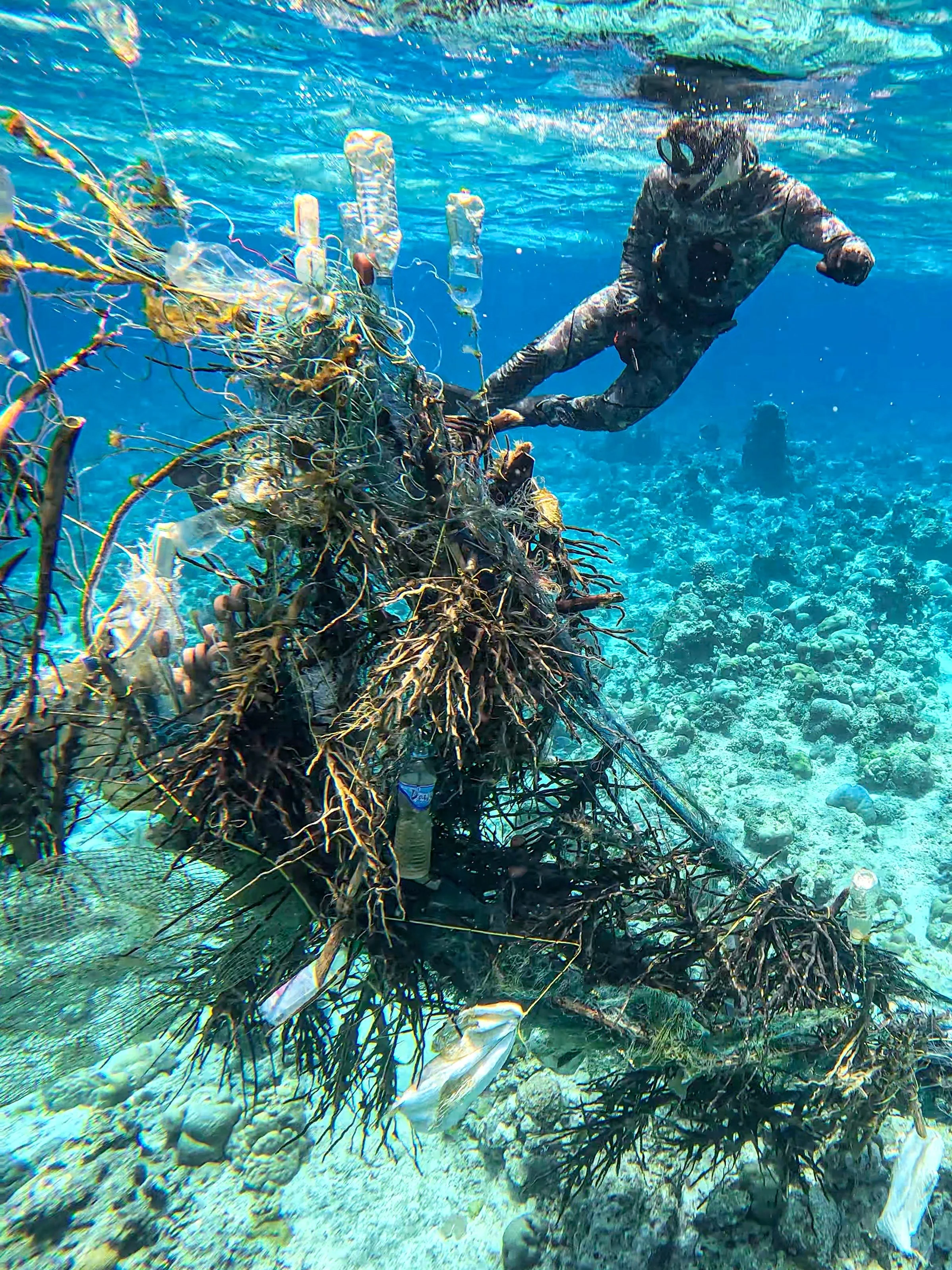
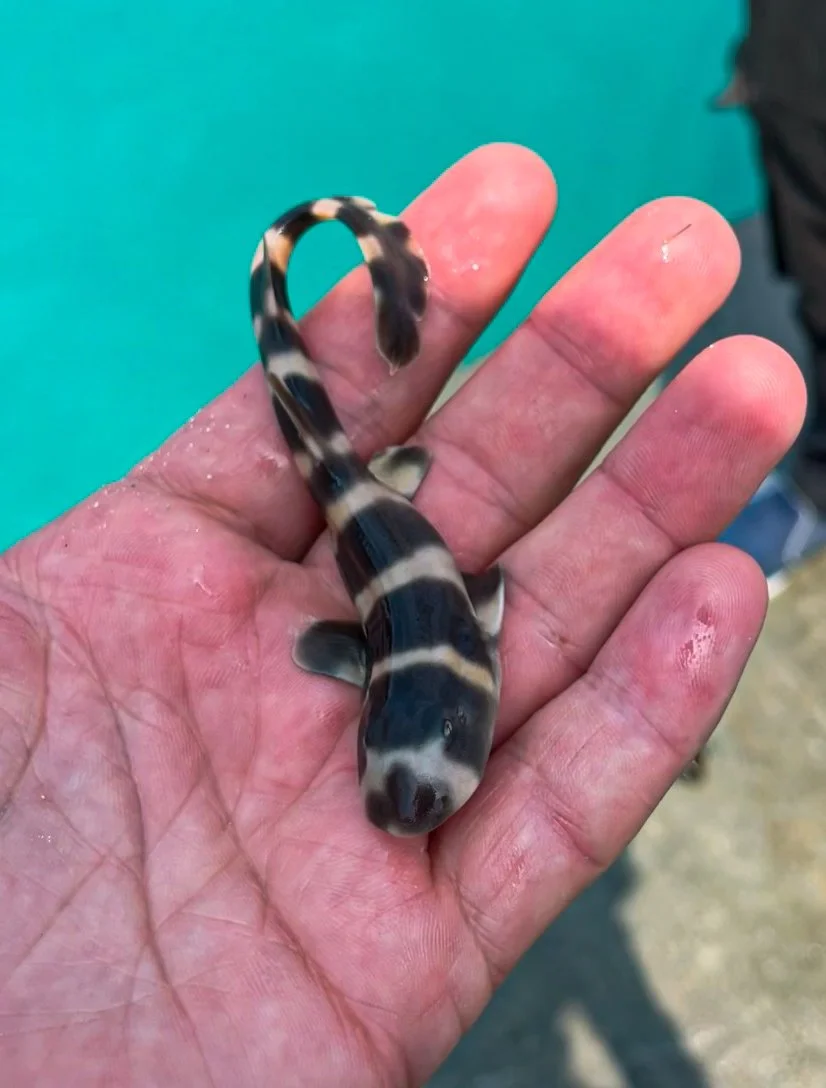
Another day, the dive team made us aware of a large ghost net that was entangled on our outer reef at the resort, so I flew my drone to check its location and get the coordinates. Walker, Mike (a coworker at the resort), and I took the dinghy out to get rid of the net. Walker and I jumped in the water, and this ghost net was a Fish Aggregation Device (FAD for short). These are used to attract biomaterials, which then attract small marine life, which then attracts the entire food chain, and fishermen use this to target game fish. Walker and I tied a rope to it so we could drag it back to the service jetty and haul it out of the water. We had to use the crane as this thing must have weighed around 100kg! When it dropped onto the jetty, we looked through it, and one of the guys found an egg. It looked like a shark egg, so I put it in my hand to examine it, and suddenly it hatched! Out popped a baby bamboo cat shark. Now, this was remarkably interesting because this species of shark is not found in the Maldives at all, which means the net was made in another country, most likely eastern India, as that is where the shark's closest range is to us. This net had been drifting for thousands of miles before getting snagged on our resort’s outer reef. You can figure out where these ghost nets originated from by the scope of life that is clinging to the net.
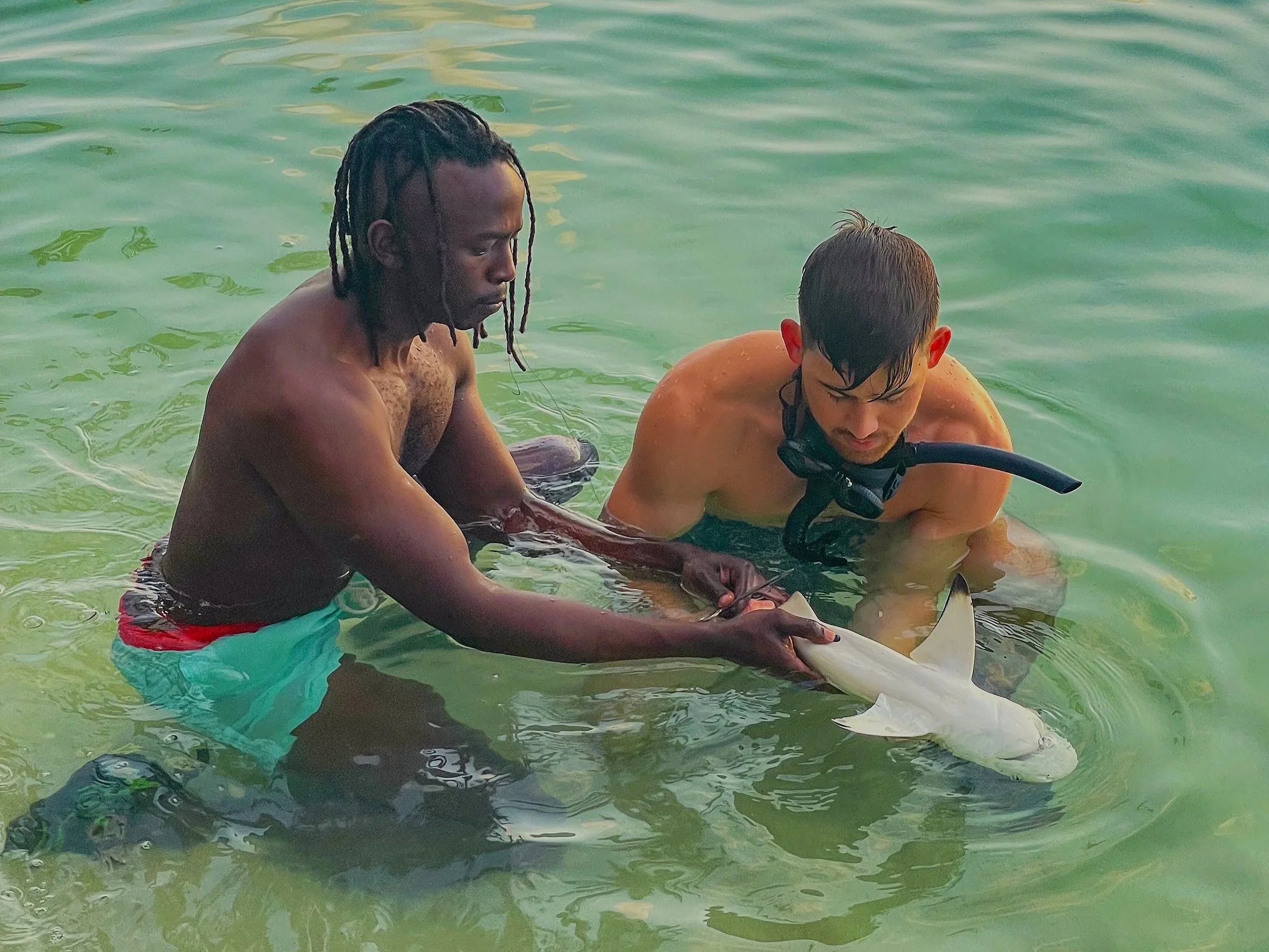
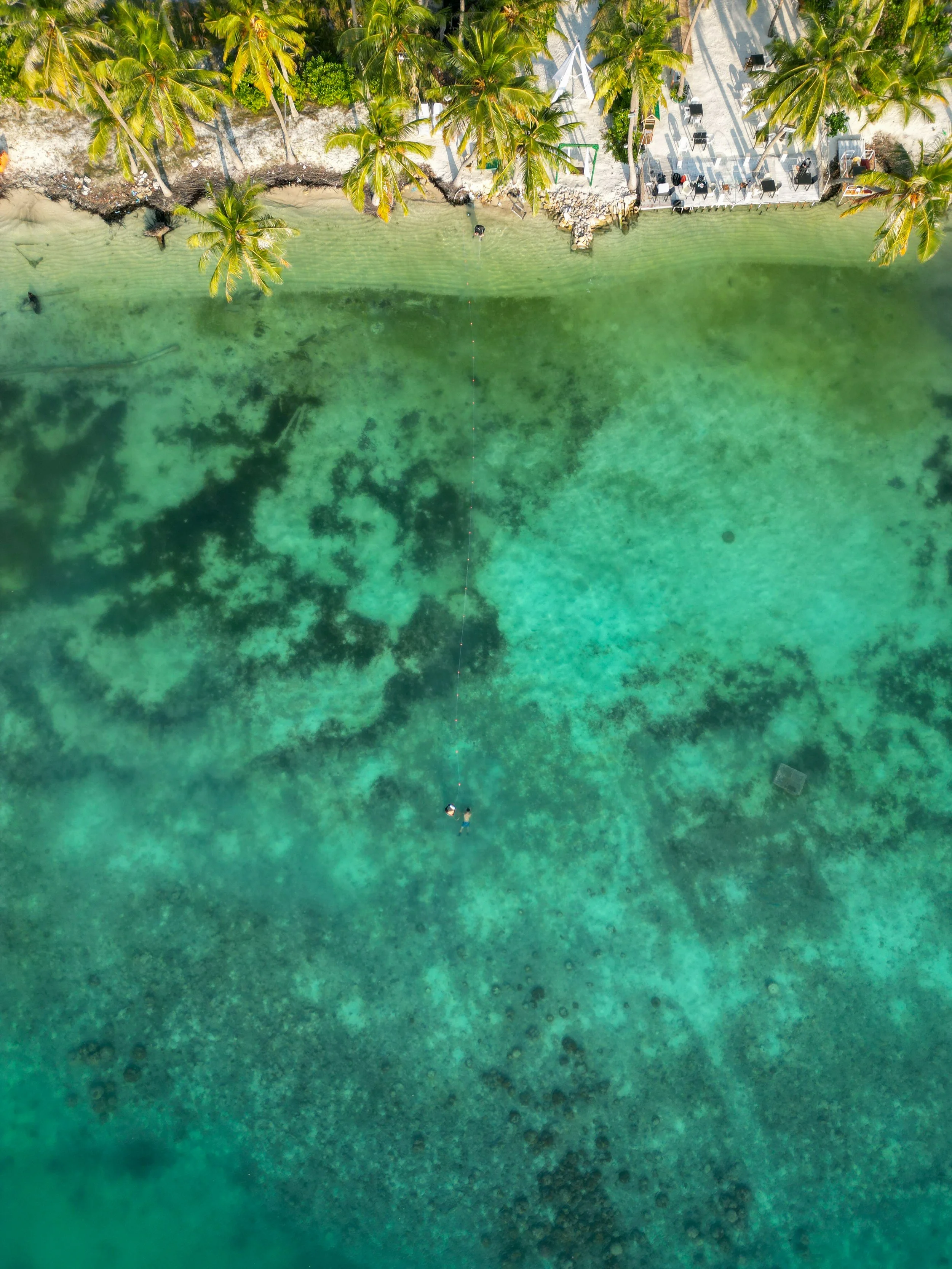
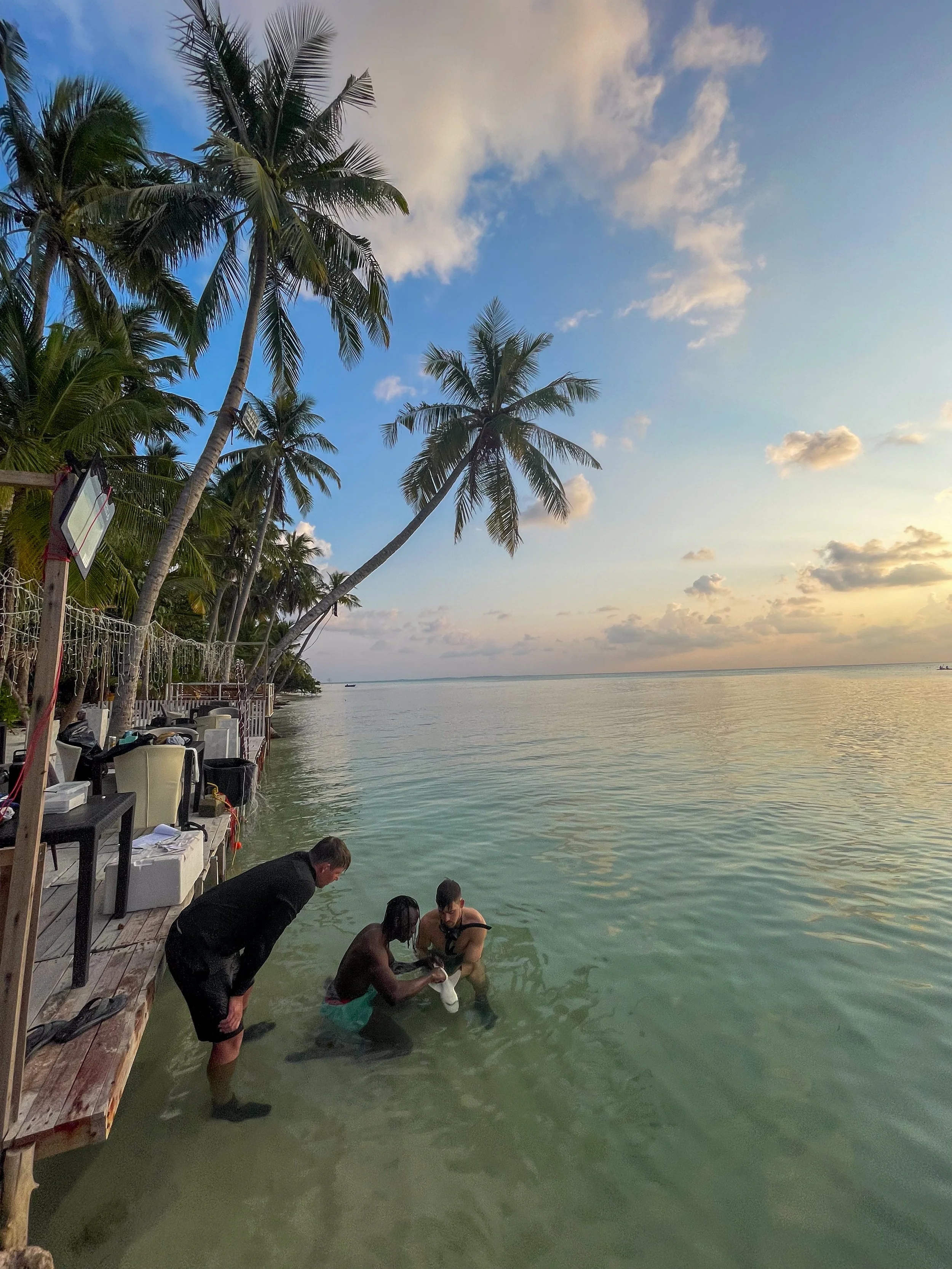
After these adventures, we finally obtained the permits Gibbs needed to take samples from his shark research back to his lab for processing. Our research team, which consisted of Walker, Gibbs, Mike, and me, spent one night on Dhiffushi. This island is not far from the capital city of Male and the Hulumale airport, making it a convenient local island for a short stay. Once we got settled into the hotel, we grabbed our gear and set out with our gill net. We caught a couple of large black tips during sunset, but I sent up my drone and saw a large group of black tips on the south side, so we moved our operation there. Walker immediately hooked some and he then succeeded in catching a leucistic shark, the target of his research! Unfortunately, at this time, a mosquito bit me, and I did not know then, but in six days, I would find out it contained the Dengue virus, which knocked me on my ass.
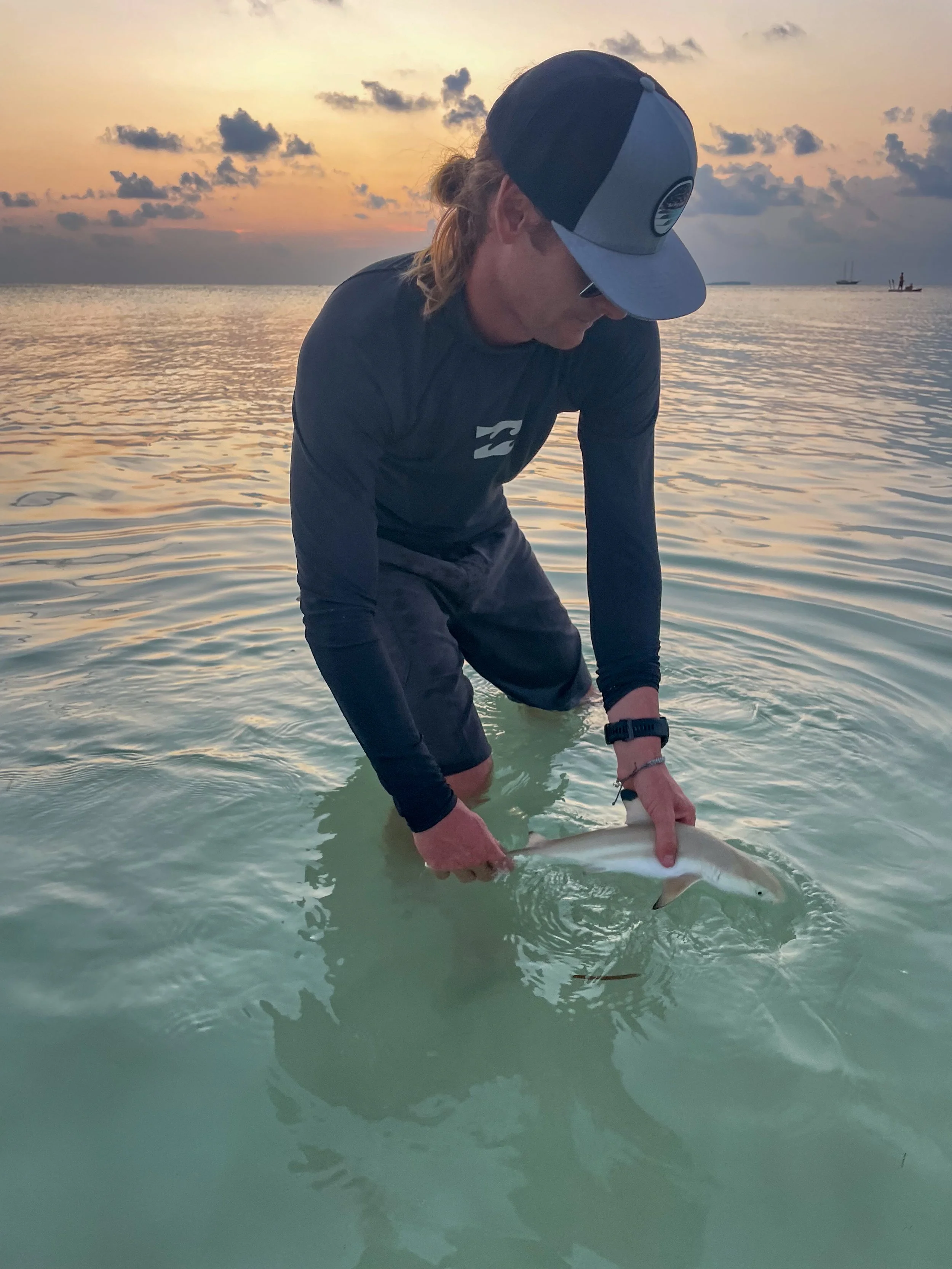
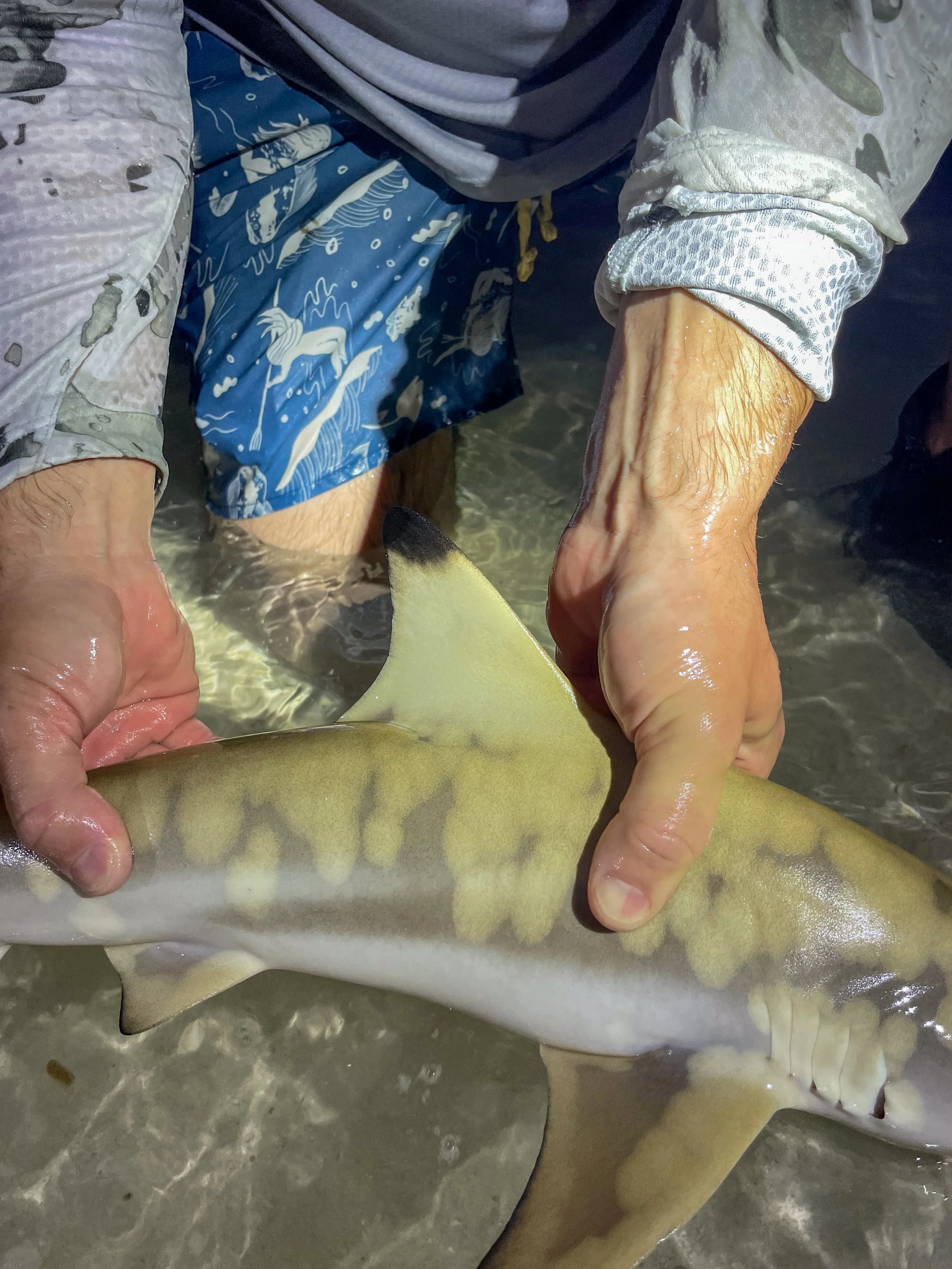
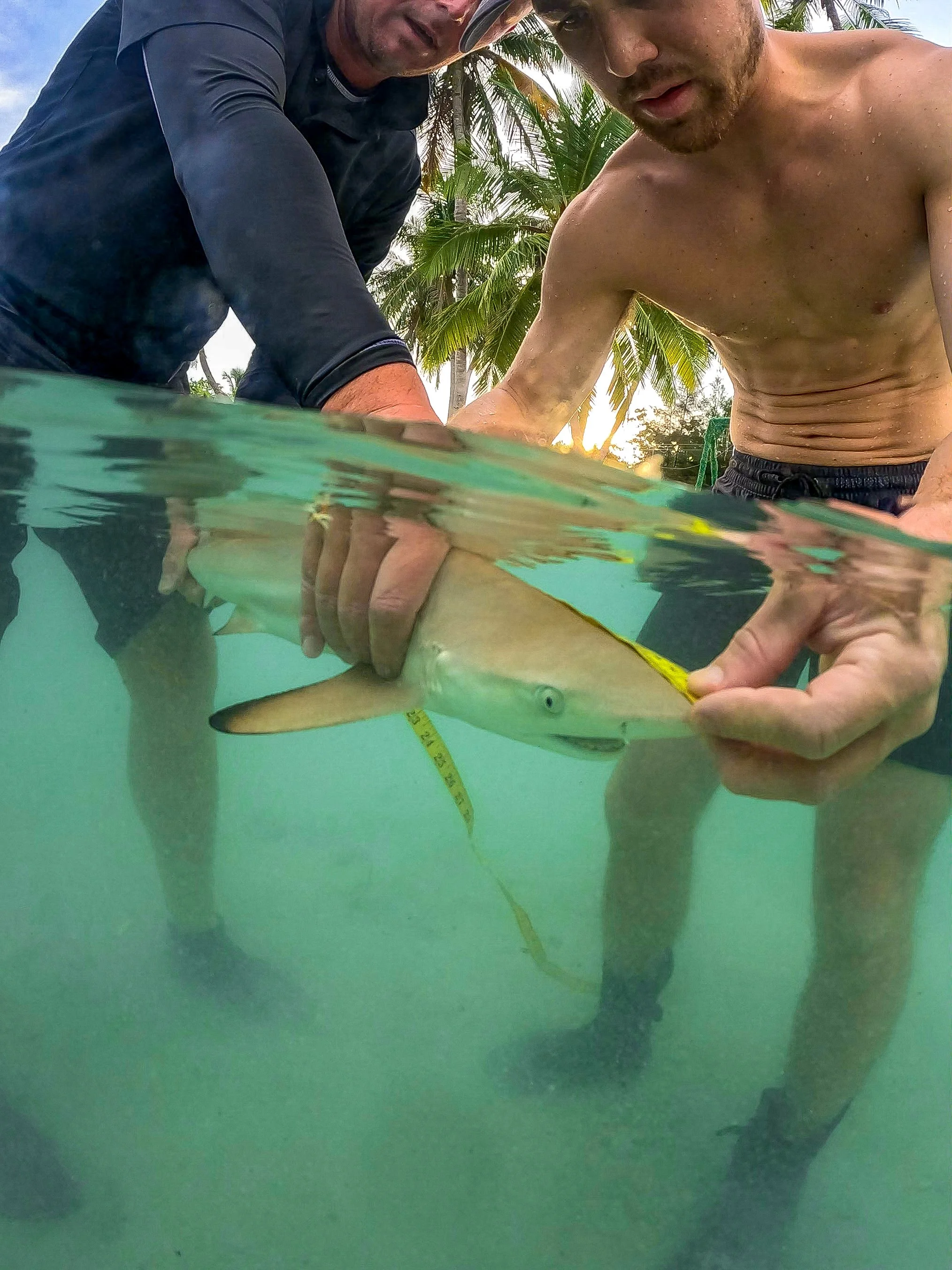
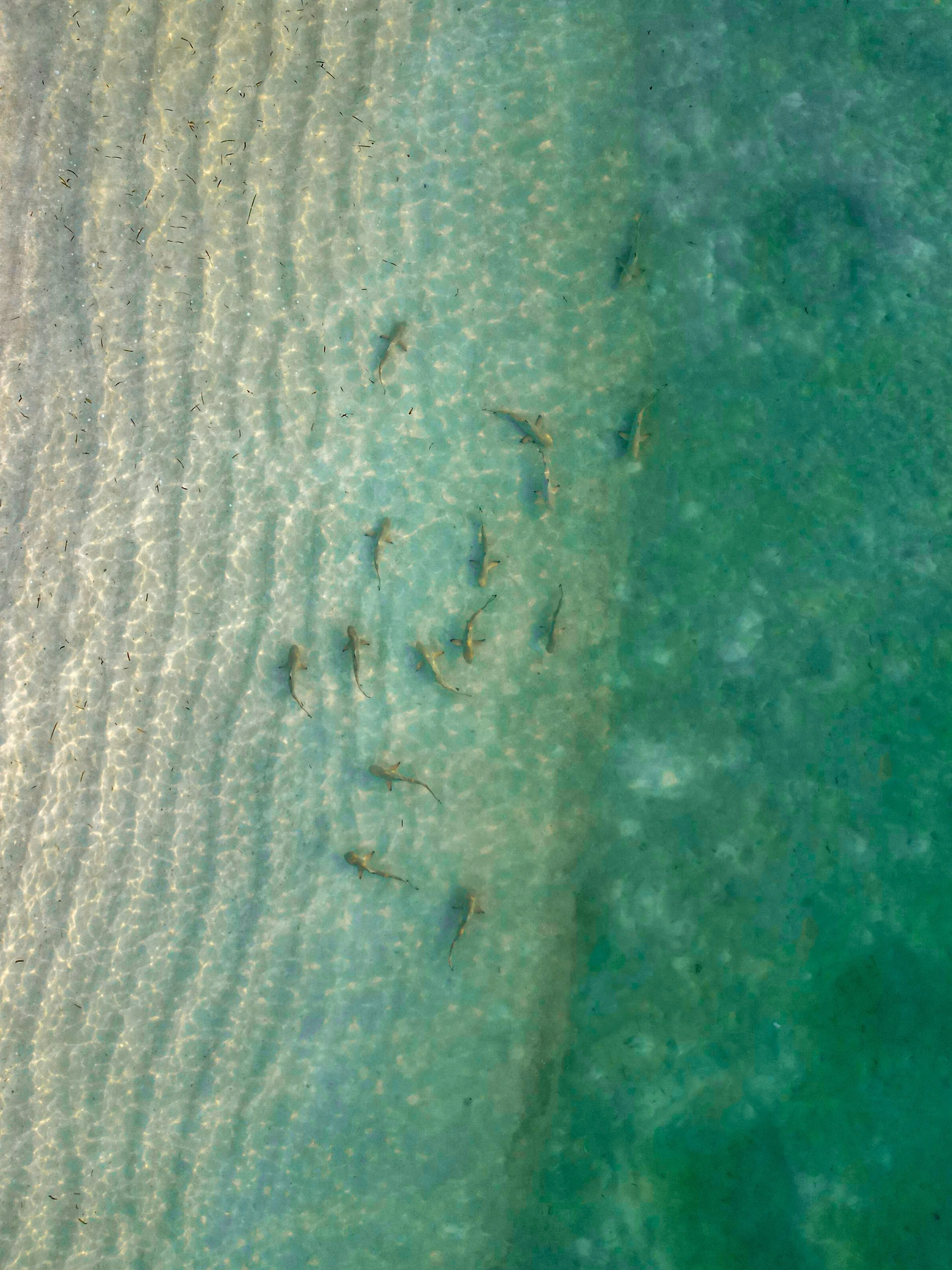
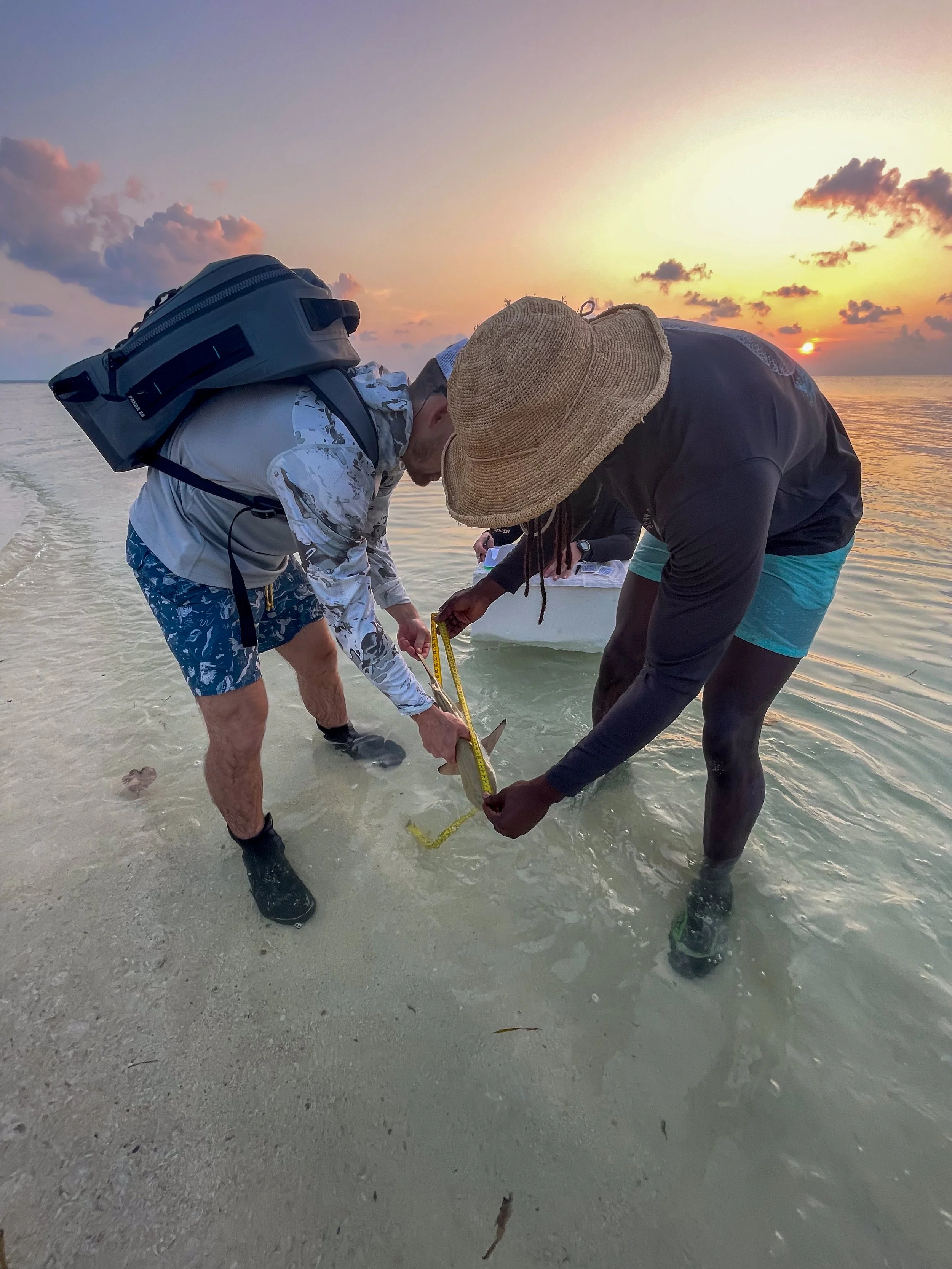
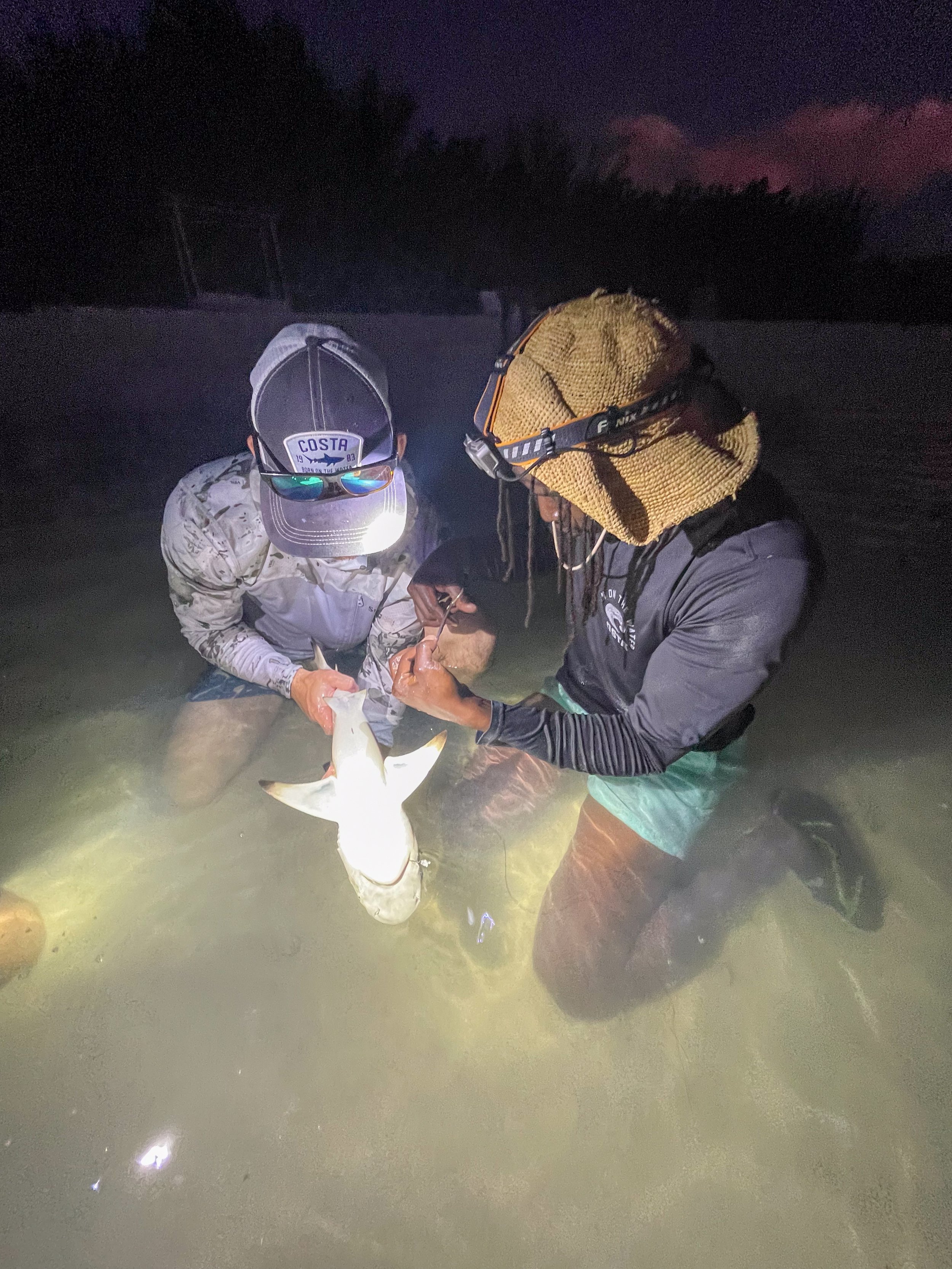
I thoroughly enjoyed my time with our Visiting Heroes Gibbs and Walker. In a matter of a few short weeks, we sampled sharks, documented rare rays, swam with magnificent Mantas and whale sharks, removed ghost nets, managed wildlife tourism, and learned that even the smallest mosquito can end a field season! Conservation work in the tropics is always unpredictable and always humbling.